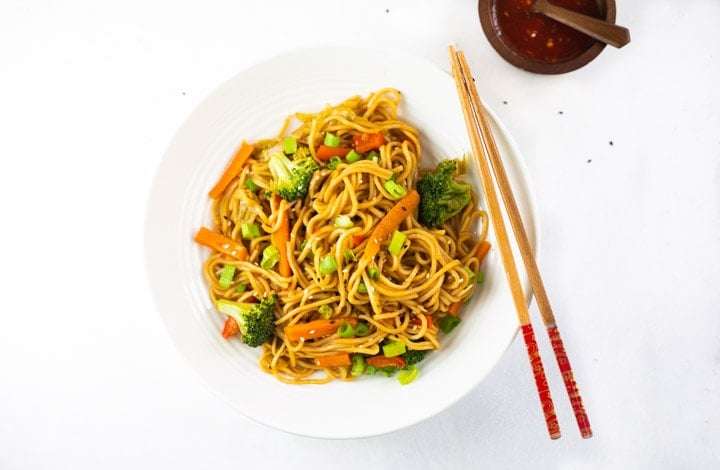
Instant Pot Vegetable Lo Mein
User Reviews
4.9
-
Prep Time
5 mins
-
Cook Time
20 mins
-
Total Time
25 mins
-
Servings
4
-
Calories
257 kcal
-
Course
Main Course
-
Cuisine
Indian-Chinese Fusion
Instant Pot Vegetable Lo Mein
Description
This Lo Mein recipe uses spaghetti noodles cooked in an Instant Pot with a sauce of vegetable broth, soy sauce, sesame oil, ginger, garlic, vinegar, chili paste, and brown sugar. The sauce ingredients blend umami, tang, heat, and sweetness. The pasta cooks directly in the sauce and broth, resulting in tender, flavorful noodles with slight stickiness from the one-pot method.
Vegetables like cabbage, carrots, bell peppers, and scallions go into the pot before pressure cooking, while broccoli is added after release to avoid overcooking. The noodles and vegetables deliver a balance of textures, with the broccoli steamed to freshness. Toppings of green onion and sesame seeds add aroma and a nutty note.
This dish is a convenient vegetarian option that can serve as a main or side. It’s adaptable to other vegetables like snap peas or mushrooms, and sauce can be customized to taste. The recipe guides cooking times according to noodle type and package instructions.
Notes suggest that noodles cooked this way have a slightly stickier texture compared to stovetop Lo Mein. Careful timing for pressure cooking and adding broccoli at the right moment preserves the desired vegetable firmness and noodle doneness.
Ingredients
- 8 ounces noodles Spaghetti works best (you can also use thicker chow mein or hakka noodles)
- 1/4 teaspoon salt adjust to taste
- 1/4 teaspoon black pepper adjust to taste
- sesame seeds for garnish, if desired
For the Sauce
- 2 cups vegetable broth (or water)
- 2 teaspoon sesame oil
- 1 teaspoon ginger paste
- 1 teaspoon garlic minced
- 3 tablespoon soy sauce
- 1 tablespoon vinegar I used rice vinegar
- 1-2 teaspoon red chili paste adjust to taste (I used sambal oelek)
- 1 teaspoon brown sugar
Vegetables
- 1/2 cup cabbage thinly sliced
- 1 carrot peeled and sliced into matchsticks
- 1/2 cup bell pepper thinly sliced
- 1/4 cup scallion white and green part divided, or green onion
- 1/2 cup broccoli cut into very small florets
Instructions
- In a bowl, add all the sauce ingredients. Whisk until evenly combined. Taste and adjust as needed.
- Add the noodles to the instant pot (break spaghetti in half).
- Pour the above sauce into the pot above the noodles. Add vegetables on top except broccoli. (check the video)
- Seal your Instant Pot and set to manual, high pressure, 4 minutes. (see note for cooking time)
- When Instant Pot is done cooking, do a quick pressure release.
- Open the lid and add the broccoli florets (make sure they are cut into small pieces). Stir the noodles with tongs several times, breaking up any that may have clumped together during cooking. Add salt and black pepper to taste. Close the lid for 5 minute so the broccoli get cooked (do not pressure cook in this step).
- Open the lid. Sprinkle some green onions and sesame seeds and serve.
Notes
- Noodles cook with sauce in the Instant Pot, producing a stickier texture than stovetop versions.
- Spaghetti noodles work best; avoid instant noodles as they do not hold up well to pressure cooking.
- Adjust pressure cook time to roughly half the noodles’ package cook time minus one minute.
- Add broccoli after pressure cooking to avoid overcooked, mushy florets, letting residual heat finish cooking them.
- Other vegetables like snap peas or mushrooms can be added to vary the recipe.
- Sauce can be adjusted to taste, with options to include hoisin or vegetarian oyster sauce.
Nutrition Information
Show DetailsNutrition Facts
Serving: 4Serving
Amount Per Serving
Calories 257 kcal
% Daily Value*
| Calories | 257kcal | 13% |
| Carbohydrates | 50g | 17% |
| Protein | 9g | 18% |
| Fat | 2g | 3% |
| Saturated Fat | 1g | 5% |
| Sodium | 760mg | 32% |
| Potassium | 292mg | 6% |
| Fiber | 3g | 12% |
| Sugar | 6g | 12% |
| Vitamin A | 3514IU | 70% |
| Vitamin C | 40mg | 44% |
| Calcium | 30mg | 3% |
| Iron | 1mg | 6% |
* Percent Daily Values are based on a 2,000 calorie diet.
User Reviews
Overall Rating
4.9
You'll Also Love