Irish Soda Bread
User Reviews
5
Irish Soda Bread
Description
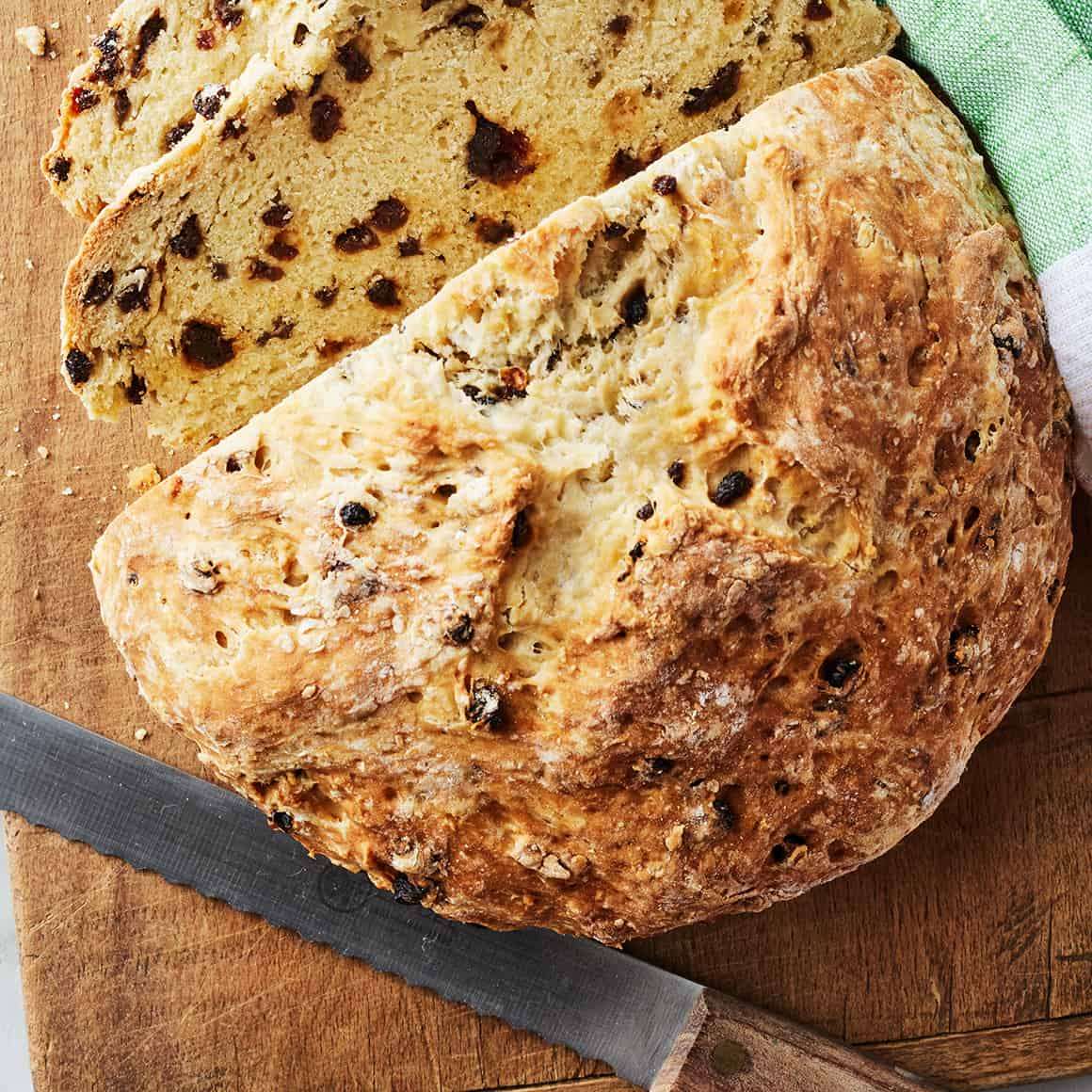
The Irish Soda Bread recipe blends buttermilk, egg, and all-purpose flour with baking soda as a leavening agent, eliminating the need for yeast. Cubed cold butter is worked into the flour until pea-sized pieces remain, contributing to a tender crumb and slight flakiness. Dried currants add bursts of sweetness throughout the dense dough. After kneading the soft dough and shaping it into a ball, it is scored with a cross to aid even cooking and allow steam to escape during baking. The bread is baked at 400°F until golden brown and hollow sounding, signaling readiness.
This bread offers a chewy crust and tender interior, accentuated by the sweetness of currants. It suits serving alongside soups, stews, or enjoyed toasted with butter. The use of buttermilk and baking soda provides a quick rise and subtle tang. The scored top is a notable feature traditionally associated with Irish soda bread.
If buttermilk isn’t available, a milk and lemon juice mixture can substitute by allowing it to curdle before mixing. Adjust the flour slightly if the dough becomes too sticky or dry during kneading to maintain the right consistency for shaping.
Ingredients
- 1⅓ cups buttermilk
- 1 egg large
- 3½ cups all-purpose flour spooned and leveled (438g), plus more for kneading
- 2 tablespoons cane sugar
- 1 teaspoon baking soda
- 1 teaspoon salt sea salt
- 3 tablespoons butter cubed, cold unsalted
- dried currant or raisin, scant 1 cup
Instructions
- Preheat the oven to 400°F and line a baking sheet with parchment paper.
- In a medium bowl, whisk together the buttermilk and egg.
- In a large bowl, whisk together the flour, sugar, baking soda, and salt. Add the cubed butter and toss to coat. Use your hands to work the butter into the flour mixture until it is in roughly pea-sized pieces. Add the currants and stir to coat in the flour.
- Make a well in the center of the dry ingredients and pour in the buttermilk mixture. Stir with a spatula or wooden spoon until a shaggy dough forms.
- Turn the dough out onto a lightly floured surface and knead to form it into a ball. The dough should be soft but not too sticky. If it is very sticky, knead in a bit more flour. If it feels dry, add a bit more buttermilk.
- Transfer the dough ball to the baking sheet and use a sharp knife to score the top with a ½-inch-deep cross. Bake for 45 to 50 minutes, or until the loaf is golden brown and it makes a hollow sound when you tap the bottom. If it is browning too quickly before it is cooked through, tent it with foil and continue to bake.
- Remove from the oven and allow to cool for 10 minutes on the baking sheet before transferring to a wire rack to continue cooling.
Notes
- If you lack buttermilk, mix milk or almond milk with 1 tablespoon plus 1 teaspoon fresh lemon juice and let sit 5 minutes to curdle for a substitute.
- Knead the dough lightly until it forms a ball; add flour if too sticky or buttermilk if too dry to reach a soft but workable texture.
- Tap the bottom of the baked loaf to ensure it sounds hollow, confirming it’s fully baked.
User Reviews
Overall Rating
5
You'll Also Love