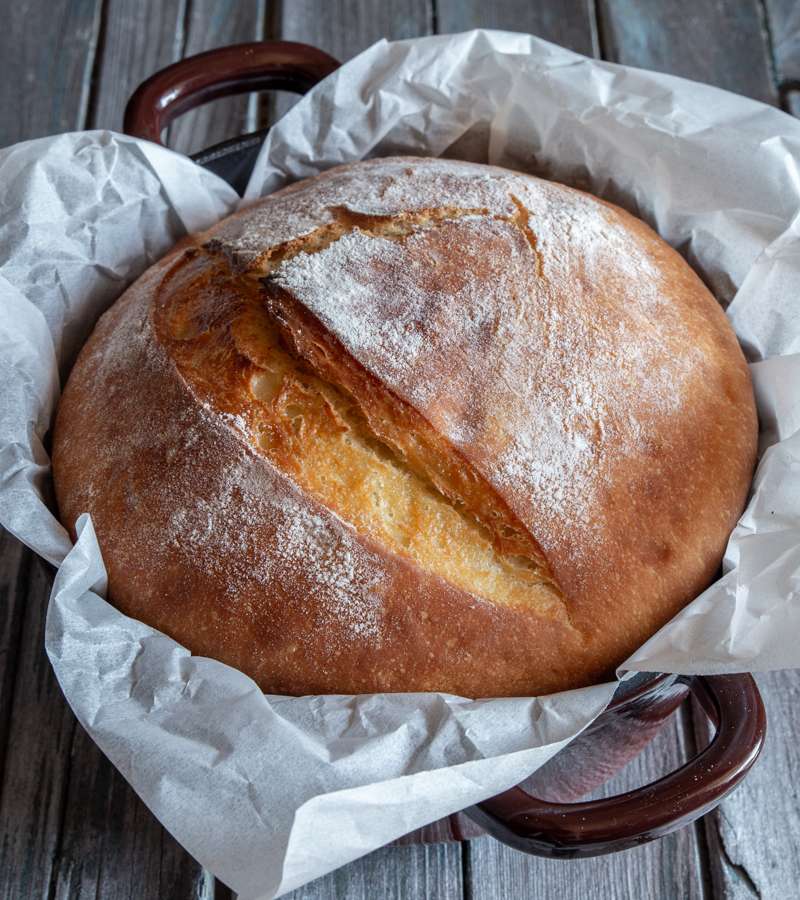
Italian Ricotta Parmesan Bread
User Reviews
5
Italian Ricotta Parmesan Bread
Description
The Italian Ricotta Parmesan Bread utilizes a blend of ricotta cheese and freshly grated Parmesan along with olive oil and active dry yeast, yielding a dough that is soft and elastic after kneading. After an initial rise in a warm place, the dough is shaped into a boule or log and allowed a second rise in an oiled, covered container, enhancing its shape and internal texture during baking. The French technique of scoring the top before baking encourages controlled expansion and a more appealing crust.
Baked at 400°F (200°C) in a covered dish, the bread gains a tender crumb with a lightly crisp crust enriched by the cheeses. The addition of ricotta adds moisture and a creamy note, while the Parmesan contributes subtle savory depth. This bread pairs well with soups, salads, or as a flavorful side to Italian dishes.
For best results, use lukewarm water between 98-105°F (36-40°C) to activate the yeast. Draining watery ricotta before use helps prevent excess moisture loosening the dough. Substituting part of the water with lukewarm milk is possible for a milkier flavor. Baking in an oven-safe covered dish retains moisture and shape. Flour types like rice or semolina can be used for dusting to prevent sticking.
Ingredients
- ½ cup water 150 grams, 2 tablespoons, lukewarm
- 1 teaspoon active dry yeast
- 2¼ cups all-purpose flour 300 grams, 1 tablespoon; or bread flour (at least 12% protein
- 3 tablespoons Parmesan Cheese freshly grated
- 1½ tablespoons olive oil
- ⅓ cup ricotta cheese 100 grams, 1 tablespoon
- 1 teaspoon salt
Instructions
- In the stand up mixer add the water and sprinkle the yeast on top, let it sit for about 10 minutes, then stir, add the flour, ricotta, parmesan, olive oil and salt on top. Start to knead on low speed #1 for about 1-2 minutes then increase the speed #2 and continue until the dough is soft and elastic, 6-8 minutes.
- Move the dough to a lightly floured flat surface and stretch and fold a few times, shape into a ball. Place the dough in a lightly oiled bowl, rolling the dough to cover lightly in oil, cover the bowl and place in a warm draft free area to rise until doubled in bulk, approximately 2 hours.
- Move the dough to a lightly floured flat surface, shape into desired shape, log or boule, place in a lightly oiled* dutch oven or oven safe covered casserole dish, sprinkle the top with flour (use rice or semolina if you don't have it then all purpose or bread will work, cover with plastic and let rise 1 hour.
- Pre-heat oven to 400F (200C).
- Score the bread, then place the covered pot in the oven and bake, for 25-30 minutes, remove the lid and continue to bake for 10-15 minutes or until the loaf is done. Immediately move the baked loaf to a wire rack to cool completely before serving. Enjoy!
*Or you can line the pot with parchment paper if you prefer.
Notes
- If your ricotta is watery, drain it in a sieve for 20-30 minutes to improve dough consistency.
- Lukewarm water temperature should be between 98-105°F (36-40°C) to properly activate yeast.
- You can substitute 1/4 to 1/2 of the water with lukewarm milk for a different flavor.
- Use an oven-safe covered dish or Dutch oven for baking to help the bread keep its shape.
Nutrition Information
Show DetailsNutrition Facts
Serving: 1loaf
Amount Per Serving
Calories 1447 kcal
% Daily Value*
| Calories | 1447kcal | 72% |
| Carbohydrates | 212g | 71% |
| Protein | 54g | 108% |
| Fat | 42g | 65% |
| Saturated Fat | 13g | 65% |
| Polyunsaturated Fat | 5g | 29% |
| Monounsaturated Fat | 20g | 100% |
| Cholesterol | 55mg | 18% |
| Sodium | 2636mg | 110% |
| Potassium | 501mg | 11% |
| Fiber | 10g | 40% |
| Sugar | 1g | 2% |
| Vitamin A | 500IU | 10% |
| Vitamin C | 1mg | 1% |
| Calcium | 384mg | 38% |
| Iron | 3mg | 17% |
* Percent Daily Values are based on a 2,000 calorie diet.
User Reviews
Overall Rating
5
You'll Also Love