Jajangmyeon (noodles in a black bean sauce)
User Reviews
4.7
-
Prep Time
20 mins
-
Cook Time
20 mins
-
Total Time
40 mins
-
Servings
4
-
Course
Main Course
-
Cuisine
Korean
Jajangmyeon (noodles in a black bean sauce)
Description
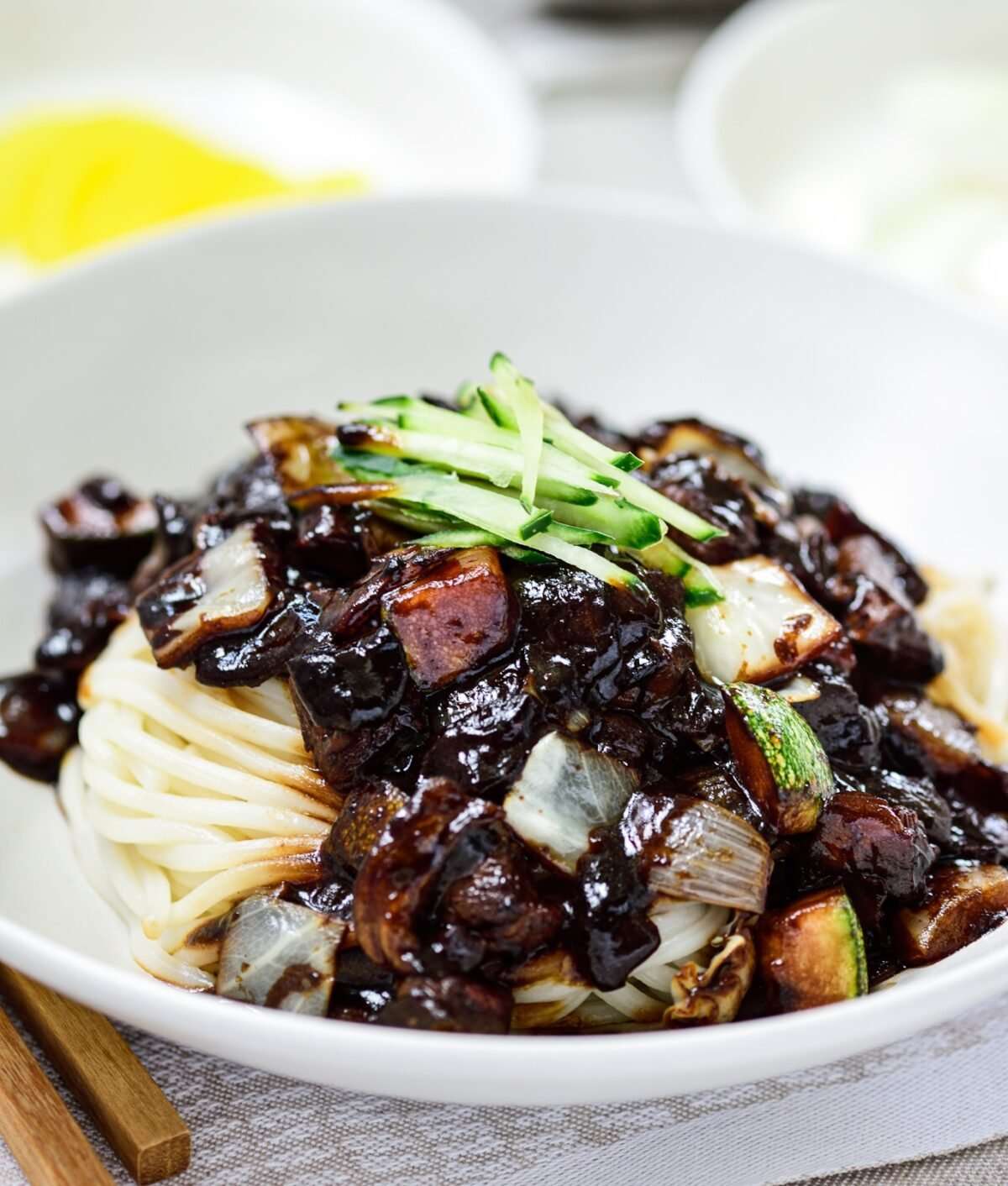
Jajangmyeon combines noodles—commonly fresh Korean jajangmyeon noodles or udon—with a rich black bean paste sauce. The sauce is made by frying Korean black bean paste with sugar and optional oyster sauce, then combining it with stir-fried pork shoulder marinated with rice wine, ginger, salt, and pepper. The pork and cubed vegetables including onion, cabbage, and zucchini are sautéed together and coated with the black bean sauce.
The sauce is thickened with a starch slurry made from potato or corn starch dissolved in chicken stock or water. This results in a glossy, thick sauce that clings well to the noodles, providing a balance of savory, slightly sweet, and umami flavors alongside tender meat and softened vegetables. Cooking the noodles separately ensures they are chewy and ready to be mixed with the hot sauce.
The dish is often served garnished with thin cucumber slices on top to add a contrasting freshness and crisp texture. It is a filling meal well-suited to those who enjoy savory, hearty noodle preparations with a distinctive fermented bean paste flavor.
When adding potatoes, dice smaller and add early since they take longer to cook or pre-cook them briefly in the microwave before combining. Adjust sauce thickness or volume by adding more stock or water with starch slurry according to preferred consistency.
Ingredients
- 3 to 4 ervings jajangmyeon noodles fresh, about 6 ounces per serving; or udon noodles
For the sauce
- 5 tablespoons Korean black bean paste some may be labeled as jjajang (짜장, aka Chunjang (춘장
- 2 tablespoons neutral cooking oil generic cooking oil
- 1 tablespoon sugar
- 1 tablespoon oyster sauce optional
- 1 cup chicken stock You can add 1/2 cup more for thinner, more liquidy/watery sauce. See note, or water
- 1 tablespoon potato or corn starch dissolved in 1/4 cup of chicken stock or water
Meat
- 8 to 10 ounces pork shoulder or lean cut if preferred, preferably with some visible fat, e.g. Boston butt
- 1 teaspoon ginger grated
- 1 tablespoon rice wine or mirin
- ⅛ teaspoon salt
- ⅛ teaspoon black pepper
- 2 tablespoons neutral cooking oil generic cooking oil
- 1 tablespoon soy sauce
Vegetables
- 1 extra large onion See note if adding potatoes, or 2 medium onions, 12 to 14 ounces
- 8 ounces green cabbage
- 8 ounces zucchini
- 1 small cucumber for garnish, optional
Instructions
- Have a pot of water ready to cook the noodles. Turn the heat on when you start cooking the meat. This way you will have the boiling water ready, for cooking the noodles, by the time the sauce is done.
- Prepare the pork and vegetables by cutting them into 1/2 - 3/4 inch cubes. Marinate the pork with a tablespoon of rice wine (or mirin), ginger, salt and pepper while preparing the vegetables.
- Add the black bean paste to a small saucepan with the oil, sugar, and the optional oyster sauce. Fry it over medium heat for 2 - 3 minutes, stirring constantly.
- Heat a large pan with 2 tablespoons of cooking oil over medium high heat. Add the pork and stir fry until no longer pink, adding a tablespoon of soy sauce half way through.
- Add the onion and cook until soft, stirring occasionally.
- Add the cabbage and zucchini and continue to stir fry until vegetables are softened.
- Stir in the black bean paste and mix everything together until all the meat and vegetables are coated well with the paste.
- Mix everything together until all the meat and vegetables are coated well with the paste. If you like ganjjajang, you can stop here and skip the next two steps. See note.
- Pour in the stock (or water) and bring it to a boil. Cook for 3 to 4 minutes.
- Stir in the starch slurry and cook briefly until the sauce is thickened. Add more sugar to taste.
- Add the noodles in the boiling water. Cook according to the package instructions and drain. Do not overcook. The noodles should have a firm bite to them (al dente). Place a serving size of noodles in each bowl. Spoon the sauce over the noodles and garnish with the optional cucumber matchsticks. Alternatively, you can serve over cooked rice.
Notes
- If adding potatoes, dice them smaller than other vegetables and add with onions, or pre-cook briefly in the microwave to ensure even cooking.
- Ganjajang is a drier variant of the sauce made without adding stock or water but produces fewer servings.
- To make the sauce thinner and more liquid, add an extra 1/2 cup stock or water along with additional starch slurry according to desired consistency.
User Reviews
Overall Rating
4.7
You'll Also Love