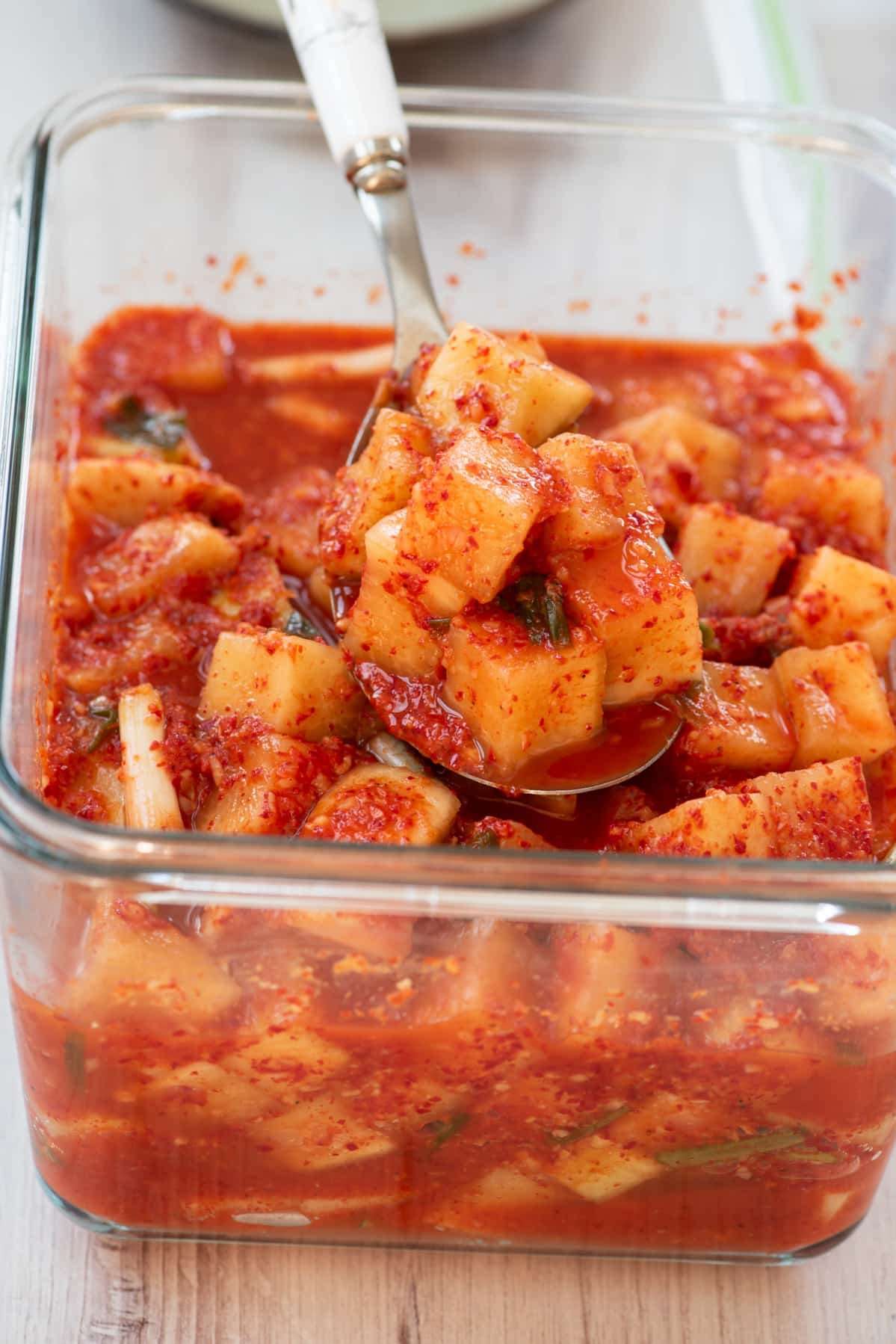
Kkakdugi (Cubed Radish Kimchi)
User Reviews
4.7
Kkakdugi (Cubed Radish Kimchi)
Description
Kkakdugi uses firm Korean radishes cut into roughly 3/4 to 1-inch cubes that shrink during salting and fermenting. The radish cubes are salted with coarse sea salt and allowed to soften while releasing liquid, then drained without rinsing to retain moisture. A mixture of spicy gochugaru chili powder, anchovy fish sauce, fermented salted shrimp, minced garlic, grated ginger, sugar, and optional Asian pear and cooked rice is combined with the radish cubes.
The seasonings incorporate umami, heat, and slight sweetness that ferment together over time to create the signature sharp and fresh flavor with a crisp radish bite. Kitchen gloves ensure even coating and protect hands from chili irritation. This kimchi is traditionally stored in a large airtight container for fermenting and later serving.
Selecting firm, heavy radishes with smooth skin ensures good texture. Salt adjustments depend on salt type used, and substitutions like additional fish sauce or soup soy sauce can be made if salted shrimp is unavailable. Blending optional fruit and rice with garlic and ginger creates a smooth seasoning paste that blends evenly with radishes.
Ingredients
- 5.5 pounds Korean radish See note 1, mu, 무
- 3 tablespoons coarse sea salt less if using finer salt - See note2, Korean, 굵은소금
- 3 scallion cut into about 1-inch lengths, or 4 scallions
Seasonings
- 1/2 cup gochugaru use more or less to taste (a tablespoon or 2, Korean chili powder, 고추가루
- 2 tablespoons anchovy fish sauce See note 3, myulchiaekjeot (멸치액젓
- 3 tablespoons saeujeot See note 3, salted and fermented shrimp, 새우젓
- 3 tablespoons garlic see note 4, minced, 8-9 plump cloves
- 1 teaspoon ginger see note 4, grated, about 1-inch thumb size
- 1 tablespoon sugar You may need more if your radish is bitter, adjust to taste or omit
- 1/2 Asian pear see note 4, or apple, optional
- 2 tablespoon rice see note 4, cooked, heated if hardened, optional
Kitchen Tools
- A large mixing bowl 7 – 8 qt
- a large colander
- kitchen gloves
- 1 gallon or little smaller airtight container or jar
Instructions
- Clean the radishes by scrubbing with a brush and/or scratching off the stubborn impurities with a small knife. Peel the skin only if necessary. Cut into 3/4 to 1-inch thick discs, and then cut each disc into 3/4 to 1-inch cubes, placing in a large bowl. (The cubes will look big but will shrink during the salting and fermentation processes.)
- Sprinkle the salt over the radishes and toss well to coat evenly. Let sit for about an hour, until the radishes have slightly softened and released some liquid. Flip them over once or twice during salting.
- Drain the radishes in a colander and discard the liquid. Do NOT rinse. (The radishes still contain sufficient water content that will be released during the fermentation process.)
- Place the radishes back in the bowl. Add the gochugaru and mix well, rubbing the radishes by hand (wear kitchen gloves). Add the remaining seasoning ingredients and mix well to evenly distribute the seasonings. Taste a little bit of the seasoning. It should be a little too salty to eat as is. Add some salt if necessary. Toss the scallions in gently. (The radishes will be a little dry at this point, but they will release water during the fermentation process.)
- Store in an airtight container or jar. Before closing the lid, press the kkakdugi down hard with your hand to remove air pockets between the radish cubes.
- Leave it out at room temperature for two to three days, depending on your room temperature and how fast you want your kimchi to ripe. Then, store in the fridge. Kkakdugi tastes best after a week or two in the fridge to fully develop the flavors. It maintains great flavor and texture for several weeks.
Notes
- Choose firm, smooth-skinned Korean radishes for the best texture in kkakdugi.
- Substitute less coarse kosher salt or canning salt if Korean coarse salt isn’t available, adjusting quantity accordingly.
- If salted shrimp is unavailable, increase anchovy fish sauce or use a combination of salt and Korean soup soy sauce for seasoning.
- Optional fruit and cooked rice can be blended with garlic and ginger along with some water to create a smooth seasoning paste.
User Reviews
Overall Rating
4.7
You'll Also Love