Liang Fen (Mung Bean Jelly Noodles, 凉粉)
User Reviews
5
Liang Fen (Mung Bean Jelly Noodles, 凉粉)
Description
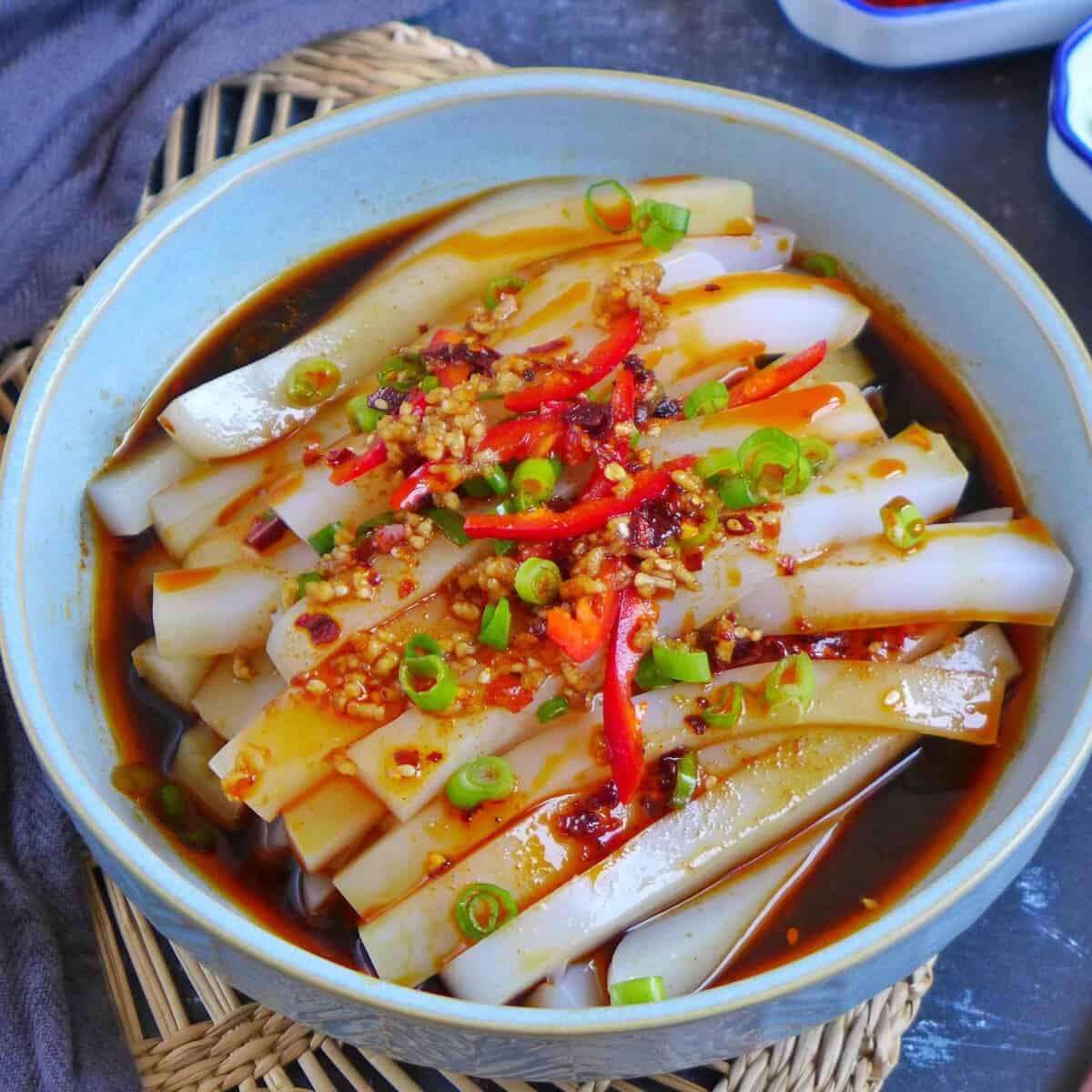
To make Liang Fen, mung bean starch is suspended in water and slowly stirred into heated water on low heat until the mixture thickens and becomes translucent. This thickened mass is poured into a container to cool and solidify into a white, gelatinous block. The jelly is then unmolded and cut into thin strips resembling noodles.
The sauce combines minced garlic, light soy sauce, black rice vinegar, sesame oil, and chili elements such as chili oil or spicy black bean sauce. Fresh scallions and optional fresh chili slices add texture and aromatic heat. The cold liang fen noodles tossed with this dressing create a refreshing dish with a mild chew from the jelly and a layered flavor profile of salty, sour, spicy, and aromatic components.
Substitutions like pea starch for mung bean starch are acceptable, but cornstarch, potato starch, and similar are not suitable to achieve the desired jelly texture. Pre-made chili oil or shop-bought spicy sauces can substitute homemade chili oil. The noodles can be cut thin by knife or specialized tools.
Ingredients
For the jelly noodles
- ½ cup mung bean starch see note 1
- 3½ cup water divided
For the sauce
- 2 cloves garlic minced
- 1½ tablespoon soy sauce light
- 1½ tablespoon black rice vinegar e.g. chinkiang vinegar
- ½ teaspoon sesame oil
- Chili oil or spicy black bean sauce, to taste (see note 2, Chinese style
- salt to taste
- scallions finely chopped
- fresh chilli sliced (optional
Instructions
Make the jelly
- In a bowl, mix mung bean starch with ½ cup of water until fully integrated.
- Heat up the remaining 3 cups of water in a saucepan until you see lots of bubbles start to appear at the bottom (Keep a close eye to avoid overheating it).
- Turn the heat to low. Stir the starch mixture well, then pour into the water. Stir constantly with a spatula for 1-2 minutes.
- When you see big air bubbles coming up to the surface and the mixture becoming quite thick and sticky but still runny, remove the saucepan from the heat (watch the video below for reference).
- Pour the translucent mass into a heat-proof container. Leave it to cool uncovered. Then cover with a lid and store in the fridge until it turns into a block of white, solid jelly. It takes 2-3 hours.
Cut the noodles
- Put one hand over the jelly, then flip the container upside down. It will slide off onto your hand easily. Put the block onto a chopping board.
- Use a knife to cut the jelly into noodle strips of your preferred thickness (See note 3 for an alternative method). Transfer them to a serving plate/bowl.
Season the dish
- In a small bowl, mix minced garlic, light soy sauce, black rice vinegar, sesame oil, chili oil and salt (if needed). Pour it over the jelly noodles. Top with scallions and fresh chili (if using).
Make ahead
- You can keep the jelly refrigerated for up to 3 days. Slice and season whenever you want to serve the dish.
- Be aware that the jelly will become firmer and more brittle over time. So if you plan to serve it after more than 1 day, increase the water by ½ cup when cooking it.
Notes
- Mung bean starch can be replaced with pea starch, but other starches like cornstarch or potato starch are unsuitable for making the jelly.
- If homemade chili oil is not available, shop-bought chili sauces such as Laoganma spicy black bean sauce can be used as alternatives.
- You may cut the jelly using a knife or a dedicated jelly scraper to create thin noodle strips.
Nutrition Information
Show DetailsNutrition Facts
Serving: 2servings
Amount Per Serving
Calories 200 kcal
% Daily Value*
| Serving | 1serving | |
| Calories | 200kcal | 10% |
| Carbohydrates | 30g | 10% |
| Protein | 2g | 4% |
| Fat | 8g | 12% |
| Saturated Fat | 1g | 5% |
| Polyunsaturated Fat | 33g | 194% |
| Monounsaturated Fat | 2g | 10% |
| Trans Fat | 0.1g | 5% |
| Sodium | 822mg | 34% |
| Potassium | 41mg | 1% |
| Fiber | 0.2g | 1% |
| Sugar | 1g | 2% |
| Vitamin A | 0.3IU | 0% |
| Vitamin C | 1mg | 1% |
| Calcium | 21mg | 2% |
| Iron | 0.4mg | 2% |
* Percent Daily Values are based on a 2,000 calorie diet.
User Reviews
Overall Rating
5
You'll Also Love