Lupini Beans and Olives, An Italian Christmas Tradition (How to Cook & Eat Lupini)
User Reviews
4.9
Lupini Beans and Olives, An Italian Christmas Tradition (How to Cook & Eat Lupini)
Description
This recipe focuses on preparing lupini beans, a traditional Italian snack especially popular during Christmas. Starting with dried beans, the beans are soaked overnight in water to rehydrate. After rinsing, they are boiled until tender, then transferred to fresh water for repeated rinsing several times a day across about five days. This extensive rinsing cycle is crucial to leach out the naturally occurring bitterness that would otherwise make the beans unpleasant.
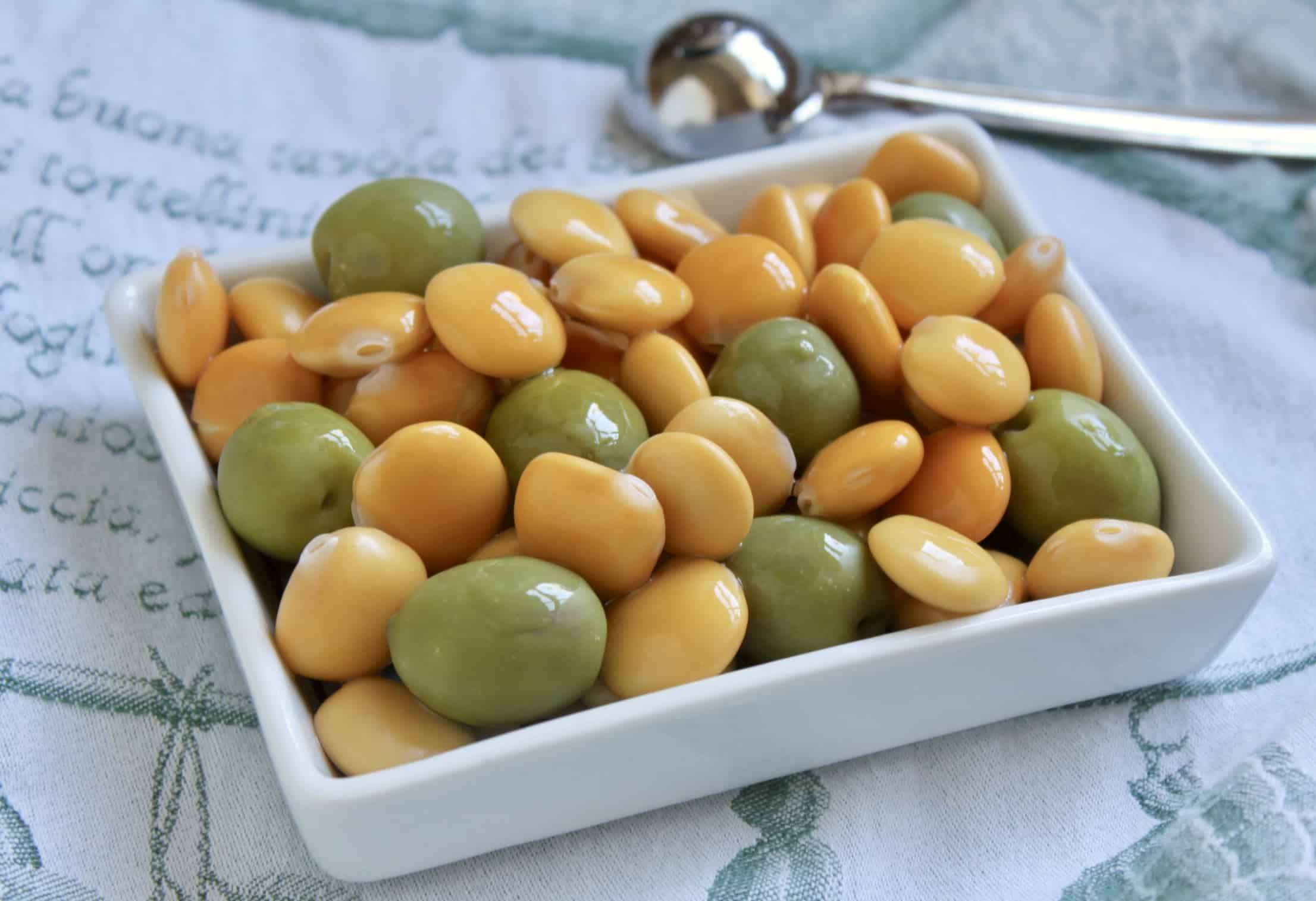
Once processed, the lupini beans are enjoyed alongside olives, complementing their firm texture and mild flavor. The soaking and rinsing stages require attention and patience, but the result is a unique legume snack celebrated in Italian culture. These prepared beans can be stored in salted water in the refrigerator for up to two weeks without olives.
Patience in changing the soaking water frequently and tasting during the later rinsing days helps ensure optimal flavor and safety. This method yields a tender bean ready to be served simply or incorporated into festive dishes.
Ingredients
- 14 oz lupini beans dried beans (look for beans without blemishes)
- 1 Tbsp salt Kosher or sea salt
- 20 oz olive green (like Castelvetrano, with pits are traditionally used in Italy) or black olives, with the liquid
Instructions
- Rinse and sort (take out any bad looking beans) the lupini, then soak them overnight, a minimum of 12 hours. Make sure to put a few inches of water above the beans so they don't dry out when you're trying to rehydrate them.
- Rinse the beans, then put them into a large pot with fresh water, covering the beans with at least a couple inches of water above them.
- Bring to a boil, then reduce heat and simmer for 45-50 minutes, occasionally stirring with a wooden spoon.
- Remove from heat, drain, and place into a large bowl and fill to cover with water.
- At this point, just keep rinsing the lupini for about 30 seconds at a time, 3 to 4 times a day, for about 5 days (fewer, if you change the water more often.)
- The bowl can be kept on the counter; it does not need to be refrigerated.
- I kept track of how many times I changed the water over 5 days, and the total count was 18. Yes, this is necessary or you will have bitter beans.
- At the end of the fifth day, taste a bean, or part of one, to check for bitterness. The bean will not taste good/sweet yet, but you are only checking for bitterness, nothing else. If the lupini beans are still bitter, continue to change the water until they are no longer bitter.
- Next in the process is to add some salt, probably about one teaspoon of Kosher salt to the lupini in the water (do not drain the beans after this.) You can also add a can of green (this is the Italian style) or black olives, liquid and all (not under oil). Stir well and taste after about three hours. If it needs more salt, add some. If you make the lupini too salty, just add a little more water.
- DO NOT CHANGE THE WATER ANYMORE and refrigerate, once the salt has been added.
- Now the lupini are ready to eat! Use a mini sieve or slotted spoon to put some lupini and olives into a serving bowl.
Notes
- Lupini beans can be stored in salted water in the refrigerator for up to two weeks without the addition of olives.
Nutrition Information
Show DetailsNutrition Facts
Serving: 20Serving
Amount Per Serving
Calories 113 kcal
% Daily Value*
| Serving | 1 | |
| Calories | 113kcal | 6% |
| Carbohydrates | 13g | 4% |
| Protein | 4g | 8% |
| Fat | 6g | 9% |
| Saturated Fat | 1g | 5% |
| Polyunsaturated Fat | 1g | 6% |
| Monounsaturated Fat | 3g | 15% |
| Sodium | 796mg | 33% |
| Potassium | 186mg | 4% |
| Fiber | 4g | 16% |
| Sugar | 2g | 4% |
| Vitamin A | 125IU | 3% |
| Vitamin C | 1mg | 1% |
| Calcium | 36mg | 4% |
| Iron | 1mg | 6% |
* Percent Daily Values are based on a 2,000 calorie diet.
User Reviews
Overall Rating
4.9
You'll Also Love