Orange Marmalade Recipe
User Reviews
4.7
Orange Marmalade Recipe
Description
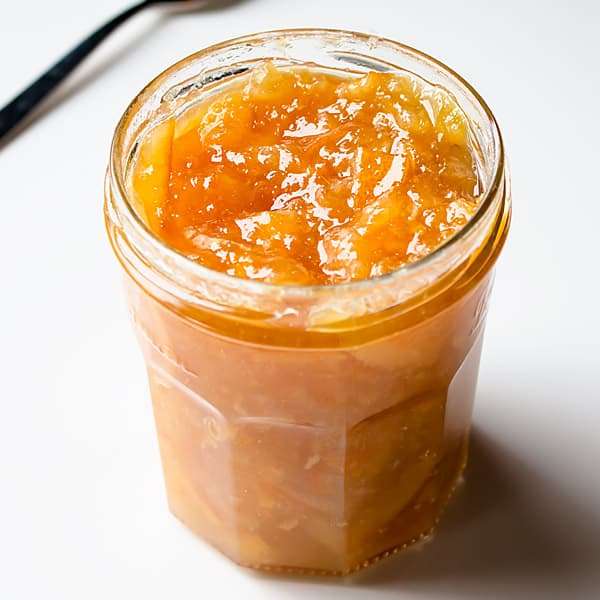
The Orange Marmalade recipe depends on cleansing and slicing whole organic oranges, including the peels, to capture the fruit's natural bitterness and aroma. Sugar is layered over the slices and left to macerate, optionally overnight. Cooking begins over medium to high heat, stirring regularly, until a rolling boil forms, then reduced to maintain consistent simmering as the marmalade thickens.
Blending with a hand blender creates a uniform consistency. The finished marmalade is identified by translucent fruit skins and a set texture, tested by cooling a small amount on a plate to see if it gels. Liquid such as rum or vodka is added for long-term preservation by inhibiting mold growth.
This marmalade yields about three eight-ounce jars. It's common to enjoy it as a breakfast spread on toast or use it in baking or cooking where citrus preserves add bright, sweet, and slightly bitter notes.
Notes underline the importance of using unwaxed oranges to avoid pesticides in the peel since the skin is included in the preserve. The addition of a few drops of liquor also serves a preserving function. The yield is around 100 teaspoons total, estimating one teaspoon per serving, aiding portioning and storage planning.
Ingredients
For the jam:
- 2.2 Pounds oranges see Notes, organic, unwaxed
- 3 ¾ cup sugar
You will also need...
- a few drops liquor *see Notes
- jars
- Labels
Instructions
- Wash your oranges well. Cut off ends.
- Cut in half and into thin slices.
- Place the orange slices in a pot and pour sugar over the oranges.
- Combine everything well so that the sugar melts and the fruit slices are covered with it.
- Optional: Keep to macerate overnight. This can result in a better marmalade.
- Keep your marmalade over a medium to high flame and stir occasionally. Bring to a rolling boil.
- Cook down the marmalade over low to medium heat and stir occasionally to make sure nothing sticks to the bottom.
- Reduce marmalade to the desired consistency with a hand blender.
- The marmalade is ready when the fruit skin appears translucent and cooked. Test if the marmalade is set by dropping some of it into an ice-cold plate. If the marmalade is not running, it is set. You can test setting with a thermometer too (*see post above for details). If it runs, keep it for some more time on the heat and repeat the test until it doesn't run anymore.
- Pour the preserve into clean sterilized jars up to the rim.
- Pour a few drops of liquor (vodka, rum,...) into the lid to kill the remaining bacteria. Close jam with lid tight. Turn upside down quickly to create a vacuum.
- Clean jar on the outside with sponge and label with marmalade name and date.
- Store in a cool and dry place until further use. Keep in the fridge once opened.
Notes
- Use organic unwaxed oranges to ensure the peel is safe and pesticide-free.
- Add a few drops of strong liquor like rum or vodka to each jar cap to help prevent mold during storage.
- This recipe makes approximately three 8-ounce jars, totaling around 100 teaspoons of marmalade.
Nutrition Information
Show DetailsNutrition Facts
Serving: 100Teaspoons
Amount Per Serving
Calories 34 kcal
% Daily Value*
| Serving | 9g | |
| Calories | 34kcal | 2% |
| Carbohydrates | 9g | 3% |
| Protein | 1g | 2% |
| Fat | 1g | 2% |
| Saturated Fat | 1g | 5% |
| Sodium | 1mg | 0% |
| Potassium | 18mg | 0% |
| Fiber | 1g | 4% |
| Sugar | 8g | 16% |
| Vitamin A | 22IU | 0% |
| Vitamin C | 5mg | 6% |
| Calcium | 4mg | 0% |
| Iron | 1mg | 6% |
* Percent Daily Values are based on a 2,000 calorie diet.
User Reviews
Overall Rating
4.7
You'll Also Love