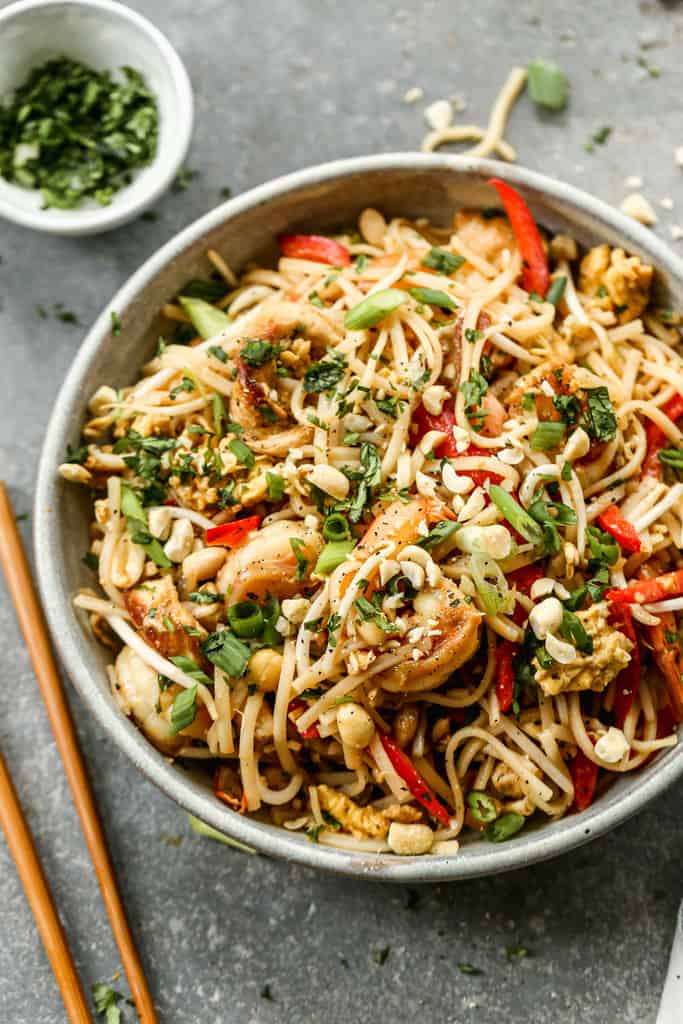
Pad Thai
User Reviews
5
-
Prep Time
15 mins
-
Cook Time
15 mins
-
Total Time
30 mins
-
Servings
4
-
Calories
627 kcal
-
Course
Main Course
-
Cuisine
Thai
Pad Thai
Description
This Pad Thai recipe starts with flat rice noodles cooked until just tender and rinsed to stop cooking. The distinctive sauce blends fish sauce, low-sodium soy sauce, brown sugar, rice vinegar (or optionally tamarind paste), sriracha, and optional creamy peanut butter for a balanced mix of salty, sweet, tangy, and mildly spicy flavors. Protein choice is flexible: shrimp cooks rapidly to a pink finish; chicken or tofu can substitute for a different texture or dietary preference.
In the wok, garlic and bell pepper sauté first, followed by the protein. Eggs are scrambled separately in the wok space and incorporated as small pieces. The noodles, sauce, fresh bean sprouts, and dry roasted peanuts are then added and quickly tossed together to coat everything evenly. Garnishes of chopped green onions, extra peanuts, fresh cilantro, and lime wedges add brightness, crunch, and acidity, enhancing the layers of flavor.
Preparation tips include making the sauce ahead and chopping ingredients early to streamline cooking. Tamarind paste can replace vinegar for a more authentic tang. Peanut butter enriches the sauce's creaminess subtly. Gluten-free soy sauce adapts it for gluten sensitivity. The dish is best served immediately to retain crispness and freshness, with leftovers storable for 2–3 days refrigerated.
Ingredients
- 8 ounces rice noodles flat
- 3 Tablespoons neutral cooking oil generic cooking oil
- 3 cloves garlic , minced
- 8 ounces Shrimp cut into small pieces, uncooked, or chicken or extra-firm tofu
- 2 egg
- 1 cup bean sprouts fresh
- 1 red bell pepper , thinly sliced
- 3 green onions , chopped
- 1/2 cup peanuts dry roasted
- 2 lime
- 1/2 cup cilantro chopped, fresh
For the Pad Thai sauce:
- 3 Tablespoons fish sauce
- 1 Tablespoon soy sauce low-sodium
- 5 Tablespoons light brown sugar
- 2 Tablespoons rice vinegar , or Tamarind Paste*
- 1 Tablespoon sriracha hot sauce , or more, to taste
- 2 Tablespoons peanut butter optional, creamy
Instructions
- Cook noodles according to package instructions, just until tender. Rinse under cold water.
- Make sauce by combining sauce ingredients in a bowl. Set aside.
- Stir Fry:: Heat 1½ tablespoons of oil in a wok or large saucepan over medium-high heat. Add the shrimp, chicken or tofu, garlic and bell pepper. The shrimp will cook quickly, about 1-2 minutes on each side, or until pink. If using chicken, cook until just cooked through, about 3-4 minutes, flipping only once.
- Push everything to the side of the pan. Add a little more oil and add the beaten eggs. Scramble the eggs, breaking them into small pieces with a spatula as they cook.
- Add noodles, sauce, bean sprouts and peanuts to the wok (reserving some peanuts for topping at the end). Toss everything to combine.
- Garnish the top with green onions, extra peanuts, cilantro and lime wedges. Serve immediately!
- Store leftovers in the fridge and enjoy within 2-3 days.
Notes
- Prepare protein and chop vegetables in advance to save time during cooking.
- Use tamarind paste instead of rice vinegar for a more traditional Pad Thai tang.
- Omit eggs and use tofu plus soy sauce for a vegan or vegetarian version.
- Adding peanut butter to the sauce can increase creamy texture and depth of flavor.
- Use gluten-free soy sauce to make the recipe suitable for gluten-sensitive diets.
Nutrition Information
Show DetailsNutrition Facts
Serving: 4Serving
Amount Per Serving
Calories 627 kcal
% Daily Value*
| Calories | 627kcal | 31% |
| Carbohydrates | 77g | 26% |
| Protein | 22g | 44% |
| Fat | 27g | 42% |
| Saturated Fat | 4g | 20% |
| Polyunsaturated Fat | 6g | 35% |
| Monounsaturated Fat | 15g | 75% |
| Trans Fat | 0.1g | 5% |
| Cholesterol | 153mg | 51% |
| Sodium | 1867mg | 78% |
| Potassium | 533mg | 11% |
| Fiber | 5g | 20% |
| Sugar | 20g | 40% |
| Vitamin A | 1406IU | 28% |
| Vitamin C | 57mg | 63% |
| Calcium | 117mg | 12% |
| Iron | 2mg | 11% |
* Percent Daily Values are based on a 2,000 calorie diet.
User Reviews
Overall Rating
5
You'll Also Love