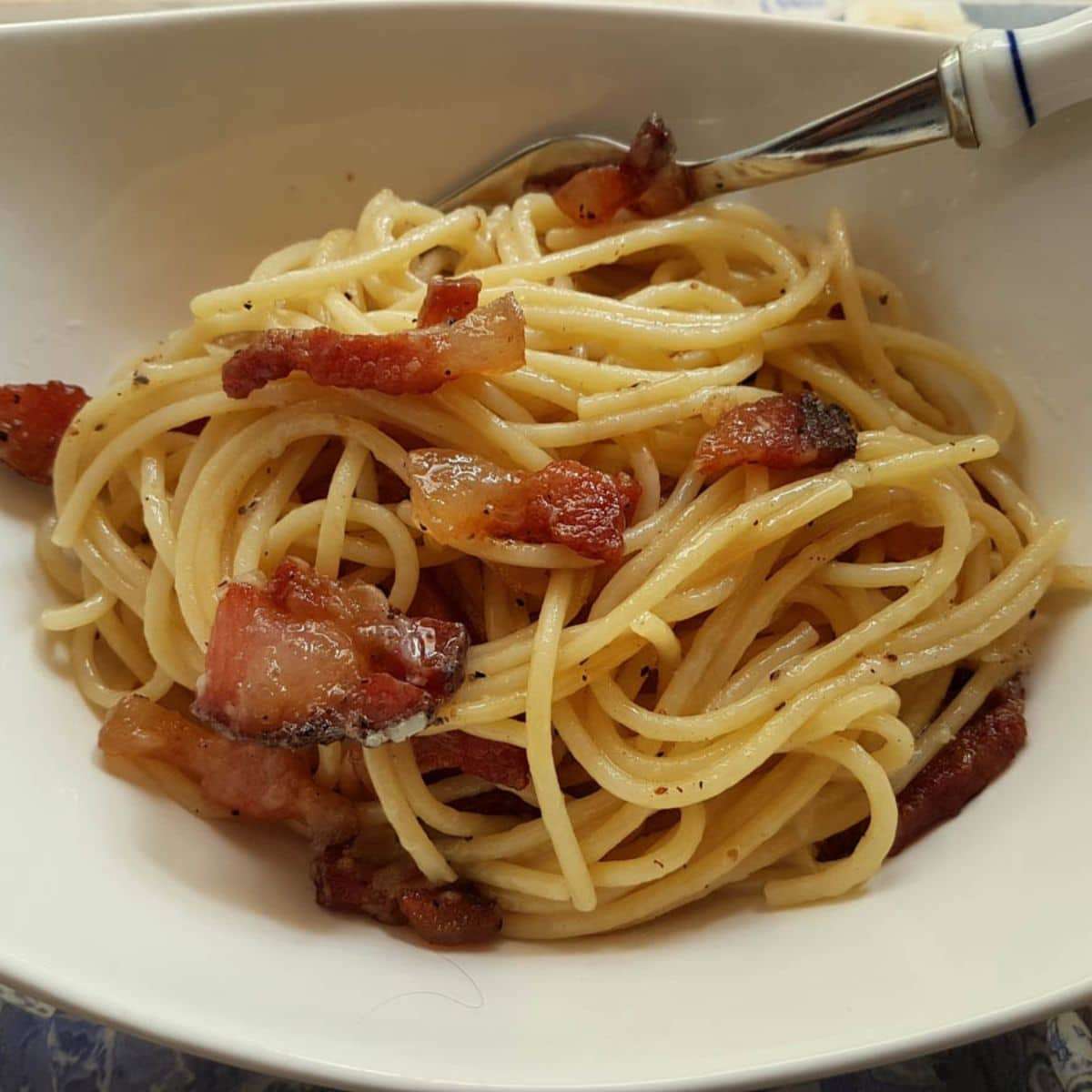
Pasta alla Gricia (Authentic Roman Recipe)
User Reviews
5
-
Prep Time
10 mins
-
Cook Time
20 mins
-
Total Time
30 mins
-
Servings
4
-
Calories
891 kcal
-
Course
Main Course
-
Cuisine
Italian
Pasta alla Gricia (Authentic Roman Recipe)
Description
Pasta alla Gricia (Authentic Roman Recipe) is a traditional Italian pasta dish spotlighting guanciale, pecorino romano cheese, and black pepper. The guanciale is cut into strips and cooked in olive oil until crisp, which renders flavorful fat that forms the base of the sauce. Spaghetti or rigatoni is cooked al dente and then combined with the guanciale and some reserved pasta water to create a glossy, silky sauce. Pecorino romano cheese adds a sharp, salty flavor that complements the pig cheek and sharp black pepper.
The cooking method focuses on crisping the guanciale and efficiently incorporating starchy pasta water to bind the sauce without adding cream. The result is a smooth coating that clings to each pasta piece for full flavor in every bite. Adjusting the crispiness of the guanciale lets you tailor the texture between tender and crunchy.
This dish is a rich, hearty choice for a lunch or dinner that celebrates Italian culinary tradition with simple ingredients. Rigatoni or spaghetti are typical pasta choices, but any shape can work depending on preference. Pair it with a glass of red wine or a light salad to balance the rich flavors.
Leftovers store well in the refrigerator up to three days. When reheating, add a splash of water to loosen the sauce if it has thickened. Variations using pancetta or Parmigiano Reggiano can be substituted but will alter the authentic taste.
Ingredients
- 14 oz spaghetti or rigatoni
- 7 oz Guanciale cut into strips, or pancetta
- 5 oz pecorino romano grated, or parmigiano reggiano
- 1-2 tablespoon extra virgin olive oil
- salt
- black pepper to taste
Instructions
- Preheat a frying pan or iron skillet, then add the extra virgin olive oil and guanciale.
- Fry the strips of guanciale in the skillet until they're crisp and golden.
- As the guanciale cooks, fill a separate pot with water and place it over high heat for the pasta. Once it starts to boil, add salt, then let the water return to a boil. Cook the pasta in the boiling salted water until it's al dente, following the package instructions for timing. Before draining the pasta, set aside a cup of the pasta water for later use.
- Stir in about a ⅓ cup of the reserved pasta water into the skillet with the guanciale, mixing until it's combined. This starchy water will combine with the rendered fat from the guanciale to form a 'sauce'.
- Lower the heat on the skillet, then mix the pasta into the skillet with guanciale until it's well incorporated with the sauce.
- If the sauce appears too dry, add a splash of the reserved pasta water to thin it out. If the sauce is too thin, allow it to reduce on the stove for a minute or so. Note: Adding the Pecorino cheese in the next step will slightly thicken the sauce.
- Remove the skillet from the heat, add half of the grated Pecorino cheese and some ground black pepper. Stir well to combine.
- Serve the pasta immediately, with a final sprinkling of the remaining grated Pecorino cheese on top.
Notes
- The crispiness of the guanciale can be adjusted based on personal preference; some prefer it tender while others like it crispy.
- Pancetta or Parmigiano Reggiano can be substituted for guanciale or pecorino romano but will change the traditional flavor.
- Any type of pasta may be used, but spaghetti or rigatoni are typical for this dish.
- Leftover pasta can be refrigerated in an airtight container for up to three days and reheated with a splash of water to maintain sauce consistency.
Nutrition Information
Show DetailsNutrition Facts
Serving: 4Serving
Amount Per Serving
Calories 891 kcal
% Daily Value*
| Calories | 891kcal | 45% |
| Carbohydrates | 75g | 25% |
| Protein | 30g | 60% |
| Fat | 52g | 80% |
| Saturated Fat | 21g | 105% |
| Polyunsaturated Fat | 1g | 6% |
| Monounsaturated Fat | 6g | 30% |
| Cholesterol | 90mg | 30% |
| Sodium | 857mg | 36% |
| Potassium | 252mg | 5% |
| Fiber | 3g | 12% |
| Sugar | 3g | 6% |
| Vitamin A | 147IU | 3% |
| Calcium | 398mg | 40% |
| Iron | 2mg | 11% |
* Percent Daily Values are based on a 2,000 calorie diet.
User Reviews
Overall Rating
5
You'll Also Love