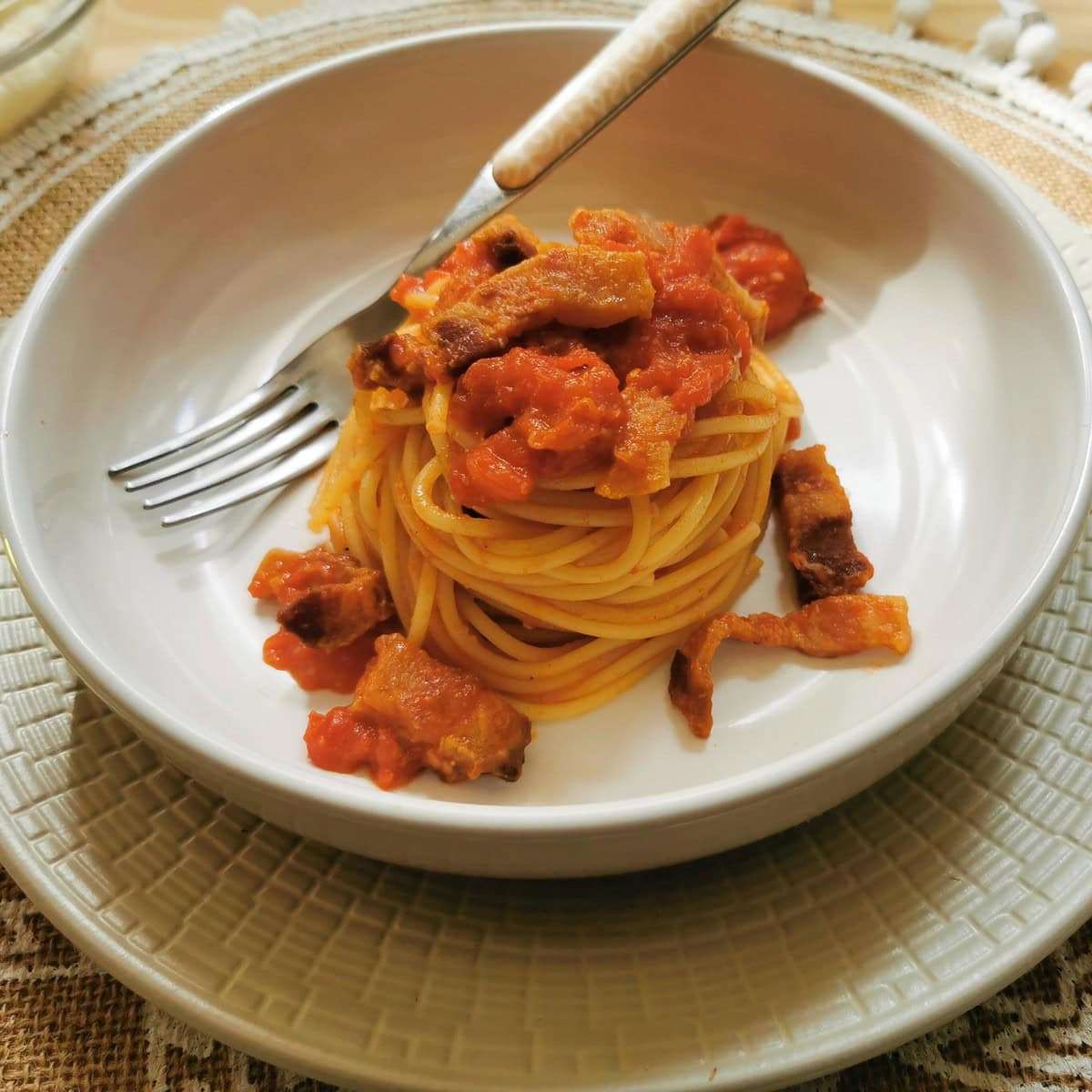
Pasta all’Amatriciana
User Reviews
5
-
Prep Time
20 mins
-
Cook Time
30 mins
-
Total Time
50 mins
-
Servings
4
-
Calories
808 kcal
-
Course
Main Course
-
Cuisine
Italian
Pasta all’Amatriciana
Description
This recipe for Pasta all’Amatriciana features slices of cured pork cheek, traditionally Guanciale di Amatrice, browned in olive oil until crisp and rendered. The pork fat provides rich flavor to the sauce. After removing most of the fat, the pan is seasoned with peperoncino flakes briefly to release fragrance, then deglazed with dry white wine to lift browned bits and add acidity.
Peeled San Marzano tomatoes are added and simmered to break down, creating a bright tomato sauce with spicy warmth from peperoncino. The pasta, typically spaghetti or bucatini, is boiled in salted water until al dente and combined with the sauce off the heat. Pecorino cheese grated over the top provides a salty, tangy finish. Black pepper is added to taste, balancing the dish’s flavors.
The simplicity of ingredients and careful cooking order highlight the cured pork’s richness and the tomatoes' brightness. Variations sometimes include onion or garlic, but the classic Roman version omits these to keep focus on the guanciale’s flavor. For those unable to find pork cheek, pancetta is an acceptable substitute, though it shifts the dish slightly.
Ingredients
- 14 oz spaghetti or bucatini
- 5 oz cured pork cheek Guanciale di Amatrice is the traditional type but you can also use thick slices of pancetta but preferably not the ready cubed one .
- 1 tablespoon extra virgin olive oil Some cooks believe it’s not necessary to add oil as the pork is already quite fatty
- ½ glass white wine dry
- 14 oz San Marzano Tomatoes peeled
- 1 peperoncino fresh or teaspoon of dried flakes
- 3 ½ oz pecorino cheese Traditionally pecorino from Amatrice which is less salty than other types, grated
- black pepper
- salt for pasta and to taste
Instructions
- Clean the pork cheek thoroughly by removing any skin or crust and cut it into small strips.
- In a large frying pan, heat the extra virgin olive oil over medium heat. Add the strips of pork cheek and cook until browned and crispy, about 5-7 minutes.
- Once browned, remove the pork cheek from the pan, along with some of the rendered fat, leaving a small amount in the pan for the sauce.
- Add the peperoncino flakes to the pan and sauté for 10 seconds, just until fragrant.
- Deglaze the pan with white wine, stirring to lift any browned bits from the bottom. Let the wine reduce for about 1-2 minutes, or until almost fully evaporated.
- Add the canned tomatoes to the pan and cook for 10 minutes, until the tomatoes begin to break down and soften.
- While the tomatoes are simmering, put a pot of water on to boil for the pasta. Add salt once it starts to boil and bring it to a rolling boil again.
- Add the bucatini or spaghetti to the boiling water and cook until al dente according to the package instructions. Reserve some of the pasta water, then drain.
- Return the cooked pork cheek to the tomato sauce and season with salt and black pepper to taste, keeping in mind that the pork is already salty.
- Once the pasta is ready, add it to the sauce, along with a portion of the grated pecorino. Stir everything together over low heat until the pasta is well coated with the sauce. If needed, add a small amount of reserved pasta water to help bind the sauce.
- Serve the pasta immediately, topped with more grated pecorino.
Notes
- Traditional Amatriciana uses guanciale; pancetta is an alternative but differs slightly in flavor and texture.
- Onion or garlic additions modify the sauce flavor and are used by some cooks, but they are not in the original recipe.
- Use San Marzano tomatoes for authentic taste and sauce consistency.
- Season pasta water well with salt to enhance overall flavor of the dish.
Nutrition Information
Show DetailsNutrition Facts
Serving: 4Serving
Amount Per Serving
Calories 808 kcal
% Daily Value*
| Calories | 808kcal | 40% |
| Carbohydrates | 80g | 27% |
| Protein | 26g | 52% |
| Fat | 40g | 62% |
| Saturated Fat | 16g | 80% |
| Polyunsaturated Fat | 1g | 6% |
| Monounsaturated Fat | 5g | 25% |
| Cholesterol | 66mg | 22% |
| Sodium | 772mg | 32% |
| Potassium | 453mg | 10% |
| Fiber | 4g | 16% |
| Sugar | 6g | 12% |
| Vitamin A | 221IU | 4% |
| Vitamin C | 9mg | 10% |
| Calcium | 321mg | 32% |
| Iron | 3mg | 17% |
* Percent Daily Values are based on a 2,000 calorie diet.
User Reviews
Overall Rating
5
You'll Also Love