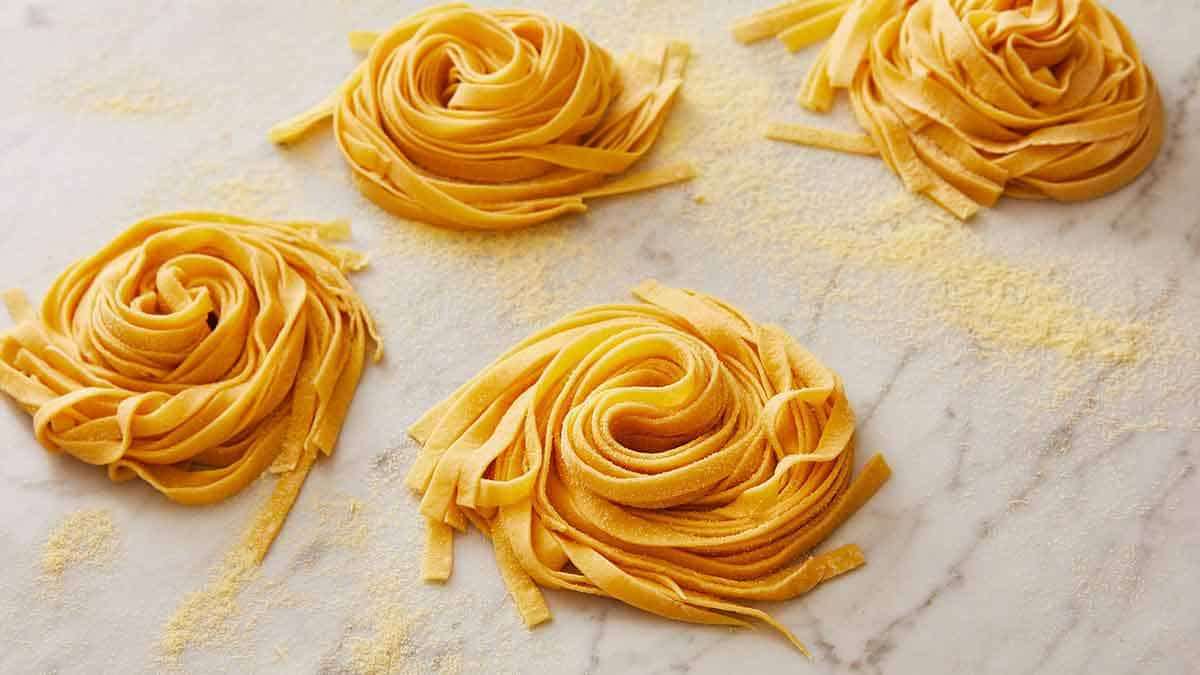
Pasta Dough Recipe
User Reviews
5
-
Prep Time
35 mins
-
Cook Time
3 mins
-
Additional Time
30 mins
-
Total Time
1 hr 8 mins
-
Servings
6 servings
-
Calories
271 kcal
-
Course
Main Course
-
Cuisine
Italian
Pasta Dough Recipe
Description
The Pasta Dough Recipe requires mixing flour, eggs, olive oil, and salt into a mound before gradually incorporating the flour into the wet ingredients. Kneading the dough until smooth and elastic ensures a workable consistency. Resting the dough relaxes the gluten, making it easier to roll thin. Semolina flour is used for dusting to keep the pasta from sticking during shaping and cutting. This homemade dough can be rolled with a machine or by hand using a rolling pin, but hand-rolling requires more time and effort for an even thickness.
The dough starts crumbly but transforms into a supple, slightly tacky ball after kneading. Cutting the pasta can be done by folding thin sheets and slicing into ribbons for noodles. Proper kneading and resting are critical to achieve the right texture for cooked pasta. This recipe provides flexibility for various pasta shapes depending on your equipment and preference.
By adjusting flour or water in small amounts during kneading, you can tailor the dough's firmness or softness. While a stand mixer or food processor can streamline the process, hand-kneading yields a traditional, satisfying dough. The recipe offers practical tips for handling and shaping pasta dough for home cooks seeking fresh pasta preparation.
Ingredients
- 2 to 2¼ cups all-purpose flour (240g-270g)
- 3 large egg
- 1 tablespoon olive oil
- ½ teaspoon salt
- semolina flour for dusting
Instructions
- On a smooth clean work surface, place 2 cups of the flour in a mound. Using the back of a rounded bowl or large spoon, create a well in the center of the flour large enough for the wet ingredients, about 4 inches wide. Crack the eggs into the well, and add olive oil and salt.
- Using a fork, start beating the egg mixture at the center, slowly making your circles bigger to start to incorporate the flour from the sides. Beat gently to try and keep the well from breaking. Continue mixing in the flour until the egg mixture is thickened and starts to form a shaggy mixture.
- Using a bench scraper or your hands, fold the mixture together until a shaggy dough ball comes together. Knead the dough by hand until smooth and elastic, about 10 to 15 minutes, adding the remaining ¼ cup of flour 1 tablespoon at a time during kneading if the dough feels sticky at any point. The dough may feel dry and crumbly at the start but should feel smooth and only slightly tacky by the end.
- Shape into a ball and wrap the dough ball tightly in plastic wrap. Let the dough rest at room temperature for at least 1 hour and up to 3 hours. Or, refrigerate the dough for up to 24 hours. Bring to room temperature before rolling.
- Lightly dust a large baking sheet with semolina flour. (Or, you can use all-purpose flour.)
- Cut the rested pasta dough into 4 equal pieces and loosely cover with plastic wrap. Working with one piece of dough at a time, press the dough into a rectangle, about ¼ inch thick. Sprinkle with semolina flour.
- Set an electric or hand-crank pasta rolling machine on its widest setting (Number 1). Pass the dough through rollers. Fold the dough in half, and pass through again, feeding the shortest side through the rollers on each roll. Repeat the folding and rolling one more time, then pass the dough through the rollers 2 more times without folding it in half.
- Adjust the rollers down to the next setting (Number 2). Pass the dough through the roller 2 times, sprinkling with semolina as needed to keep the dough from sticking.
- Continue adjusting the roller thickness and passing the pasta through the rollers twice on each setting, down to the third thinnest setting (Number 6). The pasta sheets will continue to get longer with each pass.
- Sprinkle the finished pasta sheet with semolina flour and gently fold it to fit the prepared sheet tray. Cover with a tea towel.
- Cut each pasta sheet into the desired shape by either cutting by hand or running them through a pasta cutter attachment. Toss in semolina flour and return to the prepared baking sheet. Uncooked fresh pasta can be formed into small mounds and frozen on a parchment paper-lined baking sheet until solid, then stored in an airtight container in the freezer for up to 1 month. (Cook from frozen.)
- To cook the pasta, drop it into a large pot of salted boiling water and cook, stirring occasionally until tender, about 3 to 5 minutes depending on the shape and size of the pasta.
Notes
- Resting the dough is essential to relax gluten, which makes rolling easier.
- Adjust flour or water gradually during kneading to achieve the right dough texture.
- If using a stand mixer or food processor, knead with a dough hook until smooth before resting.
- Rolling pasta by hand requires patience for consistent thickness; using a pasta machine can save time.
- Dusting with semolina flour prevents sticking when rolling and cutting the pasta.
- Cut pasta sheets by folding gently and slicing to desired ribbon width.
Nutrition Information
Show DetailsNutrition Facts
Serving: 6servings
Amount Per Serving
Calories 271 kcal
% Daily Value*
| Calories | 271kcal | 14% |
| Carbohydrates | 45g | 15% |
| Protein | 10g | 20% |
| Fat | 5g | 8% |
| Saturated Fat | 1g | 5% |
| Polyunsaturated Fat | 1g | 6% |
| Monounsaturated Fat | 3g | 15% |
| Trans Fat | 1g | 50% |
| Cholesterol | 93mg | 31% |
| Sodium | 230mg | 10% |
| Potassium | 108mg | 2% |
| Fiber | 2g | 8% |
| Sugar | 1g | 2% |
| Vitamin A | 135IU | 3% |
| Calcium | 23mg | 2% |
| Iron | 3mg | 17% |
* Percent Daily Values are based on a 2,000 calorie diet.
User Reviews
Overall Rating
5
You'll Also Love