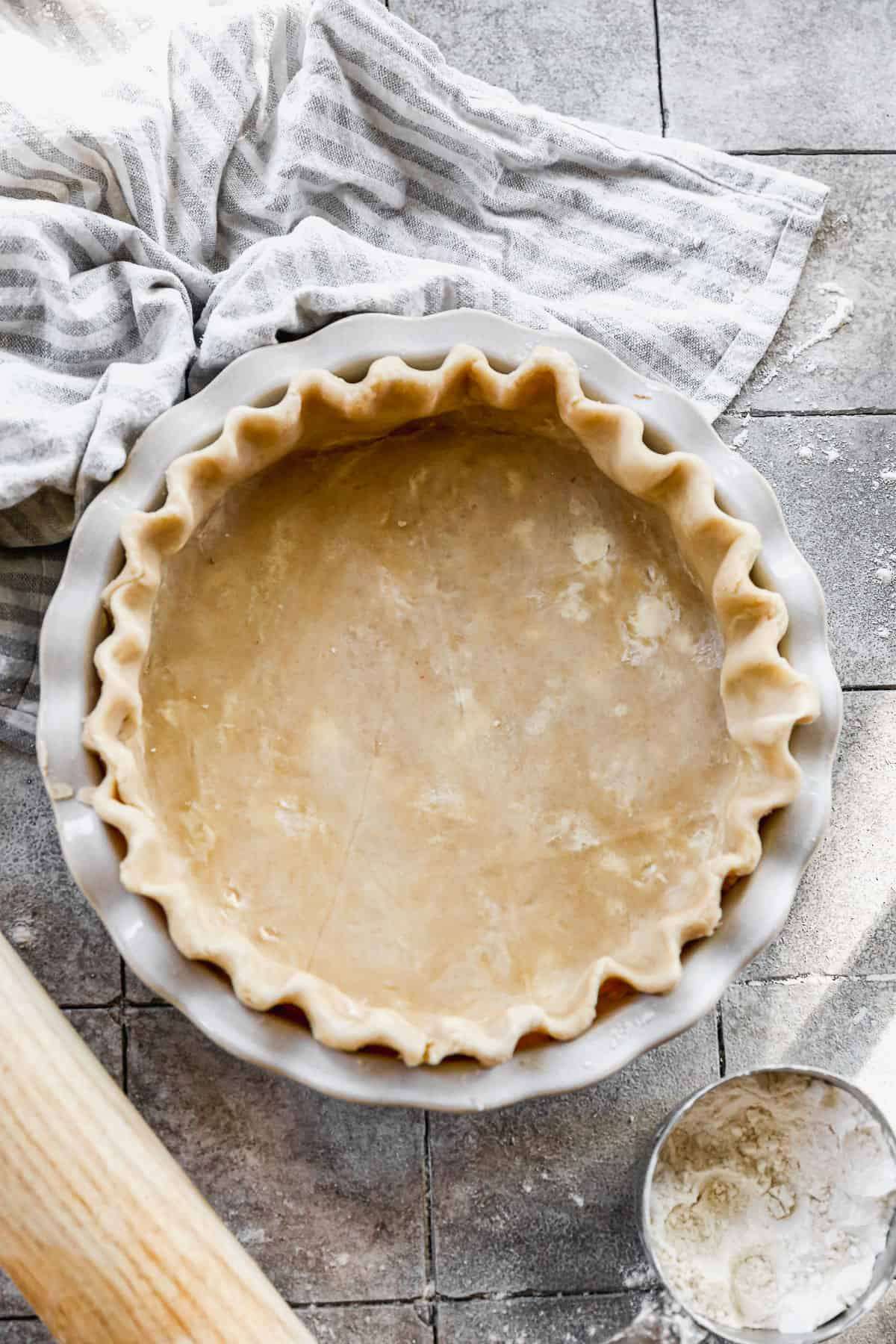
Pie Crust
User Reviews
5
Pie Crust
Description
Pie Crust uses a combination of butter and vegetable shortening, cut into a mixture of all-purpose flour and salt, to achieve the right balance of flavor and texture. The key is to keep the fats cold and incorporate them until the mixture resembles coarse crumbs before adding ice water sparingly to avoid overworking the dough. Chilling the dough discs for at least 2 hours firms up the fats, which helps it to roll out easily and bake into a crust with a flaky texture and tender crumb. Once chilled, the dough can be handled confidently without sticking.
This recipe yields two discs of dough, ideal for pies that need both a bottom and a top crust, such as apple pie or savory dishes like chicken pot pie. The dough can also be frozen wrapped tightly for up to three months, and thawed thoroughly before rolling out to maintain its quality.
For best results, rolling the dough on a floured surface or using a damp cloth technique for beginners helps manage stickiness. Keeping the dough cold at every stage ensures the crust bakes up flaky rather than tough or greasy.
Ingredients
- 2 1/2 cups all-purpose flour
- 1 teaspoon kosher salt
- 6 Tablespoons butter cold unsalted
- 3/4 cup vegetable shortening , chilled
- 1/2 cup water ice
Instructions
- Mix flour and salt in a large mixing bowl. Add ice cubes to a measuring cup and fill with 1/2 cup cold water. Set aside.
- Add fats: Grate frozen butter into the bowl, or cut it into very small pieces. Add chilled shortening and use a pastry blender or fork to cut the fats into the flour until well combined and resembles coarse crumbs.
- Add ice water a spoonful at a time, mixing until the dough begins to come together into a ball. Be careful not to over mix, and you may not need all of the water. Gently mold the dough into a ball.
- Divide dough into 2 pieces and press each to flatten into a disk.
- Refrigerate: Cover dough discs with plastic wrap and refrigerate the dough for 2 hours (or freeze for 30 minutes). Refrigeration is mandatory as you need the fats in the pie dough to be cold when it's rolled out and placed in oven).
- Roll out dough on a floured countertop. If you're new to pie making, it may be helpful to use this method: dampen a large cloth and lay it flat on your countertop, with a large piece of parchment paper over it (the damp towel will keep the parchment from moving). Lightly flour the parchment and dough and roll the dough into a large circle, about 1-inch larger then the diameter of your pie dish. Always start at the center of the crust, and roll outwards.
- Place in pie pan: Gently turn the dough into your pie dish and remove the parchment paper. Settle it smoothly into the bottom and sides of the pan. Trim and crimp the edges of the crust.
- For Pies requiring an unbaked pie crust (like pumpkin, apple, or even chicken pot pie): Fill the unbaked crust with pie filling and bake according to pie recipe instructions.
- For a blind Baked Pie Crust (pre-baked crust) you need pie weights, dry beans or dry rice. (Without pie weights the crust will shrink into the pan as it bakes). Place a large piece of parchment paper over the unbaked crust and add pie weights, (or 1-2 cups dry beans, or dry rice) on top. Bake at 375° F for 15-20 minutes. Remove pie weights by carefully lifting up on parchment paper. Prick the bottom of the pie crust with a fork, then return to oven for 10-15 minutes, until lightly golden. Allow crust to cool before adding filling.
Notes
- This recipe makes two pie crusts, suitable for pies with top crusts or for freezing one disc for later.
- To freeze pie dough, wrap each disc tightly in plastic wrap and store in a freezer-safe container for up to three months; thaw completely in the refrigerator before use.
- Blind-baked pie crusts can also be frozen after cooling, wrapped well, and should be thawed fully at room temperature before filling.
Nutrition Information
Show DetailsNutrition Facts
Serving: 2Serving
Amount Per Serving
Calories 258 kcal
% Daily Value*
| Calories | 258kcal | 13% |
| Carbohydrates | 20g | 7% |
| Protein | 3g | 6% |
| Fat | 19g | 29% |
| Saturated Fat | 7g | 35% |
| Polyunsaturated Fat | 4g | 24% |
| Monounsaturated Fat | 7g | 35% |
| Trans Fat | 2g | 100% |
| Cholesterol | 15mg | 5% |
| Sodium | 196mg | 8% |
| Potassium | 30mg | 1% |
| Fiber | 1g | 4% |
| Sugar | 0.1g | 0% |
| Vitamin A | 175IU | 4% |
| Calcium | 6mg | 1% |
| Iron | 1mg | 6% |
* Percent Daily Values are based on a 2,000 calorie diet.
User Reviews
Overall Rating
5
You'll Also Love