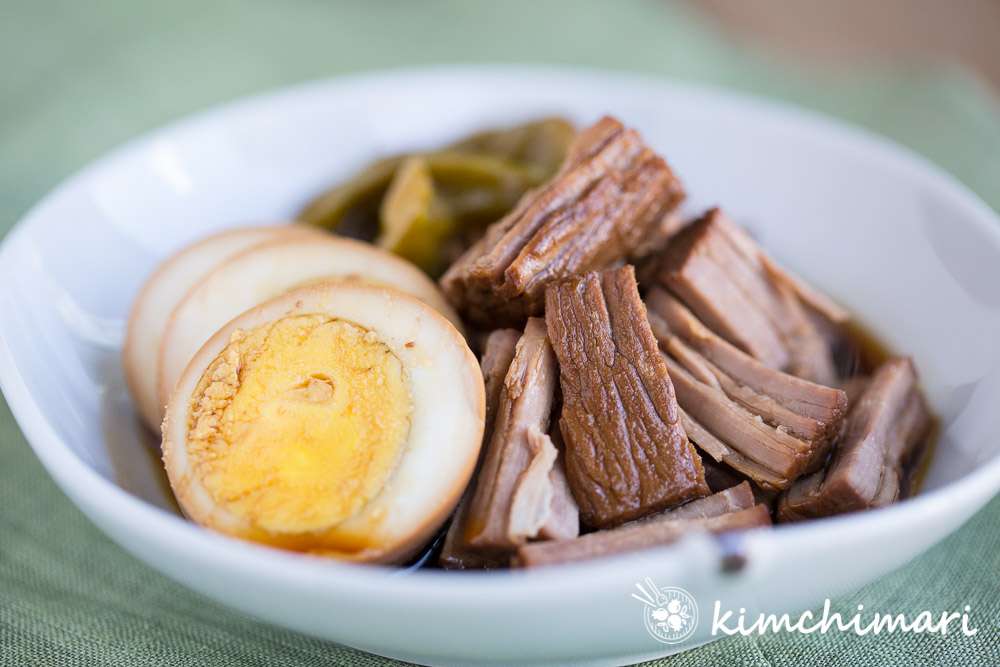
Pressure Cooker Jangjorim (Soy Braised Beef with Egg)
User Reviews
5
-
Prep Time
5 mins
-
Cook Time
45 mins
-
Total Time
50 mins
-
Servings
8 servings
-
Calories
180 kcal
-
Course
Side Dish, Main Course
-
Cuisine
Korean
Pressure Cooker Jangjorim (Soy Braised Beef with Egg)
Description
This Pressure Cooker Jangjorim recipe begins with preparing hard-boiled eggs either using an Instant Pot or stovetop method, ensuring they are cooked just right and chilled before peeling. The beef is cut into 2-3 inch cubes and prepared alongside garlic, ginger, and cleaned shishito peppers. The meat and aromatics are cooked in a soy sauce and sugar mixture in a pressure cooker until tender, infusing the ingredients with a deep savory flavor.
The dish features a balance of salty and sweet notes, with the soy sauce bringing umami and the sugar mellowing the flavors. The eggs absorb some of the braising liquid, complementing the tender beef chunks. The shishito peppers add mild pepper flavor without overpowering the sauce.
Jangjorim is often served chilled or at room temperature as a side dish or banchan with rice. It can be used as a filling for kimbap or mixed with rice and butter for a comforting bowl. The recipe notes emphasize that the sodium level appears high due to sauce volume calculations, but actual consumption is moderate. Leftovers can be refrigerated up to a week or frozen; reheating involves boiling briefly to extend shelf-life.
Ingredients
- 1 lb beef brisket or eye of round
- 4 cup water
- 6 each garlic cloves
- 1 knob ginger
- 3/4 cup soy sauce kikkoman, sempio, tamari, Jin Ganjang
- 6 tbsp sugar
- 5 egg
- 8 shishito pepper add as much as you want!
Instructions
Hard Boil Eggs
- Choose one of the two methods below.
Instant Pot Method
- Add 1 cup water to a 6-qt Instant Pot® or 1 1/2 cup water to 8 qt Instant Pot. Gently add eggs on top of a metal trivet. Select Manual at High pressure, and set time for 5 minutes. Quick-release pressure and cool eggs in an ice bath for 1 min. Peel eggs and set aside.
StoveTop method (you can do this while meat is cooking in IP)
- Boil a pot of water (enough to cover eggs) and when it comes to boil, turn heat off and immediately add eggs (room temp preferable) to pot. Cover and leave it for 10 minutes. Cool eggs in an ice bath for 1 min and peel.
Prepare other ingredients
- Cut brisket or eye of round into cubes (about 2-3 inch cubes)
- Peel garlic and ginger. Clean shishito peppers by rinsing in water (be sure to clean dirt in between the creases of the peppers) and then snapping off the top stem. Don't cut or no need to make holes in the peppers - they will soak up the sauce without a hole.
- In the Instant Pot, add water, beef cubes, garlic cloves, ginger. Cover and close the vent and cook Manual at Low pressure for 18 min. Natural Release for 10 min and Quick Release to open. Meat should be nice and tender.
- To pot with cooked beef and broth, add soy sauce, sugar, boiled egg and shishito peppers.
- With the cover off, start the SAUTE function at HIGH temperature for 30 minutes. The sauce should reduce and the meat and eggs should be nicely seasoned.
- Turn heat off, let it cool.
- Serve warm on the first day of cooking, store leftovers in the refrigerator and then Jangjorim can be enjoyed cold right from the refrigerator OR can also be warmed up in the microwave.
Notes
- Sodium content appears high due to calculation method; typical serving uses much less sauce, keeping intake moderate.
- Store leftovers refrigerated up to one week; re-boil 2-3 minutes before serving to extend shelf life.
- Freezing is possible but eggs lose quality after thawing.
- Common serving options include using the beef in kimbap, mixing with rice and sauce for a flavorful meal, or combining with a fried egg (gyeran bap).
Nutrition Information
Show DetailsNutrition Facts
Serving: 8servings
Amount Per Serving
Calories 180 kcal
% Daily Value*
| Calories | 180kcal | 9% |
| Carbohydrates | 14g | 5% |
| Protein | 18g | 36% |
| Fat | 5g | 8% |
| Saturated Fat | 2g | 10% |
| Cholesterol | 137mg | 46% |
| Sodium | 1442mg | 60% |
| Potassium | 277mg | 6% |
| Fiber | 2g | 8% |
| Sugar | 11g | 22% |
| Vitamin A | 149IU | 3% |
| Vitamin C | 6mg | 7% |
| Calcium | 35mg | 4% |
| Iron | 2mg | 11% |
* Percent Daily Values are based on a 2,000 calorie diet.
User Reviews
Overall Rating
5
You'll Also Love