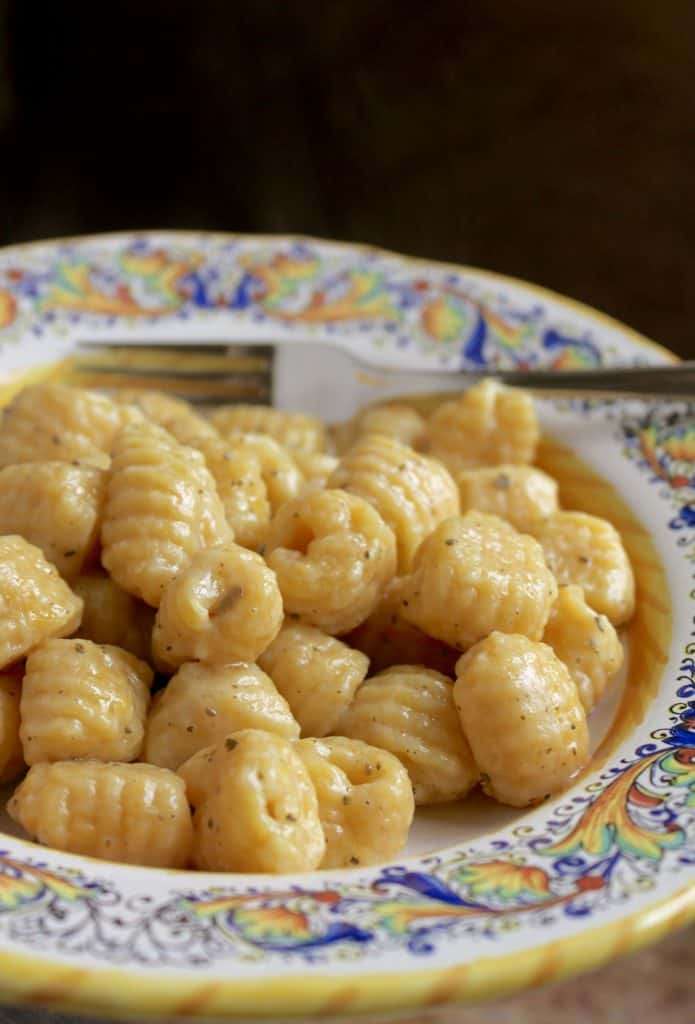
Pumpkin Gnocchi with Butter Sage Sauce
User Reviews
4.9
-
Prep Time
20 mins
-
Cook Time
7 mins
-
Total Time
27 mins
-
Servings
4
-
Calories
494 kcal
-
Course
Main Course
-
Cuisine
Italian
Pumpkin Gnocchi with Butter Sage Sauce
Description
This Pumpkin Gnocchi with Butter Sage Sauce uses cooked russet potatoes and pumpkin combined with flour, potato starch, and grated cheese to form a delicate dough. The dough is kneaded gently, shaped into small gnocchi pieces, and traditionally ridged using a fork or gnocchi board. Cooking the gnocchi briefly in boiling water produces tender dumplings that hold their shape well.
The accompanying butter sage sauce enhances the gnocchi modestly, allowing the pumpkin's natural sweetness and the potatoes' texture to shine through. The creamy sauce with a hint of sage embraces each gnocchi, providing a mild herbal note.
This dish suits a cozy dinner and can be served alone or with additional sauces if preferred. The recipe advises rolling out small batches of dough to maintain freshness and recommends using specific types of flour for best results.
Ingredients
- 15 oz pumpkin or cooked pumpkin, drained, put in a sieve over a bowl, canned
- 3 russet potato or any floury potato cooked in their skin in salted water, peeled then mashed used hot
- 1 egg
- 1 tsp kosher salt (or sea salt)
- ⅛ tsp nutmeg a dash, grated
- 1 ¼ cup all-purpose flour best choice is 00 Italian flour
- ½ cup potato starch
- ½ cup Parmigiano Cheese (grated Pecorino cheese)
Butter Sage Sauce:
- butter (good quality, as needed for the amount of gnocchi)
- ¼ tsp sage or dried sage, as needed, fresh
Instructions
- Place the mashed potatoes (while still hot/warm) into a large bowl and spread them out to release the steam. Next, add the pumpkin, egg, salt and nutmeg and mix well.
- Add the flour, potato starch and grated cheese and continue to mix.
- When it comes together, place on a flour dusted board or countertop and knead gently to form a smooth dough.
- Put the dough onto a well-floured countertop or work area and knead gently until the dough has a uniform texture. Cut off a piece of dough and leave the rest on the counter with the bowl covering it (upside-down).
- Roll the piece of dough into a rope and cut off pieces (about ½" to ¾" long) with a small, sharp knife.
- Shape the pieces into gnocchi on a fork or a gnocchi board using gentle pressure, and easing up as you roll downwards. Use enough flour so that they don't stick, then place on a semolina covered tray or countertop.
- (Make the butter-sage sauce if cooking immediately.)
- If not cooking the potato pumpkin gnocchi immediately, you can freeze them on the tray, then place into a freezer bag when frozen, and store in the freezer for up to 2 weeks.
- Butter Sage Sauce: Melt the butter (as much as you need for the amount of gnocchi you are cooking) with the sage in a sauté pan.
- To cook the gnocchi: drop into the salted, boiling water and remove with a slotted spoon as soon as they float to the top or within 30 seconds, or so. Gently place the potato pumpkin gnocchi into a the pan with the butter sage sauce, and toss gently.
- Serve immediately.
Notes
- The gnocchi dough should be worked gently to maintain a light texture.
- If not cooking immediately, cover the remaining dough to prevent drying out.
- Using 00 Italian flour yields the best texture, but all-purpose flour is acceptable.
- You can serve the gnocchi with other sauces according to your preference.
Nutrition Information
Show DetailsNutrition Facts
Serving: 4Serving
Amount Per Serving
Calories 494 kcal
% Daily Value*
| Serving | 1 bowl | |
| Calories | 494kcal | 25% |
| Carbohydrates | 84g | 28% |
| Protein | 16g | 32% |
| Fat | 11g | 17% |
| Saturated Fat | 6g | 30% |
| Polyunsaturated Fat | 1g | 6% |
| Monounsaturated Fat | 3g | 15% |
| Trans Fat | 0.2g | 10% |
| Cholesterol | 70mg | 23% |
| Sodium | 870mg | 36% |
| Potassium | 1.158mg | 0% |
| Fiber | 7g | 28% |
| Sugar | 5g | 10% |
| Vitamin A | 16.889IU | 0% |
| Vitamin C | 14mg | 16% |
| Calcium | 225mg | 23% |
| Iron | 5mg | 28% |
* Percent Daily Values are based on a 2,000 calorie diet.
User Reviews
Overall Rating
4.9
You'll Also Love