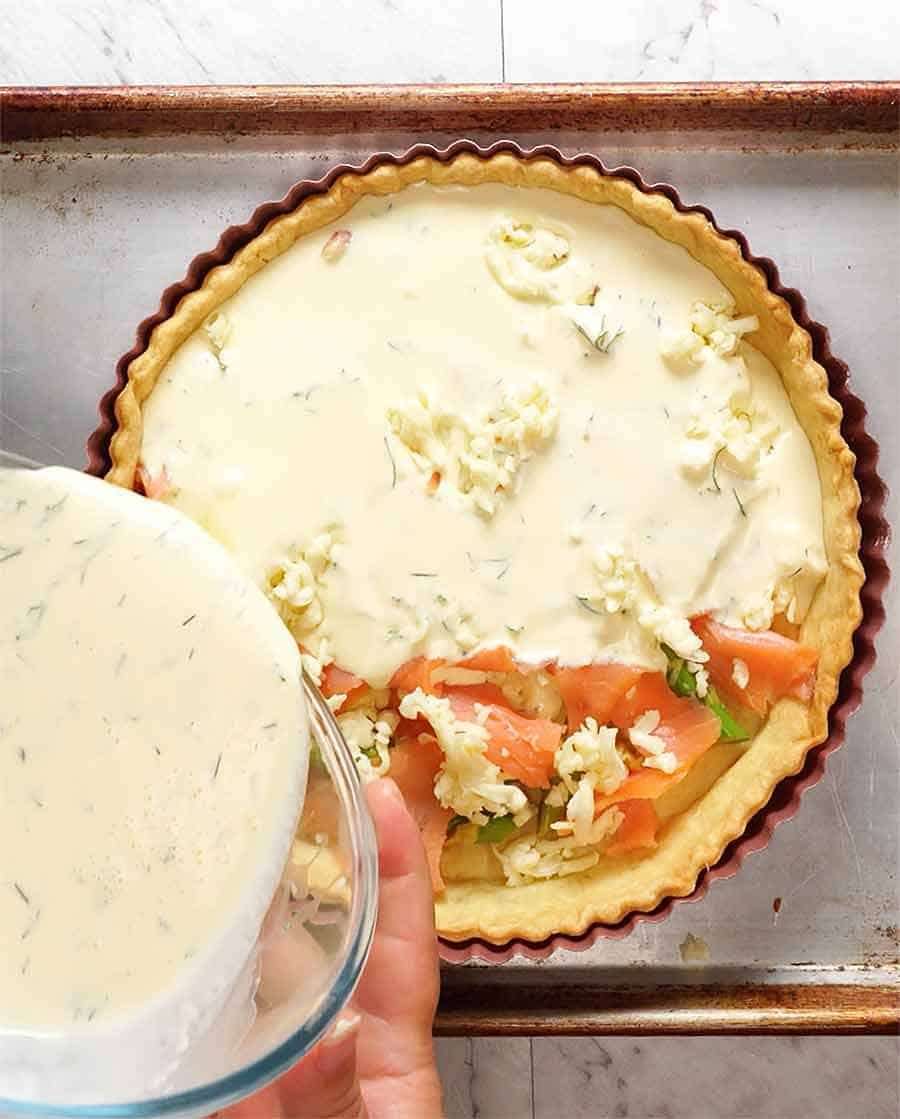
Quiche Crust / Shortcrust Pastry for Pies
User Reviews
5
-
Prep Time
15 mins
-
Cook Time
35 mins
-
Total Time
50 mins
-
Servings
8 - 12
-
Calories
173 kcal
-
Course
Main Course, Baked Goods
-
Cuisine
French
Quiche Crust / Shortcrust Pastry for Pies
Description
The preparation starts by pulsing flour, salt, and chilled butter cubes in a food processor until the mix resembles coarse crumbs. Ice-cold water is then added gradually to bring the dough together without overworking it. Formed into a disc and wrapped, the dough rests in the refrigerator to keep butter cold, essential for flakiness.
When ready, the dough is rolled out on a floured surface into an 11-inch round and then transferred to a 9-inch quiche or pie pan. Chilling the dough again before baking helps reduce shrinkage and maintain texture. Unlike pastry recipes with egg, this dough stays tender and crisp without becoming tough, thanks to the absence of binding eggs.
Optional refrigeration steps are recommended if working in a warm environment or if rolling out takes longer to keep the butter solid. Store-bought frozen shortcrust pastry can also be used by overlapping and sealing sheets to fit the pan.
Ingredients
- 1 1/4 cups (185g / 5.6 oz) plain flour all purpose flour, white
- 1/2 tsp salt
- 100g / 7 tbsp butter unsalted, cold, cut into 1cm/ 1/3" cubes
- 3 tbsp water ice cold, + more as required
Instructions
- Place flour, salt and butter in a food processor.
- Pulse 10 times or until it looks like breadcrumbs.
- With the motor running on low, pour 2.5 tbsp of water into the tube feeder.
- Turn up to high and blitz for 30 seconds or until it turns into a ball of dough. Initially it will look like breadcrumbs, then it will turn into a ball of soft dough - some random escaped bits is fine. If it doesn't look like its coming together at 20 seconds, add another 1/2 tbsp of water. Don't blitz longer than 30 seconds at most.
- Form a disc, wrap in cling wrap. If there are escaped crumble bits, that's fine - just press them in. Refrigerate for 1 - 3 hours.
- Preheat oven to 200C/390F (standard) or 180C/350F (fan forced)
- Sprinkle work surface with flour, unwrap dough and place on the flour. Sprinkle top with flour, then roll out into a 27cm/11" round.
- Gently roll the pastry so it wraps around the rolling pin.
- Unroll it over the quiche pan or pie dish - 23cm / 9".
- Press the pastry into the edges of the quiche pan, patching up edges if required (if pastry doesn't quite reach top of rim).
- Roll the rolling pin across the top to cut off the excess pastry.
- Optional extra "safe measure" refrigeration - 15 minutes. See (Note 2).
- Place a large piece of parchment paper over the pastry, then fill with baking beads or lots of rice or dried beans to weigh it down. (Note 3)
- Bake for 20 minutes, then remove from oven.
- Turn oven DOWN to 180C/350F (or 160C/320F fan).
- Use excess paper to CAREFULLY remove hot beads, then return to oven for 10 minutes or until base is light golden.
- Remove from oven and fill with chosen Quiche Filling. Quiche Lorraine, Salmon Quiche, Italian Sausage or your other filling of choice.
- The pastry will not be 100% cooked, it finishes cooking with the filling. It's cooked enough so the crust will not go soggy.
Notes
- Keep butter cold and handle dough quickly to retain flaky texture.
- If warm conditions slow rolling, refrigerate the dough for 15 minutes before baking to firm up the butter.
- This recipe omits eggs to keep the crust tender and crisp yet easy to cut.
- For store-bought frozen pastry sheets, overlap two sheets to cover the pan, pressing firmly to seal before proceeding.
- The recipe’s measurements work with both US and metric systems.
Nutrition Information
Show DetailsNutrition Facts
Serving: 8- 12
Amount Per Serving
Calories 173 kcal
% Daily Value*
| Calories | 173cal | 9% |
| Carbohydrates | 17g | 6% |
| Protein | 2g | 4% |
| Fat | 10g | 15% |
| Saturated Fat | 6g | 30% |
| Cholesterol | 26mg | 9% |
| Sodium | 235mg | 10% |
| Potassium | 24mg | 1% |
| Vitamin A | 310IU | 6% |
| Calcium | 6mg | 1% |
| Iron | 1.1mg | 6% |
* Percent Daily Values are based on a 2,000 calorie diet.
User Reviews
Overall Rating
5
You'll Also Love