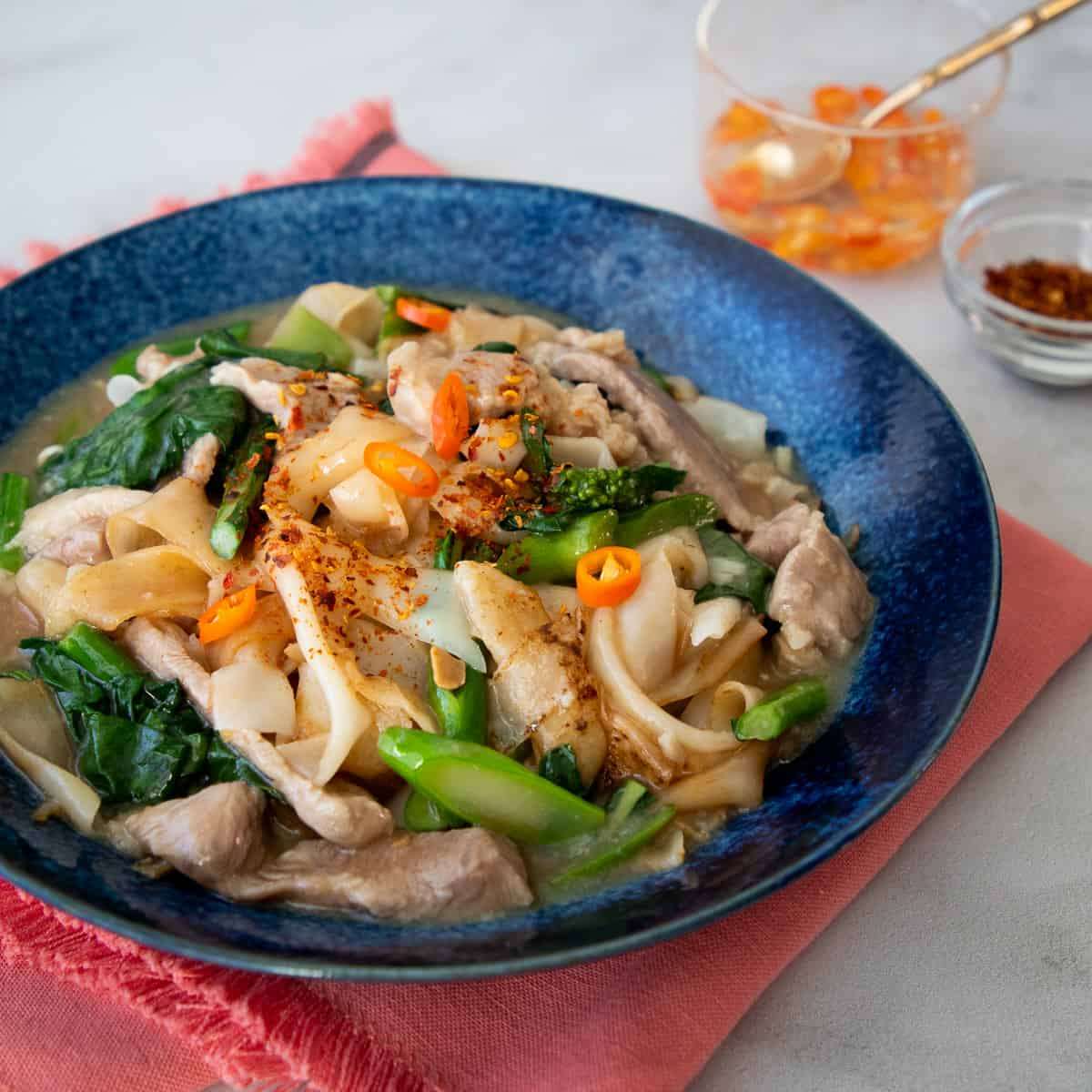
Rad Na - Fresh Rice Noodles with Pork Gravy ราดหน้า
User Reviews
5
-
Servings
4 servings
-
Course
Main Course
-
Cuisine
Thai
Rad Na - Fresh Rice Noodles with Pork Gravy ราดหน้า
Description
This Rad Na recipe centers on marinated pork pieces mixed with soy sauce, oyster sauce, sesame oil, and tapioca starch then cooked in a gravy combining garlic, fermented soybean paste (or miso), homemade unsalted pork stock, and seasonings like soy sauce and sugar. Wide fresh rice noodles are coated with black soy sauce and pan-toasted to develop light browning and a slightly crispy surface.
The gravy is thickened with tapioca starch mixed with water and includes Chinese broccoli, which adds a fresh, slightly crunchy contrast. The overall result is a savory, slightly sweet sauce coating tender pork and noodles with a hint of aromatic sesame oil and pepper heat.
Serving Rad Na with chili vinegar and roasted chili flakes allows additional heat and tanginess as desired. The dish balances textures from soft noodles with a crispy sear, tender pork, and crunchy greens, making it a flavorful Thai noodle plate.
Freshness of rice noodles is preferred, but certain dried noodles can substitute. Tapioca starch is recommended over cornstarch for clarity and reheating quality. The pork stock quality significantly affects the flavor, so homemade is best if possible.
Ingredients
Marinated Pork
- 12 oz pork butt sliced into bite sized pieces, about ⅛" thick, shoulder
- 1 tablespoon soy sauce
- 1 tablespoon oyster sauce
- 1 teaspoon sesame oil toasted
- ½ teaspoon sugar
- ¼ teaspoon white pepper
- 2 tablespoon tapioca starch or cornstarch
- 1 egg large, white
The Noodles
- 25 oz rice noodles see note 1, fresh, wide
- 1 teaspoon black soy sauce or dark soy sauce
- 1 tablespoon neutral oil
The Gravy
- 2 tablespoon neutral oil
- 6 cloves garlic chopped
- 3 tablespoon thai fermented soybean paste or low sodium miso (see note 2, tao jiew
- 3 cups pork stock unsalted, preferably homemade (see note 3)
- 1½ tablespoon soy sauce
- 1 tablespoon Golden Mountain Sauce or sub Maggi Seasoning or oyster sauce
- 1½ tablespoon sugar
- 1 teaspoon sesame oil toasted
- ½ teaspoon ground white pepper
- 7 oz Chinese broccoli stems thinly sliced on a bias, leaves roughly chopped, Gai Lan
- ¼ cup tapioca starch (see note 4)
- ¼ cup water
Condiments (optional)
- chili vinegar highly recommended (see note 5)
- chili flakes see note 6, roasted
Instructions
Marinade the pork:
- Mix the pork with all the marinade ingredients, and let sit for at least 20 minutes and up to a day ahead.
For the Chili Vinegar
- Thinly slice hot peppers of your choice then add to a small bowl. Cover with white vinegar and let sit for at least 15 minutes, or until ready to use (amounts do not need to be precise). This will keep indefinitely in the fridge.
Cook the noodles:
- Toss the noodles together with the black soy sauce to stain them. You can make them darker or lighter according to your preference.
- Heat a large work or a nonstick frying pan over high heat. When the pan is very hot, add the oil, then add the noodles and spread them out as much as you can. The goal is to get some browning on the noodles, so let them sit and char a bit without stirring. Once the bottom side is toasted, flip the noodles and repeat on the other side.
- The noodles will start to stick together as they toast - this is okay as they will loosen once the gravy goes on them. But once they start looking a bit clumpy, it's a sign that you should take them out of the pan soon, as too much clumping makes them hard to separate later. Set the noodles aside.
For the Gravy:
- In a wok or a large saucepan over medium heat, add the oil, garlic and fermented soybean paste. Saute until the garlic starts to turn golden brown. Deglaze with the pork stock then add the soy sauce, Golden Mountain Sauce, sugar, white pepper, and sesame oil; bring to a full boil.
- While waiting for the sauce to boil, put the tapioca starch in a bowl and add just enough water to dissolve it - about ¼ cup but no need to be precise here. Stir to make a slurry and set aside (leave the spoon in the bowl, you'll need it again).
- Once the sauce reaches a full boil, add the pork and spread the pieces out quickly. Once the pork pieces are all separated, stir in the Chinese broccoli and bring the sauce to a boil.
- Once boiling, give the starch slurry another stir, then pour HALF of it into the gravy and quickly stir to mix. Once the sauce returns to a boil, it will have thickened, and if you want it even thicker, add more of the remaining slurry. Remove from heat when you are happy with the sauce consistency, which should just be thick enough to coat the noodles, but not gloopy. Note: Always wait until the sauce returns to a boil before deciding if it needs more thickening.
- Taste and adjust seasoning as needed. If it needs more salt, add more tao jiew or miso (if you want to add more miso paste, dissolve it in a small amount of water first before pouring it in). You can also add more white pepper if you like.
- To serve, divide the noodles into serving bowls, then ladle the gravy over the noodles. Serve with prik nam som and/or roasted chili flakes. Enjoy!
Notes
- If fresh wide rice noodles are unavailable, dried wide rice noodles, rice vermicelli, or wonton noodles can be used in specified quantities.
- Low-sodium miso can replace fermented soybean paste; if using regular miso start with less and adjust salt at the end.
- Making your own pork stock greatly improves flavor; a good chicken stock is an acceptable substitute.
- Tapioca starch is preferred for thickening gravy as it remains clear and reheats smoothly compared to cornstarch.
- Chili vinegar can be prepared by soaking sliced hot peppers in white vinegar and stored indefinitely in the fridge.
- Roasted chili flakes provide a smoky heat and are made by lightly toasting hot pepper flakes or dried chilies.
User Reviews
Overall Rating
5
You'll Also Love