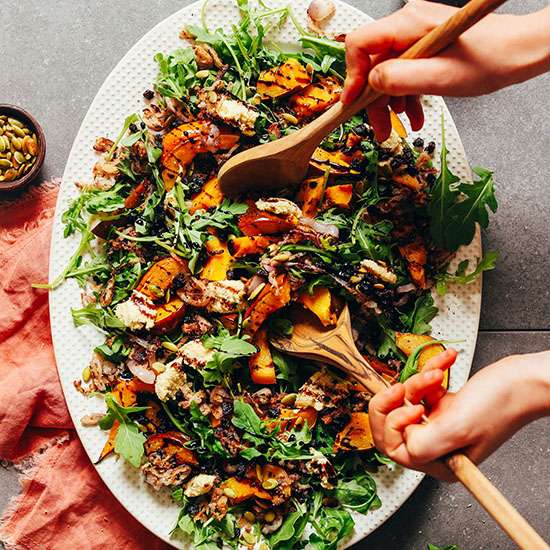
Roasted Squash Arugula Salad with Crispy Shallot and Balsamic Reduction
User Reviews
5
Roasted Squash Arugula Salad with Crispy Shallot and Balsamic Reduction
Description
This salad features wedges of acorn squash roasted until tender and golden, bringing out their natural sweetness and soft texture. The roasting process, using avocado or olive oil and seasoning with salt and pepper, caramelizes the edges and enhances the squash's flavor. While the squash roasts, a balsamic vinegar reduction is simmered until thick and syrupy to provide a rich, tangy dressing component.
Thinly sliced shallots are lightly coated with brown rice flour and cooked until crisp, introducing a crunchy, savory element that contrasts the soft squash and fresh arugula. Toasted pepitas add additional crunch and a nutty tone alongside creamy macadamia nut cheese. Fresh arugula complements the sweet and rich ingredients with its slightly bitter, peppery bite, and currants contribute bursts of dried fruit sweetness to round out the flavor profile.
The salad is composed by layering these elements, offering a mix of textures and balanced flavors ranging from sweet and creamy to crisp and tangy. It works well as a starter or as part of a composed meal, showcasing seasonal squash and distinctive toppings.
Ingredients
SQUASH
- 1 medium acorn squash (or similar winter squash // pick one with green and orange skin)
- 1 Tbsp avocado oil or olive oil
- 1 pinch salt
- 1 pinch black pepper
DRESSING
- 1 cup balsamic vinegar
SHALLOT
- 2 medium shallot thinly sliced
- 3 Tbsp brown rice flour
- 1/8 tsp sea salt
- ~2 Tbsp olive oil for cooking - if avoiding oil, omit and use a non-stick pan, or avocado oil
SALAD
- 1/4 cup macadamia nut cheese (or similar store-bought)
- 2 Tbsp pepita we preferred roasted, roasted or raw
- 5-6 cups arugula
- 2 Tbsp currants or other dried fruit, such as cranberries, dried
Instructions
- Preheat oven to 425 F (218 C). To prepare squash, use a sharp knife to carefully cut in half lengthwise (from root to tip), then remove seeds with a spoon or ice scream scooper. Slice squash halves into even wedges and leave the skin on.
- Arrange squash on a parchment-lined baking sheet. Sprinkle with oil, salt, and pepper and toss to coat. Spread in an even layer.Roast squash for ~15-20 minutes or until tender and golden brown.
- In the meantime, prepare dressing by adding balsamic vinegar to a small saucepan. Bring to a gentle boil. Then allow to simmer until it is reduced by half and looks thick (about 10-15 minutes). Watch carefully near the end as it can go from reduced to burnt quickly. You’ll know it’s done when, swirled, it coats the sides of the pan.
- At this time, prepare the nut cheese (link to recipe above), or if using store-bought, skip this step.
- If toasting pepitas, add to a dry skillet over medium heat and cook, stirring occasionally, until lightly browned - about 3-5 minutes (being careful not to burn).
- Next, add sliced shallots to a small bowl with brown rice flour, salt, and pepper and toss to coat. Heat a medium (preferably cast-iron) skillet over medium heat. Once hot, add oil and floured shallots and sauté, stirring occasionally, until lightly golden brown and crispy - ~5 minutes.
- To serve, arrange arugula on a platter or serving bowl and top with roasted squash, crispy shallots, dollops of macadamia nut cheese, pepitas, and cranberries or currants. Drizzle with dressing.
- Best when fresh, but leftovers can be stored covered in the refrigerator up to 2-3 days (preferably without dressing and squash separate from greens).
Notes
- Nutrition info estimates include the entire balsamic dressing and a mixture of avocado and olive oils.
Nutrition Information
Show DetailsNutrition Facts
Serving: 4(Side servings)
Amount Per Serving
Calories 311 kcal
% Daily Value*
| Serving | 1Servings | |
| Calories | 311 | 16% |
| Carbohydrates | 37g | 12% |
| Protein | 4.8g | 10% |
| Fat | 16.5g | 25% |
| Saturated Fat | 2.4g | 12% |
| Sodium | 139mg | 6% |
| Potassium | 692mg | 15% |
| Fiber | 6g | 24% |
| Sugar | 16g | 32% |
* Percent Daily Values are based on a 2,000 calorie diet.
User Reviews
Overall Rating
5
You'll Also Love