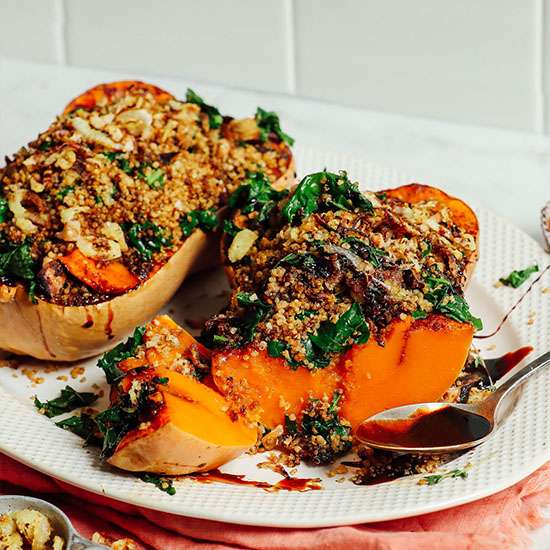
Roasted Stuffed Butternut Squash
User Reviews
4.9
-
Prep Time
15 mins
-
Cook Time
1 hr 15 mins
-
Total Time
1 hr 30 mins
-
Servings
8
-
Calories
245 kcal
-
Course
Side Dish, Main Course
-
Cuisine
Vegan
Roasted Stuffed Butternut Squash
Description
This Roasted Stuffed Butternut Squash combines the natural sweetness of roasted squash with a hearty quinoa and vegetable filling. The butternut squash is carefully halved, deseeded, and coated with avocado oil, coconut sugar, cinnamon, and salt before roasting to develop a tender and caramelized base. Meanwhile, quinoa is cooked until fluffy, and the shiitake mushrooms are sautéed with garlic and kale, then combined with walnuts for texture and a savory depth using coconut aminos. Once the squash halves are roasted, they are filled with the quinoa mixture and baked further to meld flavors.
The filling balances earthy mushrooms with nutrient-dense kale and crunchy walnuts, while the squash adds softness and sweetness. Optionally, crispy sautéed shallots add a savory crunch, and a balsamic vinegar reduction can drizzle over the finished dish for brightness and acidity.
This recipe suits a comforting vegetarian main or side dish that highlights seasonal produce and whole grains. It can be enjoyed as a complete meal or alongside other autumn-inspired dishes. Preparation involves simple roasting and sautéing techniques, and the components can be prepped ahead. The optional notes suggest coating shallots with flour and seasoning before frying to achieve crispness. Nutrition details exclude optional ingredients.
Ingredients
VEGGIES & QUINOA
- 2 cups quinoa cooked (from ~3/4 cups raw - see instructions
- 1 Tbsp avocado oil or coconut oil
- 3 cups shiitake mushroom loosely packed sliced
- 2 Tbsp coconut aminos (or sub tamari, but start with a lesser amount as it’s saltier)
- 2 cloves garlic minced
- 2 cups loosely packed chopped kale
- 1/2 cup walnut optional, roughly chopped, or other nut or seed of choice
SQUASH
- 1 large butternut squash halved lengthwise, seeds removed
- 1 Tbsp avocado or melted coconut oil
- 2 Tbsp coconut sugar
- 1/4 tsp ground cinnamon (optional)
- 1 healthy pinch salt sea salt
FOR SERVING
- 1 cup balsamic vinegar reduced down on stovetop
- shallot optional, crispy sautéed, 1 cup or 2 medium; or substitute onion
Instructions
- Preheat oven to 400 degrees F (204 C) and set out a baking sheet with parchment paper or a silicon liner or grease a 9x13-inch (or similar size) baking dish.
- In the meantime, if you haven’t already done so, prepare quinoa by adding quinoa and water to medium saucepan and bringing to a boil over high heat. Once boiling, reduce heat to a low simmer, cover, and cook for 18-20 minutes, or until fluffy and the water is absorbed. Remove lid and let cool completely (uncovered) on the stovetop.
- Halve the squash lengthwise (tip and stem) by inserting your knife point into the squash and rocking toward the base. Then remove your knife, flip the squash around 180 degrees and insert the point into the same spot, but rock it toward the stem, pressing down firmly but carefully to split the squash in half.
- Scoop out seeds with a spoon or ice cream scoop. Then brush with oil (or water) and sprinkle with coconut sugar, cinnamon (optional), and salt. Place cut-side down on a lined baking sheet or baking pan.
- Bake squash for 15 minutes, then flip the squash over to cut-side up. Bake for another 30-45 minutes (sometimes more depending on the size of your squash), or until a knife easily pierces the squash (especially in thicker parts). It's better for the squash to be on the more tender side than firm, in our experience.
- In the meantime, prepare your balsamic reduction by adding balsamic vinegar to a small saucepan and bringing to a low boil over medium high heat. Once bubbling, reduce heat to a healthy simmer - about medium low heat - and cook for about 12-15 minutes. You’ll know it’s done when it’s reduced in volume by about half, it appears syrupy, and it has visible bubbles on the top. Set aside to cool. It will thicken as it cools.
- Once your quinoa is cooked and cooled, heat a large rimmed metal or cast iron skillet over medium heat. One hot, add oil or water and quinoa. Sauté for 5-8 minutes, stirring occasionally, until slightly crispy and browned. Season with half the coconut aminos for flavor. Then remove from skillet and set aside.
- To the still hot skillet add the mushrooms and the other half of the coconut aminos. Sauté for 2-3 minutes, or until browned and reduced in size. Then add garlic and kale and walnuts (optional) and sauté for another 1-2 minutes or until kale is just wilted. Then add quinoa back to the pan and toss to coat (see photo). Set aside.
- Once your squash is roasted, place cut-side up on the baking sheet or dish and fill to the brim with quinoa filling. Then place back in the oven to roast another 5 minutes.
- To serve, arrange on a serving platter or individual plates. We loved garnishing ours with some crispy pan-fried shallot*, parsley, and a drizzle of balsamic reduction. However, this would also pair well with a simple salad dressing like a vinaigrette, tahini dressing, or even Vegan Gravy.
- Store leftovers covered in the fridge up to 4-5 days. Reheat in a 350 degree F (176 C) until hot.
Notes
- Coat shallot slices with brown rice flour, salt, and pepper before frying to achieve crispy shallots.
- Use parchment paper or a silicon liner when roasting the squash to prevent sticking.
- Cook quinoa fully and let cool uncovered to achieve a fluffy texture before mixing with other ingredients.
- The balsamic vinegar can be reduced on the stovetop to add a tangy glaze when serving.
- Adjust coconut aminos amount due to saltiness if substituting with tamari sauce.
Nutrition Information
Show DetailsNutrition Facts
Serving: 8Serving
Amount Per Serving
Calories 245 kcal
% Daily Value*
| Serving | 1serving | |
| Calories | 245 | 12% |
| Carbohydrates | 46.2g | 15% |
| Protein | 5.8g | 12% |
| Fat | 5.1g | 8% |
| Saturated Fat | 0.6g | 3% |
| Sodium | 91mg | 4% |
| Potassium | 950mg | 20% |
| Fiber | 9.7g | 39% |
| Sugar | 8.9g | 18% |
* Percent Daily Values are based on a 2,000 calorie diet.
User Reviews
Overall Rating
4.9
You'll Also Love