Salted Duck Eggs
User Reviews
5
Salted Duck Eggs
Description
Salted Duck Eggs involve pickling fresh raw duck eggs in a spiced brine made by boiling water with kosher salt, bay leaves, star anise, and cloves, then allowing the solution to cool completely before immersion. The duck eggs are fully submerged in this brine inside a sterilized jar, weighted down to ensure they remain covered. The jar is stored in a shaded, room-temperature area for 28 days, during which the eggs absorb salt and aromatic spice flavors.
After curing, the eggs develop a complex, savory flavor. The shell remains hard, while the yolks become firm, rich, and slightly oily, characteristic of salted eggs. Cooking typically involves boiling for 15 minutes or pressure cooking for 5 minutes with natural pressure release, followed by an ice bath to stop cooking.
Salted duck eggs are commonly used as accompaniments in Asian cuisine or incorporated into dishes for their salty umami flavor.
Freshness is critical; select fresh eggs and ensure the brine is fully cooled and eggs are dried before brining. The use of duck eggs rather than chicken eggs requires a longer brining time due to thicker shells.
Ingredients
- 12 Duck Egg Fresh raw
- 5 cups water
- 1 cup kosher salt (Sea salt)
- 3 pieces bay leaf
- 5 pieces star anise
- 10 pieces cloves
Instructions
- Wash and dry a dozen fresh raw duck eggs.
- Pour 5 cups of water into a pot.
- Put 1 cup of kosher salt into the pot.
- After that, put 3 pieces of bay leaves into the pot.
- Then, add 5 pieces of star anise and 10 pieces of cloves into the pot. Turn on the fire to medium small. Keep stirring until the salt dissolves.
- When the water starts boiling, turn the fire to small and simmer for 5 minutes. Let it completely cool off before pouring into the jar.
- Meanwhile, sterilize the glass jar. You can put it in the microwave for 1-2 minutes. When it's cool off, place the washed and dried fresh raw duck eggs into the jar.
- Later, pour the salted water into the jar. (Remember the liquid has to be completely cooled off before pouring into the jar.) Then, put a small sauce dish over the eggs and slightly press down to make sure all the eggs are immersed in the salted water.
- Next, cover the lid and place it under the shade area at room temperature for 28 days or 4 weeks.
- After 28 days, open the lid and remove the small sauce dish.
- Take one salted duck egg and crack it into a container.
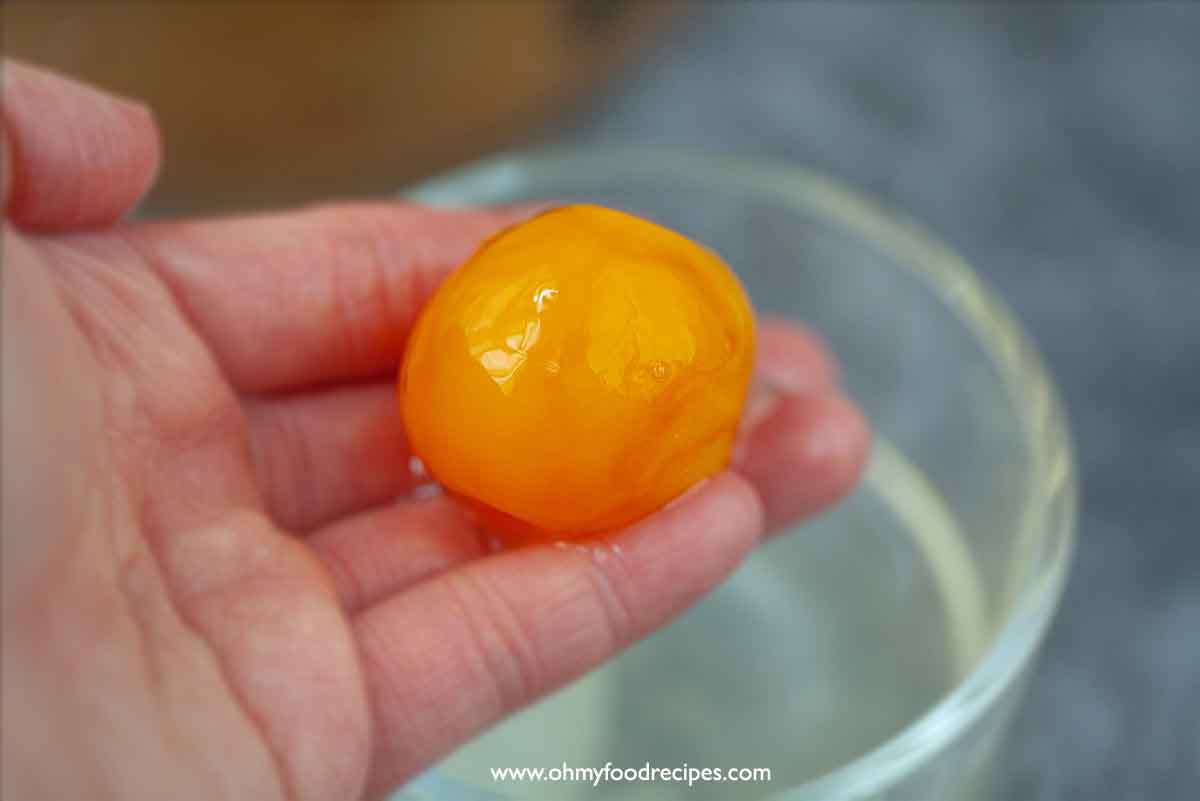
- Use a hand to separate the salted egg yolk. You can use the salted egg yolk to make glutinous rice dumplings, lo mai gai or mooncakes.
- Also, you can boil the salted duck eggs for 15 minutes using the stove top method. Or, cook the salted duck eggs in the instant pot pressure cooker. Pour a cup of water into the instant pot. Then, put a rack in the pot. Close the lid and vent. Push the manual button and adjust time for 5 minutes at high pressure and natural release pressure.
- When the salted duck eggs are cooked, soak them into the ice bath.
- Cut it in half and peel off the shell. It's great to go with rice, congee or stir fry with some vegetables and meat.
Notes
- Use fresh duck eggs and ensure they are washed and dried before brining to prevent contamination.
- Cool the brine completely before pouring over the eggs to prevent partially cooking them.
- Keep the eggs fully submerged by placing a small dish weighted on top inside the jar.
- Store the jar at room temperature in a shaded area for 28 days; chicken eggs require only 21 days due to thinner shells.
- Cook salted eggs by boiling for 15 minutes or pressure cooking for 5 minutes with natural pressure release and then cool in an ice bath.
- Sterilize the glass jar before use to maintain brining hygiene.
Nutrition Information
Show DetailsNutrition Facts
Serving: 12Serving
Amount Per Serving
Calories 134 kcal
% Daily Value*
| Calories | 134kcal | 7% |
| Carbohydrates | 2g | 1% |
| Protein | 9g | 18% |
| Fat | 10g | 15% |
| Saturated Fat | 3g | 15% |
| Polyunsaturated Fat | 1g | 6% |
| Monounsaturated Fat | 5g | 25% |
| Trans Fat | 1g | 50% |
| Cholesterol | 619mg | 206% |
| Sodium | 9541mg | 398% |
| Potassium | 173mg | 4% |
| Fiber | 1g | 4% |
| Sugar | 1g | 2% |
| Vitamin A | 490IU | 10% |
| Vitamin C | 1mg | 1% |
| Calcium | 64mg | 6% |
| Iron | 3mg | 17% |
* Percent Daily Values are based on a 2,000 calorie diet.
User Reviews
Overall Rating
5
You'll Also Love