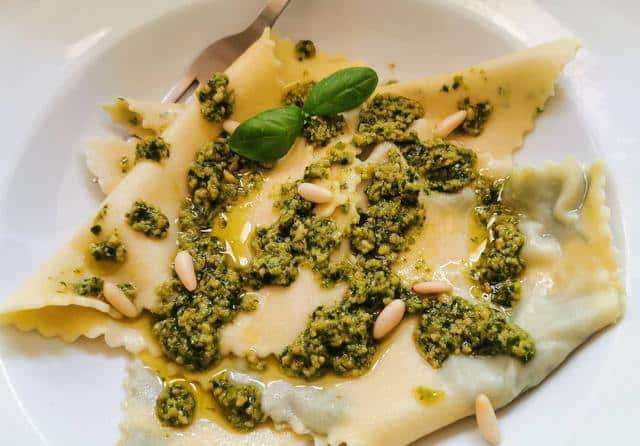
Silk Handkerchief Pasta with Basil Pesto (Fazzoletti di Seta)
User Reviews
5
-
Prep Time
1 hr
-
Cook Time
10 mins
-
Servings
4
-
Calories
413 kcal
-
Course
Main Course
-
Cuisine
Italian
Silk Handkerchief Pasta with Basil Pesto (Fazzoletti di Seta)
Description
This recipe features hand-rolled fazzoletti pasta—large squares with thinner edges and a slightly thicker center—that create a light, silky texture when cooked. The dough uses all-purpose flour, eggs, salt, and olive oil, kneaded until smooth and elastic, ensuring a supple pasta perfect for holding the vibrant pesto sauce.
The basil pesto is made traditionally by grinding garlic and toasted pine nuts into a paste, slowly working in young basil leaves, salt, and olive oil for a smooth consistency. Grated Parmigiano Reggiano and Pecorino Sardo cheeses add depth and umami, resulting in a bright, balanced sauce with herby freshness and mild nuttiness.
Serving suggestions include tossing the silky pasta with the pungent basil pesto, either using a mortar and pestle or a blender pulse method to preserve flavor. The leftover pasta dough can be adapted into shapes like farfalle. The dish fits well as a first course in a meal or a light main. Adjustments to dough hydration are noted to achieve the right pliability.
Ingredients
For the pesto
- 4 handfuls basil 60-70 g preferably young leaves (In Liguria they use Basilico Genovese D.O.P, fresh leaves
- 30 g pine nuts (1oz) I like to toast mine
- 60 g parmigiano reggiano (2oz) grated
- 60 g Pecorino Sardo cheese 2oz) grated
- 2-3 pinches sea salt coarse
- 1-2 garlic peeled, cloves
- extra virgin olive oil as required) the best is Riviera Ligure D.O.P. This oil is sweet and fruity and enhances the aroma of the basil and seasoning
For the pasta
- 200 g all-purpose flour or all purpose flour (see notes, Italian '00', 7oz
- 2 egg large
- 1 pinch salt
- semolina flour for dusting
- 1 tablespoon extra virgin olive oil for cooking
Instructions
Make the pesto
- BASIL LEAVES If it’s possible, choose medium sized young leaves (brighter green). Rinse the leaves under water and dry them with paper towels.
Basil pesto the traditional way.
- Peel the garlic cloves and put them into a mortar with pine nuts. Grind until you have a paste Then add some basil leaves, and a little coarse salt, and 3 tablespoon of olive oil. Keep working with the pestle, while continuing to add more basil leaves and olive oil until the pesto is smooth. Finally, transfer to a bowl, add the cheeses and stir well.
Using a blender
- Put all the ingredients in the blender and pulse a few seconds at a time until you have the right consistency. Don’t keep pulsing for too long at once as the blender will heat up and this can spoil the basil.
Make the handkerchief pasta (fazzoletti)
- If using a stand mixer sift the flour into the bowl of your kitchen mixer, break the eggs into the center with a pinch of salt and mix and knead until you have a soft dough that doesn’t stick to the sides of the bowl. Then turn it out onto a floured wooden pastry board and finish kneading there. If the dough seems too dry and crumbly add some tepid water.
If making dough by hand
- Mound your sifted flour onto a pastry board, make a well in the center and add a pinch of salt. Break the eggs into the well and whisk them a little ( you could also beat eggs in a small bowl and then add to flour). Start to incorporate the eggs and flour by slowly bringing more flour in from the inside edges of the well. You can use a fork for this. Continue mixing the flour with the eggs until they are no longer runny. Using your hands now, bring the outside edges in, forming a large mass on your board.
- Begin to knead the dough as you would bread, pushing it down with the heel of your hand. Continue kneading for about 7-10 minutes. Knead until the pasta dough is smooth, elastic, and just slightly tacky. You can dust the dough with more flour if it’s too sticky. Work the dough until it is perfectly homogeneous.
- Roll the dough into a ball and cover with a tea towel (or wrap it in plastic wrap) so it does not dry out and let it rest for at least thirty minutes.
Make your fazzoletti.
- Cut off ⅙ of the dough. Re-wrap the rest in cling film so it doesn’t dry out and roll out the piece you cut off until it is flat enough that you can pass it through a pasta machine if you are using one.
- I used my pasta machine to roll out the sheets, first 3-4 times on number 6 (the widest setting on my machine) on the dial and then a couple of times on number 4. Then we continued to roll it even thinner on the pastry board. You want to get the pasta as thin as possible without breaking.
- If you aren’t using a machine you need to keep rolling out the dough until it is thin enough to see your fingers through it. Once your sheets are thin enough cut them into 15cm squares (15x15). Transfer the ready fazzoletti to a floured tray while you finish the rest. Repeat with the remaining dough.
Making parsley and basil herb fazzoletti
- If you want to make herb fazzoletti you just need to place some basil and parsley leaves onto one end of one of the sheets of pasta. Fold the sheet over to cover the leaves and then roll together until as thin as possible. If your pasta is too dry, the two sides of the sheet may not stick together. In this case wet around the edges with a little water before folding and rolling out.
Finish the dish.
- Put a pot of water onto boil for the pasta. Once it boils, add salt and a tablespoon of olive oil. Bring to the boil again. Cook the handkerchief pasta for about 4-5 minutes, 2-4 at a time depending on the size of your pot. Remove the pasta pieces from the water using a slotted spoon and then cook more of them.
- Mix your pesto with a little pasta cooking water until you have the consistency you want. Put some pesto in the bottom of your serving plate. Add the cooked pasta handkerchiefs and then some more pesto and pine nuts on top. Serve with extra grated parmigiano if required.
Notes
- Young medium-sized basil leaves produce the best pesto flavor and color.
- Adjust flour and liquid as needed depending on egg size and flour type to achieve soft dough.
- Leftover pasta dough can be shaped into farfalle by cutting rectangles and pinching centers, lightly moistening fingers to help seal.
- Traditional pesto is made with a mortar and pestle, but a blender can be used with short pulses to avoid overheating and damaging basil aroma.
Nutrition Information
Show DetailsNutrition Facts
Serving: 4Serving
Amount Per Serving
Calories 413 kcal
% Daily Value*
| Calories | 413kcal | 21% |
| Carbohydrates | 41g | 14% |
| Protein | 19g | 38% |
| Fat | 19g | 29% |
| Saturated Fat | 7g | 35% |
| Polyunsaturated Fat | 4g | 24% |
| Monounsaturated Fat | 7g | 35% |
| Trans Fat | 0.01g | 1% |
| Cholesterol | 108mg | 36% |
| Sodium | 656mg | 27% |
| Potassium | 164mg | 3% |
| Fiber | 2g | 8% |
| Sugar | 1g | 2% |
| Vitamin A | 406IU | 8% |
| Vitamin C | 1mg | 1% |
| Calcium | 363mg | 36% |
| Iron | 3mg | 17% |
* Percent Daily Values are based on a 2,000 calorie diet.
User Reviews
Overall Rating
5
You'll Also Love