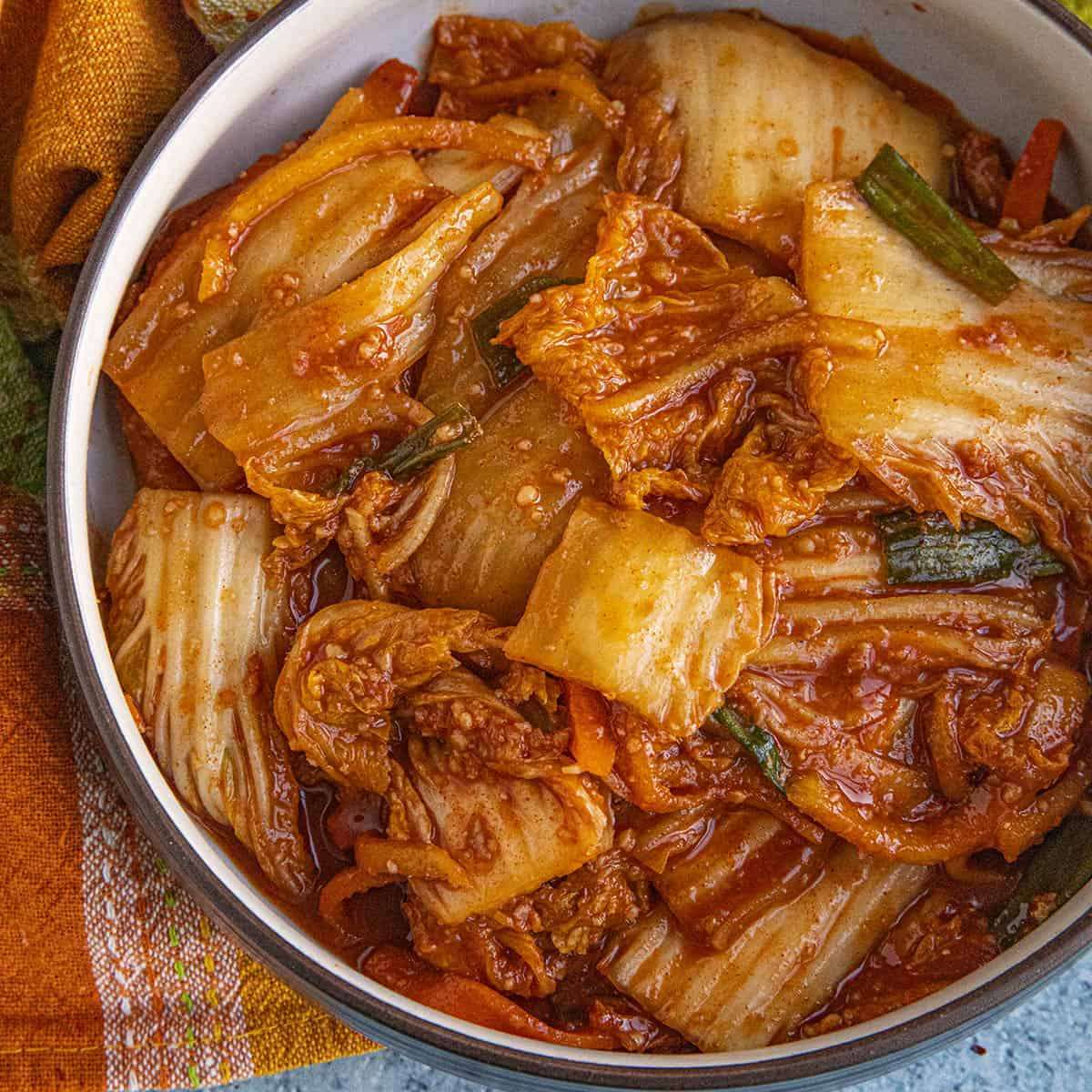
Spicy Kimchi Recipe (How to Make Kimchi)
User Reviews
5
-
Prep Time
30 mins
-
Cook Time
2 d
-
Servings
16
-
Calories
75 kcal
-
Course
Side Dish, Main Course
-
Cuisine
Korean
Spicy Kimchi Recipe (How to Make Kimchi)
Description
Spicy Kimchi is made by first soaking Napa cabbage in a brine of salted water to achieve the right texture and cleanse the leaves. After draining and rinsing, the cabbage is mixed with an array of julienned vegetables including carrot, daikon or turnip, scallion, and Asian pear, which add crunch and subtle sweetness. The key spice paste is created by simmering glutinous rice flour with water to form a starch base, then blending with gochugaru chili flakes, fish sauce, garlic, ginger, salted shrimp, and optionally miso paste for umami depth.
The mixture is then combined with the vegetables and cabbage, thoroughly coating each piece. Fermentation at room temperature for 8 to 12 hours kick-starts the process before refrigerating the kimchi, where it continues to develop flavor slowly. Over time, the kimchi acquires a sour note that can be adjusted by fermenting longer or shorter depending on personal preference.
This home-fermented kimchi makes a versatile and traditional Korean side dish, lending brightness and spice to meals. It pairs well with rice, soups, stews, and grilled meats, providing contrast and complexity. Understanding the fermentation times and tasting as it matures can help ensure every batch reaches desired tanginess.
Proper brining and handling are crucial steps to make sure the cabbage is tender yet crisp, while the chili and fermented seafood components build layers of flavor. Kimchi can keep refrigerated for several months, slowly fermenting and intensifying, making it a valuable staple in the kitchen.
Ingredients
FOR THE CABBAGE BRINE
- 2 quarts water filtered or bottled water are good, unchlorinated
- ½ cup kosher salt or sea salt
- 1 head about 3 pounds; 1.3kg Napa cabbage
TO MAKE THE KIMCHI
- 1 carrot sliced into matchsticks
- 1 scallion end trimmed, cut into ½ inch pieces, bunch
- 1 daikon radish peeled, sliced into matchsticks, or turnip, small
- ½ Asian pear peeled, sliced into matchsticks
- 6 garlic chopped, cloves
- 2 tablespoons ginger fresh grated
- 3 tablespoons glutinous rice flour
- 1 cup gochugaru Korean chili flakes
- 1/2 cup fish sauce
- 3 tablespoons salted shrimp saeujeot, minced – as an alternative, use 1.5 tablespoons shrimp paste, or 3 tablespoons chopped dried shrimp (soaked), or 2 tablespoons miso paste
- 2 tablespoons miso paste red or white – optional, for extra umami flavor
Instructions
BRINE THE CABBAGE
- Whisk together the unchlorinated cold water and sprinkle salt in a large bowl.
- Slice off the root end of the cabbage. Slice the cabbage into quarters and submerge them in the brine. Use a plate or other small weights to keep the cabbage completely submerged.
- Set aside for 8-12 hours at room temperature.
- Set the cabbage into a colander and drain the brine. Rinse the cabbage and squeeze out excess water using your hands. Chop the cabbage into 1 inch pieces (if desired, or leave the pieces whole).
MAKE THE KIMCHI
- Add the cabbage to a large bowl along with the carrot, scallions, radish or turnip, Asian pear, garlic and ginger. Toss to combine.
- Add the rice flour and 1 cup water to a sauce pan. Heat to a simmer, then whisk for 3-4 minutes until smooth and the mixture forms a smooth, loose paste.
- Remove from heat and stir in the gochugaru. The chili flakes will bloom as the mixture cools.
- Stir in the fish sauce, salted shrimp, and miso paste (or your other umami alternatives).
- Pour the mixture into the cabbage and vegetables. With your hands, rub the gochugaru mixture into the vegetables, covering them as completely as possible. Be thorough. Really get in there with your hands!
- Taste and adjust for salt or any other desired seasonings.
- Pack the kimchi into a large mason jar (or several). You can use other vessels, like a fermentation crock. Press the contents down and weigh it down with glass fermentation weights (or use a plastic bag filled with water).
- Cover with a fermentation airlock lid, or use fermentation membranes (see notes). If you don’t have such lid options, use a 2-piece lid, but don’t screw it down, just set it on top. This is to allow any gases to escape while fermenting.
- Set aside away from any sunlit areas and ferment for 1-3 days at room temperature (you CAN ferment longer if you’d like – see RECIPE NOTES on fermentation times). Moisture should release from the kimchi, so press the kimchi down if needed to keep it below the liquid. Gases should escape via the fermentation membrane, or just loosen the lid to let any gas build up out.
- Set into the refrigerator and let sit for 1 week to let the flavors mingle. You can enjoy it right away, but it is better to wait. The fermenting kimchi will continue to ferment slowly in the fridge.
- Use as desired.
Notes
- Use unchlorinated water for the cabbage brine to ensure proper fermentation.
- Fermentation times vary; taste to judge sourness and ferment to your preference.
- Store kimchi in the refrigerator to slow fermentation and maintain flavor for 6-8 months or longer.
- The dish will develop more sourness as it ferments; this is normal and varies by personal taste.
Nutrition Information
Show DetailsNutrition Facts
Serving: 16Serving
Amount Per Serving
Calories 75 kcal
% Daily Value*
| Calories | 75kcal | 4% |
| Carbohydrates | 12g | 4% |
| Protein | 5g | 10% |
| Fat | 2g | 3% |
| Saturated Fat | 1g | 5% |
| Polyunsaturated Fat | 1g | 6% |
| Monounsaturated Fat | 1g | 5% |
| Cholesterol | 32mg | 11% |
| Sodium | 998mg | 42% |
| Potassium | 416mg | 9% |
| Fiber | 6g | 24% |
| Sugar | 3g | 6% |
| Vitamin A | 5370IU | 107% |
| Vitamin C | 6mg | 7% |
| Calcium | 78mg | 8% |
| Iron | 3mg | 17% |
* Percent Daily Values are based on a 2,000 calorie diet.
User Reviews
Overall Rating
5
You'll Also Love