The Perfect Pie Crust
User Reviews
4.5
The Perfect Pie Crust
Description
This crust preparation starts with mixing flour, salt, and sugar, then grating frozen salted butter into the mixture to preserve small chunks coated with flour. This careful coating prevents the butter from melting too quickly and produces flaky layers upon baking. Sour cream is incorporated gently with a fork and hands, mashed into the mixture without overworking, maintaining the desired crumbly texture.
The dough should be handled minimally to avoid toughening. The use of sour cream instead of water or milk gives the crust a tender crumb and slight tang, making it suitable for sweet or savory pies. The recipe specifies unbleached flour and frozen butter to optimize consistency.
The crust is adaptable for single or double crust pies and requires attention to measuring flour correctly to prevent dryness. Using the spoon and sweep method for flour measurement helps avoid overflouring, which could hinder dough consistency.
This dough is a reliable foundation for various pies, offering a flaky yet tender result thanks to the butter and sour cream technique.
Ingredients
- 1 ½ cups all-purpose flour unbleached, see note
- ¼ teaspoon salt
- 2 teaspoons granulated sugar
- 10 tablespoons butter frozen, salted
- ½ cup sour cream not lowfat or light, plus an additional tablespoon or three if needed
Instructions
- In a medium bowl, lightly whisk together the flour, salt and sugar.
- Using the large holes of a box grater, grate the butter into the dry ingredients.
- With a fork, toss the butter and flour mixture until the butter pieces are all evenly coated with flour. Don't break down the butter pieces in this step, just lightly toss until they are coated with flour.
- Spoon the sour cream into the bowl. Using the same fork, mix the sour cream into the butter/flour mixture by pressing the fork down into the sour cream in order to mash the large clumps of sour cream into the flour and butter. A commenter suggested using a pastry blender which will help incorporate the sour cream a bit better. The sour cream won't mix in like a traditional pie crust with ice water. But take care not to overwork the dough trying to get the sour cream mixed in - if the butter pieces get too small and overprocessed, the crust will be tough.
- After a few turns with the fork, it is easiest to use your hands to pull the dough together. It will look a bit shaggy but as you press it together (quickly and firmly so the the butter pieces don't melt), it should start to form a cohesive ball.
- If it still seems overly dry, add a teaspoon or so of sour cream at a time until it comes together.
- It's ok if there are still a few dry spots or cracks in the dough. The mixture should not be overly wet or sticky. At the same time, it shouldn't be falling apart either. It should hold together when pressed (see the pictures below). Many of you have had to add quite a bit more sour cream. That's ok as long as the crust isn't overly saturated (then it will be dense and gummy). Much of that depends on how you measure flour - if you pack the flour into your measuring cup, you'll obviously need more sour cream (try to measure the flour with a light hand).
- At this point the dough can be rolled out on a lightly floured counter or it can also be pressed into a flat disc and wrapped in plastic to be refrigerated for 1-2 days or frozen for up to a month.
- To roll out, lightly flour your countertop and using firm, even strokes, roll from the center outward, turning the dough a quarter turn every few strokes. The less you mess with the dough the better - even rolling - so try not to overwork it. Roll it out to a thin crust as quickly as possible.
- Roll the dough over the rolling pin and unroll it onto the pie plate. Gently lift up the edges of the pie crust and settle it into the bottom of the pie plate without pressing or smushing.
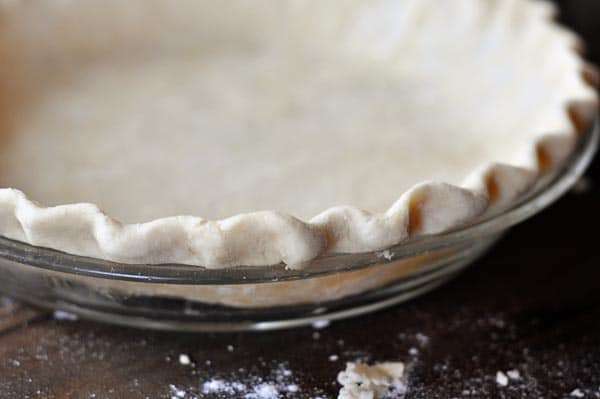
- Trim the edges to within 1/4-inch. Fold the short overhang underneath the top edge of the pie plate and crimp all the way around.
- Cover with plastic wrap and refrigerate for 30 minutes before using. To blind bake (prebake the pie crust), line the refrigerated crust with foil and fill with dry beans or pie weights. Bake at 350 degrees for 20-25 minutes. Gently remove the foil and beans/weights and return to the oven to bake for another 10-12 minutes until nicely golden.
Notes
- This recipe can be doubled easily to make a double crust pie.
- To ensure the perfect texture, avoid overmeasuring flour; use the spoon and sweep method rather than dipping directly into the flour container.
- Using frozen salted butter and proper mixing technique is key to keeping the crust tender and flaky.
User Reviews
Overall Rating
4.5
You'll Also Love