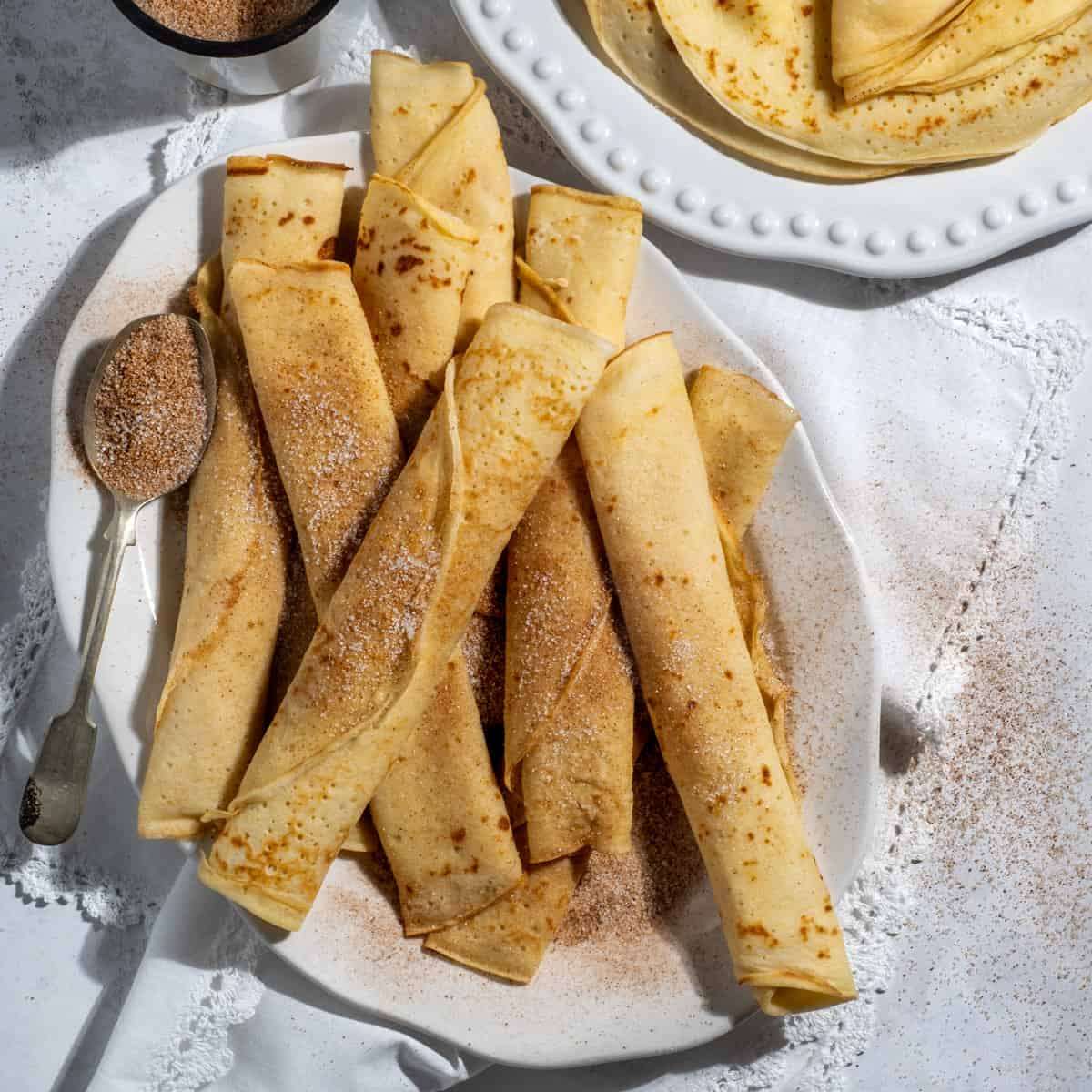
Traditional South African Pancakes Recipe (Pannekoek)
User Reviews
5
-
Prep Time
10 mins
-
Cook Time
30 mins
-
resting time:
15 mins
-
Total Time
55 mins
-
Servings
20 pancakes, or up to 25 pancakes in a medium-sized pan
-
Calories
237 kcal
-
Course
Dessert, Main Course, Breakfast, Snacks
-
Cuisine
South African
Traditional South African Pancakes Recipe (Pannekoek)
Description
The Traditional South African Pancakes, called Pannekoek, are prepared by blending eggs with water, vinegar, and oil, then gradually incorporating a sifted mixture of flour, baking powder, and salt. The batter is beaten until smooth and allowed to rest before cooking. Pancakes are cooked one ladle at a time in a lightly oiled non-stick frying pan over medium-high heat, producing thin, tender layers with slight rise from baking powder.
The accompanying cinnamon sugar mix combines white sugar and ground cinnamon to add a sweet and warmly spiced topping. These pancakes are often served for breakfast or as a treat, folded or rolled with the cinnamon sugar sprinkled on top or inside.
The recipe calls for a thin layer of oil in the pan and careful spreading to achieve evenly cooked pancakes with slight softness and a delicate crumb. Resting the batter helps improve texture and reduces lumps.
Ingredients
For the pancakes
- 4 egg
- 4½ cups water
- ¼ cup vinegar 4 tablespoons and ½ teaspoon
- 1 cup oil neutral oil like sunflower, vegetable
- 4 cups all-purpose flour 600g
- 4 teaspoons baking powder
- 1 teaspoon salt
For the cinnamon sugar
- ½ cup white sugar 125ml
- 2 tablespoons ground cinnamon
Instructions
- In a large bowl, whisk the eggs and water until the eggs are well broken up and evenly dispersed in the water. An electric hand mixer works well, but you can also use a balloon whisk.
- Add the vinegar and oil to the egg mixture and beat until well combined.
- In a separate bowl, sift the flour, baking powder and salt together.
- Sprinkle a third of the dry ingredients onto the wet ingredients and beat until incorporated. Repeat this process twice more with the remaining flour.
- Beat until you have a smooth batter that resembles thick cream. If you notice any pockets or lumps of flour, increase the speed and beat only until they disappear.
- Set the batter aside to rest for 15 minutes.
- Prepare the non-stick frying pan by adding a small amount of oil. Use a piece of kitchen paper to spread the oil around the pan, ensuring only a very thin layer remains. Keep the oiled paper handy in case you need to apply more later.
- Heat the pan over medium-high heat.
- Add a ladle of batter to the hot pan. As soon as the batter hits the pan, swirl it around to evenly distribute it to the edges. Work quickly before the batter settles.
- Still over medium-high heat, cook the pancake until the surface appears dull (with no shiny patches of batter) and the edges of the pancake start pulling away from the pan.
- Gently slide the spatula underneath the pancake up to the middle and quickly and confidently flip it over. Cook until the underside is light, golden brown with a few darker spots.
- Repeat for the remaining batter, regulating the heat as necessary. Cooked pancakes can be kept on a plate covered top and bottom with foil. Alternatively, place a plate over a saucepan of simmering water with the pancakes on top to keep warm.
- In a small bowl, combine the cinnamon and sugar, then sprinkle the mixture generously onto each pancake before rolling it up.
Nutrition Information
Show DetailsNutrition Facts
Serving: 20pancakes, or up to 25 pancakes in a medium-sized pan
Amount Per Serving
Calories 237 kcal
% Daily Value*
| Calories | 237kcal | 12% |
| Carbohydrates | 26g | 9% |
| Protein | 4g | 8% |
| Fat | 13g | 20% |
| Saturated Fat | 1g | 5% |
| Polyunsaturated Fat | 4g | 24% |
| Monounsaturated Fat | 8g | 40% |
| Trans Fat | 0.1g | 5% |
| Cholesterol | 33mg | 11% |
| Sodium | 220mg | 9% |
| Potassium | 44mg | 1% |
| Fiber | 1g | 4% |
| Sugar | 5g | 10% |
| Vitamin A | 50IU | 1% |
| Vitamin C | 0.03mg | 0% |
| Calcium | 67mg | 7% |
| Iron | 2mg | 11% |
* Percent Daily Values are based on a 2,000 calorie diet.
User Reviews
Overall Rating
5
You'll Also Love