Tuscan Roast Pork
User Reviews
5
-
Prep Time
30 mins
-
Cook Time
2 hrs 30 mins
-
Total Time
3 hrs
-
Servings
4 servings
-
Calories
465 kcal
-
Course
Main Course
-
Cuisine
Italian
Tuscan Roast Pork
Description
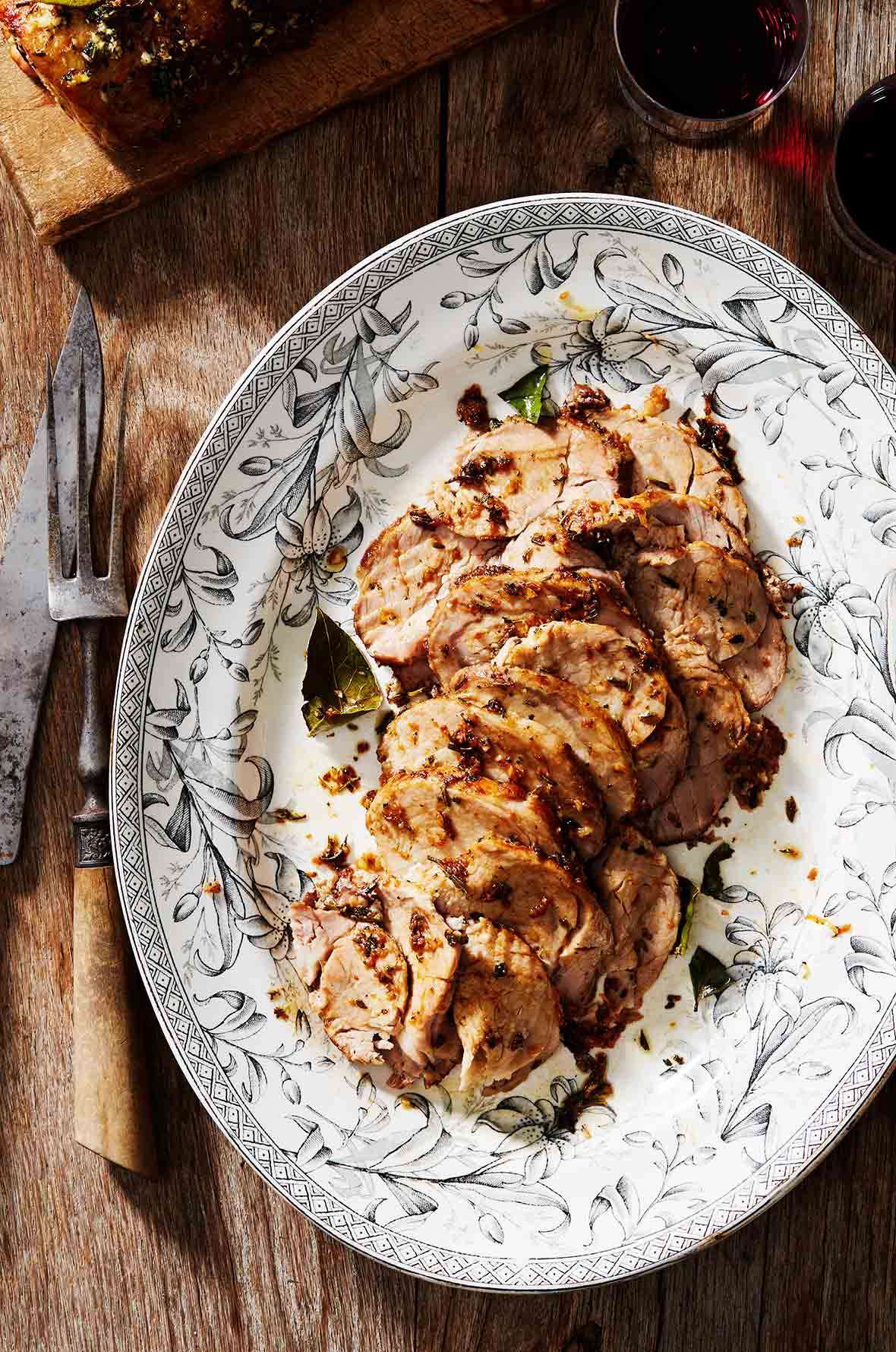
The recipe "Tuscan Roast Pork" highlights a pork loin seasoned with a coarse paste made from garlic, fresh rosemary, chopped sage, and an optional anchovy fillet for depth. The pork, which retains a thick fat cap, is tied crosswise with kitchen string, optionally incorporating bay leaves to impart gentle herbal undertones. Salt is rubbed into the meat before it is seared in a skillet over medium-high heat until a dark golden crust forms on all sides. This partial cooking develops rich flavor and texture before roasting.
The process involves roasting the seared pork at a low oven temperature (225°F or 110°C), which ensures gradual doneness, preserving juiciness and yielding tender meat without drying out the exterior. The herb paste complements the pork's natural flavors with a subtle garlic and aromatic herbal presence.
Serving the Tuscan Roast Pork works well alongside roasted vegetables or a simple salad, where the savory, herb-imbued crust contrasts with fresh sides. The anchovy, if included, enhances umami without an overt fishy taste, blending into the Mediterranean flavor profile.
Ingredients
- 4 large garlic peeled, cloves
- 2 tablespoons rosemary fresh leaves
- 2 tablespoons sage leaves chopped fresh
- 1 anchovy fillet or 1 teaspoon anchovy paste (optional, oil-packed
- 5 tablespoons extra-virgin olive oil
- 2 pounds pork loin thick fat cap left on, boneless center-cut, not tenderloin
- 2 bay leaf optional
- About 3/4 teaspoon kosher salt
Instructions
- Preheat the oven to 225°F (110°C) and position a rack in the center of the oven.
- Meanwhile, in the bowl of a small food processor, combine the garlic, rosemary, sage, anchovy (if using), and 3 tablespoons oil and process until a coarse paste forms. (Alternatively, you can use a mortar and pestle.)
- If desired, use kitchen string to tie the pork tightly crosswise about every 2 inches (5 cm). You can slip the bay leaves under the twine if you like. If you do not tie your pork, but wish to use bay leaves, simply carve a couple slits in the pork and tuck the bay leaves into the slits.
- Season the pork on all sides with the salt, rubbing the meat to coat it.
- In a large ovenproof skillet over medium-high heat, heat the remaining 2 tablespoons oil until shimmering. Add the pork and sear, starting with the fatty side and using tongs to turn it, until dark golden brown on all sides, 8 to 10 minutes total. Turn off the heat and let the pork in the skillet.
- Using an offset spatula or pastry brush, coat the pork with the herb mixture. If you’re the sort who likes the punch of raw garlic, reserve 1 tablespoon of the herb mixture to coat the pork after it comes out of the oven.
- Transfer the skillet to the center rack in the oven and roast until the meat is tender and the internal temperature is around 180°F (82°C), 2 to 3 hours. (Rest assured, if you just got alarmed at those numbers, that although this is a much higher internal temperature than we typically cook pork, it works.)
- Remove the skillet from the oven. If desired, brush the top and sides of the pork with the reserved 1 tablespoon herb mixture. Let the pork cool for at least 5 minutes.
- Transfer the pork to a cutting board, reserving the cooking juices in the skillet. Remove and discard the string and bay leaves, if using.
- Slice the pork very thinly (about 1/8 inch | 4 mm thickness) and arrange the slices on a serving platter. Drizzle with the juices and herbs from the pan. Serve warm or at room temperature.
Nutrition Information
Show DetailsNutrition Facts
Serving: 4servings
Amount Per Serving
Calories 465 kcal
% Daily Value*
| Serving | 1portion | |
| Calories | 465kcal | 23% |
| Carbohydrates | 2g | 1% |
| Protein | 51g | 102% |
| Fat | 27g | 42% |
| Saturated Fat | 5g | 25% |
| Monounsaturated Fat | 16g | 80% |
| Cholesterol | 143mg | 48% |
| Sodium | 558mg | 23% |
| Fiber | 1g | 4% |
| Sugar | 1g | 2% |
* Percent Daily Values are based on a 2,000 calorie diet.
User Reviews
Overall Rating
5
You'll Also Love