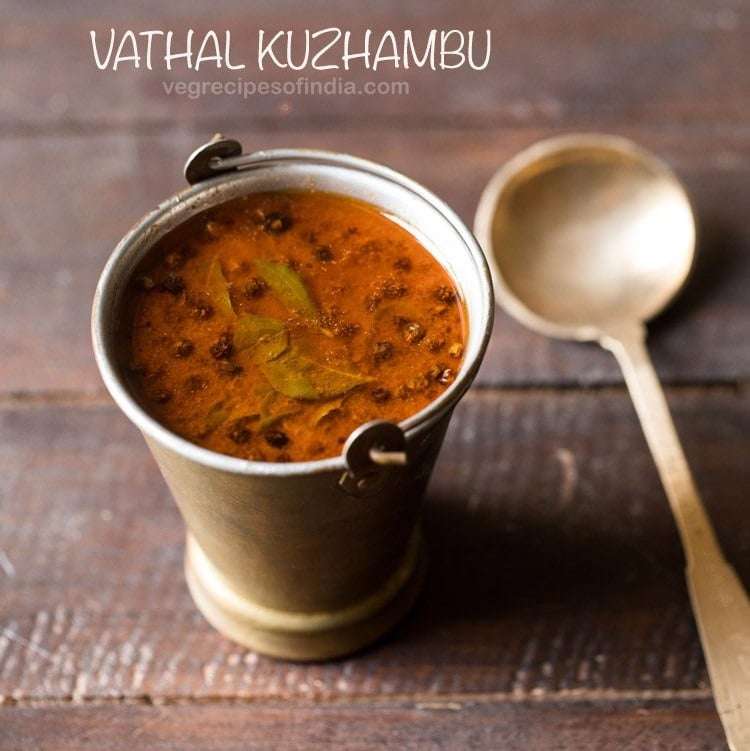
Vatha Kulambu | Vatha Kuzhambu
User Reviews
5
-
Prep Time
5 mins
-
Cook Time
25 mins
-
Total Time
30 mins
-
Servings
4
-
Calories
119 kcal
-
Course
Main Course
-
Cuisine
Indian
Vatha Kulambu | Vatha Kuzhambu
Description
The recipe begins by soaking tamarind in hot water to extract the sour pulp, which forms the base of the curry. In a pan, sesame (gingelly) oil is heated gently, and mustard seeds are tempered until they crackle. Fenugreek seeds, broken dry red chilies, curry leaves, and a pinch of asafoetida (hing) are added to infuse the oil with their aroma. Sun-dried black nightshade berries (manathakkali vathal) are then stir-fried carefully to release their flavor without burning, followed by adding sambar powder to toast briefly off the heat.
This combination creates the characteristic pungent, spicy, and tangy flavor profile of Vatha Kulambu, balanced with optional jaggery for mild sweetness and rice flour to adjust thickness. Salt and water complete the curry, which is simmered until fully blended. The dish has a robust and earthy flavor from the dried berries, offset by tamarind's sourness and tempered spices.
Vatha Kulambu is typically served hot with plain steamed rice, where its complex taste complements simple rice, making it a comforting and flavorful meal. It's a regional specialty with a distinctive blend of ingredients unique to southern Indian cooking.
Ingredients
for soaking tamarind
- 1 tamarind or 1 tablespoon tightly packed tamarind, lemon sized ball
- 1 cup water hot
for making vatha kulambu
- 3 tablespoons sesame oil (gingelly oil)
- 3 tablespoons black nightshade berries manathakkali vathal, sundried
- ½ teaspoon mustard seeds
- ½ teaspoon fenugreek seeds
- 1 to 2 red chili peppers broken and seeds removed, dry
- 8 to 10 curry leaves
- 1 asafoetida hing, pinch
- 1.5 to 2 tablespoons sambar powder
- 2 cups water
- salt as required
- 1 teaspoon rice flour – optional
- ½ teaspoon jaggery – optional
Instructions
soaking tamarind
- In a bowl take 1 lemon sized tamarind ball or 1 tablespoon tightly packed tamarind. Preferably use aged and dark tamarind.
- Add 1 cup hot water. Cover and soak tamarind for 20 to 30 minutes.
- Squeeze the tamarind and extract the tamarind pulp in the water. Keep tamarind pulp aside.
making vatha kuzhambu
- Heat 3 tablespoons sesame oil (gingelly oil) in a pan. Keep flame to a low and add ½ teaspoon mustard seeds.
- Let the mustard seeds crackle.
- Keep the flame to a low and then add ½ teaspoon fenugreek seeds, 1 to 2 dry red chilies, 8 to 10 curry leaves and 1 pinch asafoetida (hing).
- Fry and stir till the red chilies change color.
- Keeping the flame to a low, now add 3 tablespoons manathakkali vathal (sun dried black nightshade).
- Stirring continuously, fry for some seconds till the color of manathakkali changes. Make sure you do not burn them.
- Now switch off the flame and add 1.5 to 2 tablespoons sambar powder.
- Fry for 1 minute switching off the flame. You can even fry at a low flame. But do make sure that the sambar powder does not get burnt.
- Add the tamarind pulp and 2 cups water. give a stir.
- Add salt as per taste. mix well and let this vatha kuzhambu come to a boil on medium-low flame for about 25 to 30 minutes.
- Continue to simmer till the curry or gravy thickens slightly. You will see some oil specks on the top.
- Then add 1 teaspoon rice flour. Adding rice flour is optional and can be skipped.
- Add ½ teaspoon jaggery. Adding jaggery is also optional.
- Mix well and continue to simmer vatha kulambu for 4 to 5 minutes more. After you switch off the flame you should clearly see a layer of oil after allowing the kuzhambu to rest for 1 to 2 minutes. Check the taste and add more salt if required.
- Serve vatha kuzhambu with steamed rice.
Nutrition Information
Show DetailsNutrition Facts
Serving: 4Serving
Amount Per Serving
Calories 119 kcal
% Daily Value*
| Calories | 119kcal | 6% |
| Carbohydrates | 4g | 1% |
| Protein | 1g | 2% |
| Fat | 11g | 17% |
| Saturated Fat | 2g | 10% |
| Sodium | 301mg | 13% |
| Fiber | 1g | 4% |
| Sugar | 1g | 2% |
| Vitamin A | 109IU | 2% |
| Vitamin B2 (Riboflavin) | 1mg | |
| Vitamin B3 (Niacin) | 23mg | |
| Vitamin C | 41mg | 46% |
| Vitamin E | 1mg | |
| Vitamin K | 1µg | |
| Calcium | 58mg | 6% |
| Vitamin B9 (Folate) | 235µg | |
| Iron | 2mg | 11% |
| Magnesium | 3mg | 1% |
| Phosphorus | 11mg |
* Percent Daily Values are based on a 2,000 calorie diet.
User Reviews
Overall Rating
5
You'll Also Love