White Sugar Sponge Cake (Bai Tang Gao - 白糖糕)
User Reviews
4.7
White Sugar Sponge Cake (Bai Tang Gao - 白糖糕)
Description
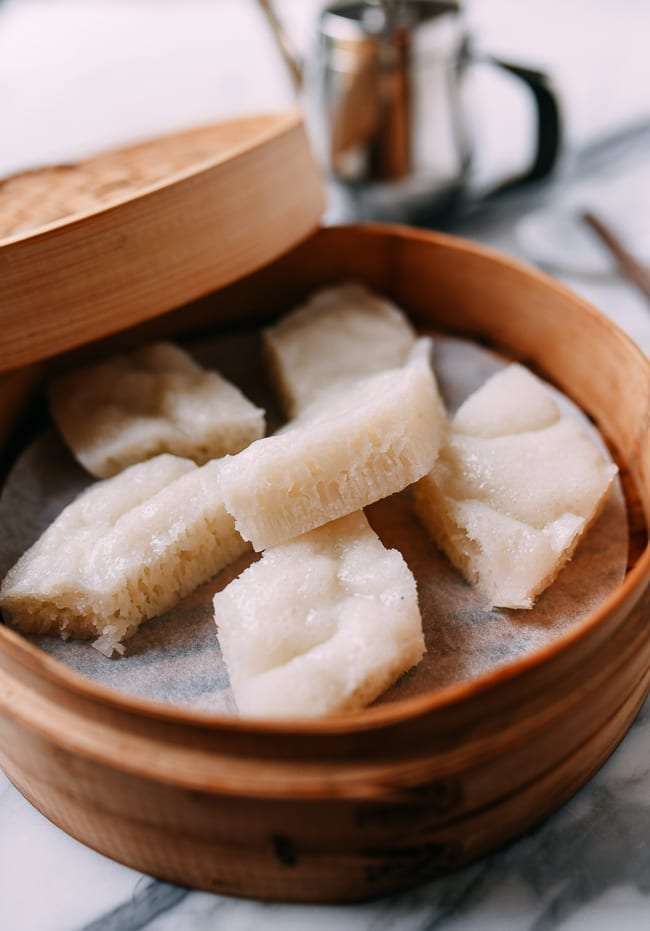
The White Sugar Sponge Cake (Bai Tang Gao) recipe combines rice flour and sugar dissolved in hot water, mixed into a thin batter with active dry yeast. Allowing the batter to ferment for several hours produces natural bubbles, which result in a uniquely airy and tender sponge texture after steaming. The steamed cake holds a moist crumb with subtle sweetness and an understated flavor profile focused on the rice and sugar.
The preparation involves steaming the fermented batter in a lightly oiled pan until set, creating a cake that is soft yet slightly springy. Its texture differs from baked cakes, offering a moist and delicate chew characteristic of steamed rice cakes.
These cakes are typically served cold or at room temperature and can be reheated briefly in a steamer to revive their softness. They make a subtle accompaniment to tea or can be enjoyed as a light snack. Storing the cake in an airtight container at room temperature during cooler months or in the refrigerator during warmer months will keep it fresh for several days.
Ingredients
- 150 g rice flour (1 1/4 cups)
- 300 g water (divided; note that when measuring water, g = ml)
- 100 g granulated sugar 1/2 cup, white
- 3 g active dry yeast (about 1 teaspoon; can substitute instant yeast)
- 30 g water 30 ml; about 2 tablespoons, lukewarm
- vegetable oil (for brushing)
Instructions
- In a heat proof mixing bowl, mix the rice flour with 80g (80 ml) water to form large clumps. Set aside.
- In a small pot, add the sugar and the remaining 200g water. Bring to a boil and stir just until the sugar is completely dissolved. Turn off the heat and immediately pour the boiling sugar water into the clumped rice mixture. Whisk for a few minutes, until smooth (there should be no lumps). The mixture will look like a thin batter. Cool until lukewarm.
- While the mixture is cooling, dissolve 3g active dry yeast (or instant yeast) into 2 tablespoons lukewarm water. Let stand for 15 minutes so the yeast can bloom.
- When the rice mixture is lukewarm and the yeast has activated, stir the yeast mixture into the batter and whisk for 3 minutes.
- Cover the bowl with an overturned plate, and allow it to ferment in a warm place for at least 3 hours. I left mine inside the microwave with a large mug of boiled water sitting next to it and the door closed. After each hour, I replaced the mug of water with another mug of boiling water to keep the environment warm.
- In the last 10 minutes of fermentation, prepare your steamer, and make sure there’s enough water in it to last for 20 minutes of steaming over high heat.
- After the 3 hours of fermentation are complete, you’ll see foamy bubbles have formed on the surface of your batter. Turn on the heat to boil the water in the steamer.
- Pour the rice mixture into a 8" to 9" pie pan or other shallow heatproof dish that will fit inside your steamer. When the water is at a rolling boil, carefully place the dish into the steamer, cover, and steam for 20 minutes on high heat.
- After 20 minutes, turn off the heat but do not uncover the steamer. Let the cake rest for 2 minutes. After 2 minutes, you may open the lid and remove the cake from the steamer.
- Brush the top of the cake lightly with vegetable oil to give it a nice shine and keep it moist. Allow it to cool on the counter before cutting. Brush your knife with oil before slicing. Serve.
Notes
- Store the sponge cake in an airtight container at room temperature during cooler months and in the refrigerator during warmer months.
- Enjoy the cake cold or at room temperature; to reheat, steam for about 5 minutes until soft again.
Nutrition Information
Show DetailsNutrition Facts
Serving: 8Serving
Amount Per Serving
Calories 123 kcal
% Daily Value*
| Calories | 123kcal | 6% |
| Carbohydrates | 28g | 9% |
| Protein | 1g | 2% |
| Fat | 1g | 2% |
| Saturated Fat | 1g | 5% |
| Sodium | 1mg | 0% |
| Potassium | 14mg | 0% |
| Fiber | 1g | 4% |
| Sugar | 12g | 24% |
| Calcium | 2mg | 0% |
| Iron | 1mg | 6% |
* Percent Daily Values are based on a 2,000 calorie diet.
User Reviews
Overall Rating
4.7
You'll Also Love