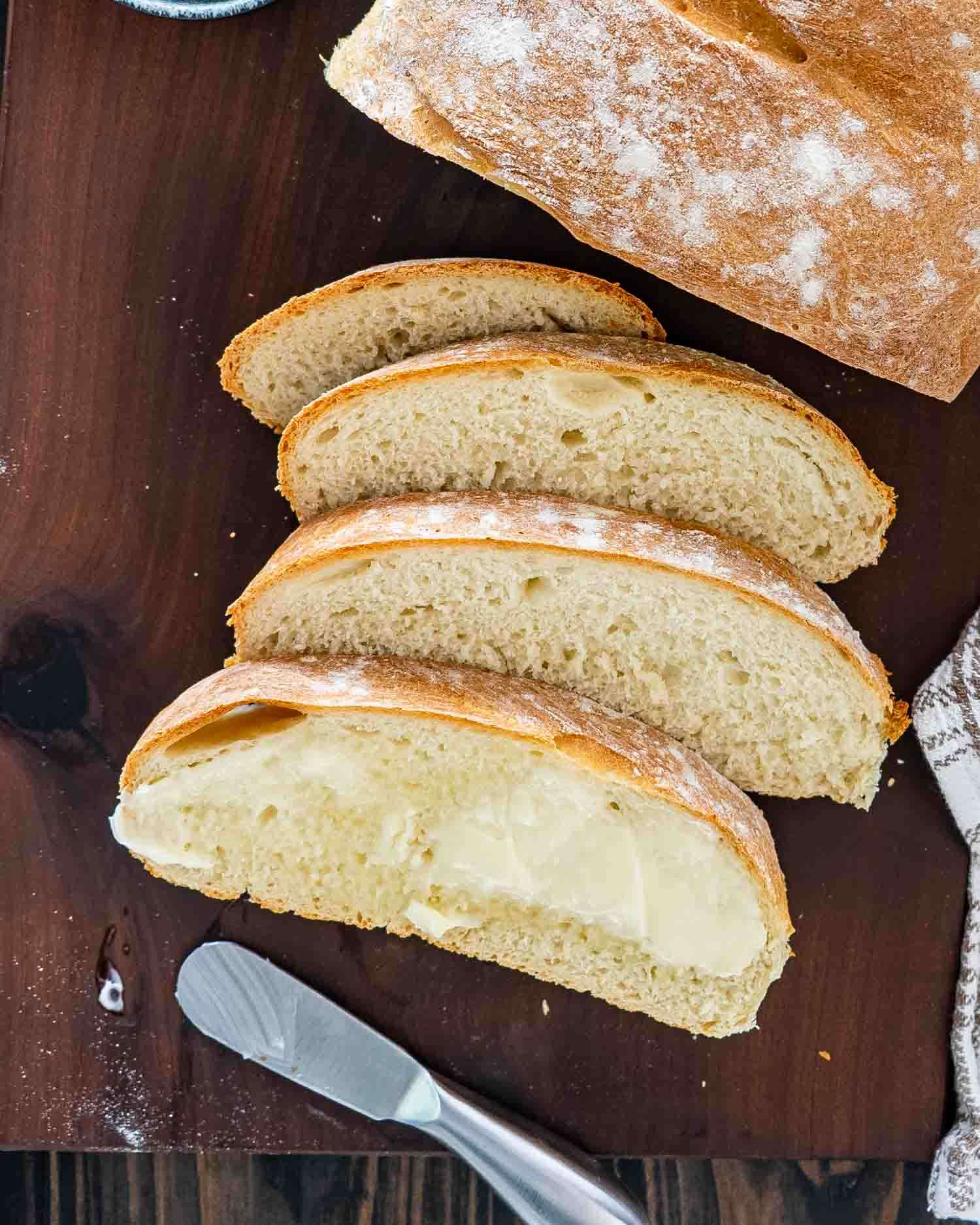
Artisan Bread
User Reviews
4.5
Artisan Bread
Description
This Artisan Bread recipe begins by activating active dry yeast in lukewarm water until foamy, which confirms yeast viability. The yeast mixture is then combined with all-purpose flour and salt in a mixer equipped with a dough hook or stirred by hand until a sticky but unified dough forms. The dough’s elasticity and stickiness indicate proper hydration and gluten development.
After mixing, the dough rises covered in a large bowl with plastic wrap that is punctured to allow gas escape. This rise encourages fermentation, flavor development, and gluten strength without intensive kneading. After rising, the dough is shaped and baked, producing two loaves characterized by a crisp crust and interior with uniform holes.
To check doneness, the bread’s bottom is tapped for a hollow sound. Proper yeast storage is advised for consistent results, recommending refrigeration or freezing of opened yeast containers and noting yeast's living nature diminishes over time. This recipe yields two loaves, each roughly sliced into ten pieces.
Ingredients
- 3 cups water lukewarm
- 1½ tablespoon active dry yeast
- 1½ tablespoon salt
- 6½ cups all-purpose flour
Instructions
- Activate the yeast. In a medium bowl add the warm water, yeast and stir together. Let the mixture sit for 5-10 minutes until the yeast bubbles up. If you are using instant yeast, you do not need to wait for 10 minutes for the yeast to activate.
- Make the dough. In the bowl of your mixer add all the flour, salt, then pour the yeast mixture over the flour and mix using the dough hook of your mixer, until it's all well incorporated and the dough comes clean from the sides of the bowl. I usually do this for about 5 to 7 minutes. If you do not have a mixer, simply add all the ingredients to a large bowl and using a rubber spatula or wooden spoon mix everything together until all the flour is incorporated. The dough will seem shaggy at first but keep mixing until you don't see anymore dry flour. The dough will be very sticky and elastic.
- First rise. Place the dough in a large bowl, cover it well with plastic wrap and poke a couple small holes in the top using toothpicks. Let the dough rise for 2 hours in a warm draft free environment.
- Prep the baking sheet. It is recommended to bake this bread on a stone, however a regular baking sheet will work just fine. Cover the baking sheet, or stone with parchment paper.
- Shape the dough. Add flour to your hands, and divide the dough in two pieces. Add more flour to your hands as necessary. Shape the dough into the desired shape for your bread and place it seam down on the baking sheet. Sprinkle some more flour on top of the loaves.
- Second rise. Let the loaves rest for another 30 minutes so that they can rise a bit. Preheat oven to 450°F. Before placing the bread in the oven, add a pan with a cup of water and place it in the bottom rack.
- Bake the bread. Score the top of your bread with a very sharp knife, to allow gases to escape. Bake the bread for 30 to 35 minutes. The water will allow for the bread to form a nice crusty top.
- Cool and serve. Cool on a rack before serving.
Notes
- Check yeast expiration before use to ensure freshness and proper rising.
- Store unopened yeast in a cool, dry place; refrigerate or freeze opened yeast in airtight containers.
- Allow frozen yeast to come to room temperature for at least 30 minutes before using.
- The dough is sticky and elastic but requires no intensive kneading; the long rise builds gluten and flavor.
- To test bread doneness, tap the bottom; a hollow sound indicates it is fully baked.
- This recipe yields two loaves; slice into 10 pieces per loaf for serving.
Nutrition Information
Show DetailsNutrition Facts
Serving: 20Serving
Amount Per Serving
Calories 149 kcal
% Daily Value*
| Serving | 1slice | |
| Calories | 149kcal | 7% |
| Carbohydrates | 31g | 10% |
| Protein | 4g | 8% |
| Fat | 1g | 2% |
| Saturated Fat | 1g | 5% |
| Polyunsaturated Fat | 1g | 6% |
| Monounsaturated Fat | 1g | 5% |
| Sodium | 526mg | 22% |
| Potassium | 46mg | 1% |
| Fiber | 1g | 4% |
| Sugar | 1g | 2% |
| Vitamin C | 1mg | 1% |
| Calcium | 8mg | 1% |
| Iron | 2mg | 11% |
* Percent Daily Values are based on a 2,000 calorie diet.
User Reviews
Overall Rating
4.5
You'll Also Love