Artisan Bread
User Reviews
5
Artisan Bread
Description
The dough is made by mixing bread flour, instant yeast, sugar, and salt, then adding warm water to form a sticky batter. After initial mixing, the dough is covered and left in a warm spot for 2–3 hours to double in size, or it can be refrigerated overnight for a slower rise. Once risen, the dough is shaped by a series of stretch-and-fold movements to strengthen gluten and maintain air bubbles, promoting an open crumb.
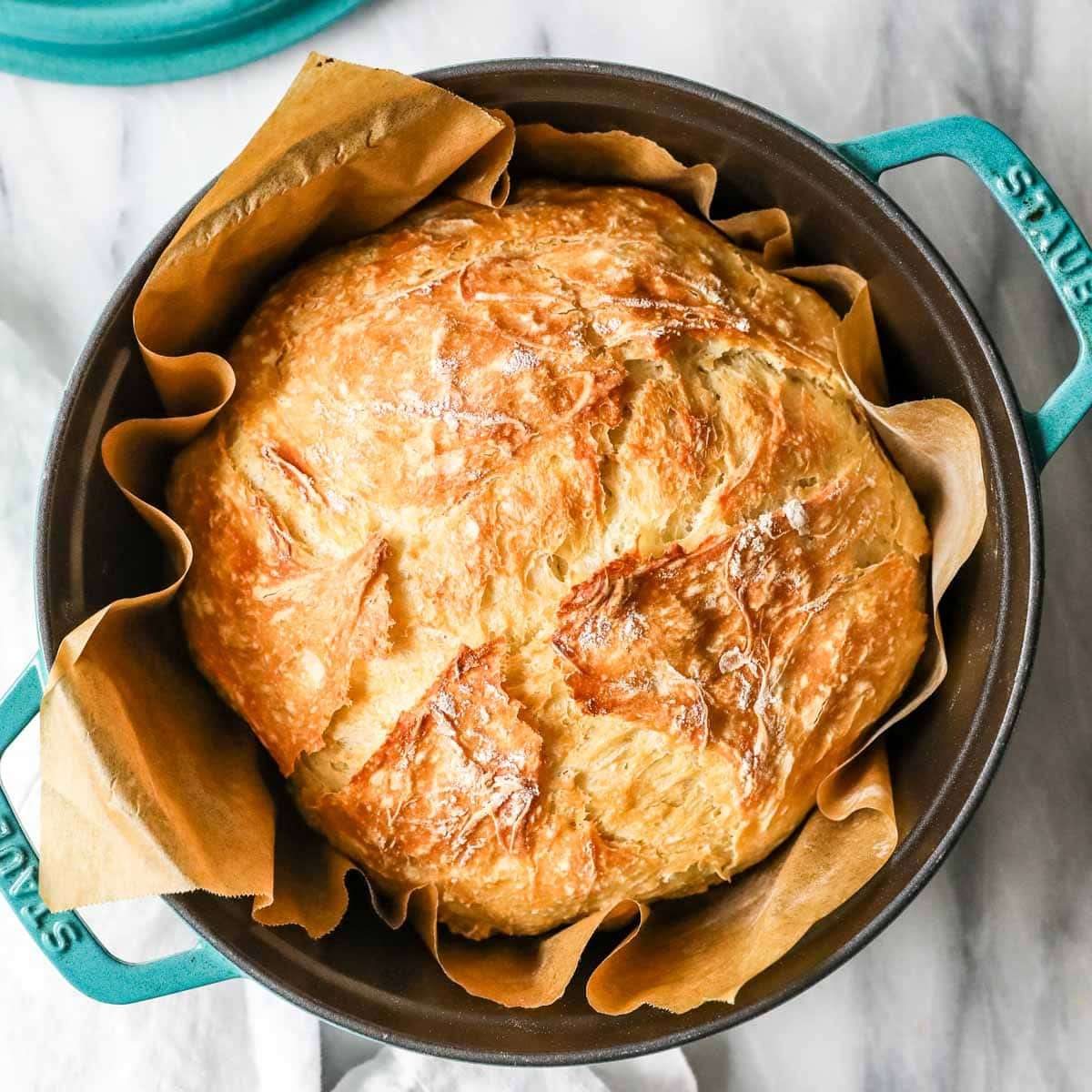
The shaped dough is gently formed into a ball and baked at 450°F (232°C) in a covered Dutch oven or alternative vessel to trap steam, which helps develop a crisp crust. Baking time typically totals 30 minutes, with the lid removed late in the process to brown the crust further. The result is a rustic loaf with a chewy interior and crisp exterior.
This bread can be stored tightly wrapped at room temperature for several days or frozen for longer keeping. Alternative baking containers and methods can be used if a Dutch oven is unavailable, with slight adjustments to baking time and technique. Substitutions with all-purpose flour are possible though the texture may vary.
Ingredients
- 3 ½ cups bread flour plus more if needed
- 2 ¼ teaspoons instant yeast
- 1 Tablespoon granulated sugar optional
- 1 ½ teaspoons salt
- 1 ½ cups water 115F/46C, warm
Instructions
- In a large mixing bowl, whisk together flour, yeast, sugar, and salt.
- Add warm water and stir until combined. Dough will be sticky.
- Cover bowl with plastic wrap and place in a warm place to rise until doubled in volume, usually 2-3 hours. Alternatively, cover dough and refrigerate overnight (no need for it to rise first, pop it right in the fridge).
- When dough has risen, scrape out onto a generously floured surface and form into a ball with your hands. If the dough is too sticky to handle, sprinkle a light amount of flour over the surface, adding more as needed to handle/shape the dough.
- Stretch and fold: Grasp the dough at the top (think 12 o’clock, if the dough were a clock face) and stretch it over the bottom (6 o’clock). Turn the dough 90 degrees and repeat. Repeat this step two more times for a total of 4 stretch and folds. I demonstrate this in the photos above and in the video, if a visual helps!
- Use your hands to form the dough into a ball again (don't be afraid to shape it, you want it to be more round than flat!), place on a large piece of parchment paper (the parchment should be large enough that you can lift it up and lower it into a Dutch oven), and lightly cover with plastic wrap.
- Allow dough to rest, covered, for 30 minutes. As it rests, preheat oven to 450F (230C) and place a 4qt Dutch oven (with lid) in the center rack of your oven.
- After 30 minutes, carefully remove Dutch oven from the oven. Score your bread down the middle, remove the lid off of the Dutch oven, and gently lower the parchment paper and bread into the pot. Place lid on top, and return to 450F (230C) oven.
- Bake for 30 minutes with the lid on, then remove lid and allow to bake for another 10 minutes. I like to check the internal temperature of my bread with an instant read thermometer to be sure it's finished baking, look for an internal temperature of 195-200F (90-93C) in the thickest part of the bread.
- Remove from oven and allow to cool in Dutch oven for 10 minutes, then use the parchment paper to carefully lift the loaf from the pot and transfer to a cooling rack to cool completely before slicing. Do let the bread cool until no longer warm to the touch or the interior will be gummy.
Notes
- Maintain oven temperature at 450°F (232°C) throughout baking for proper crust development; do not lower temperature after placing bread inside.
- A 4-quart Dutch oven is ideal for trapping steam, but a bread pan or cookie sheet can also be used with adjustments.
- If using a bread pan, shape dough into a loaf and let it rest while preheating oven; cover with an inverted pan or foil for initial baking.
- Dough can be refrigerated overnight without rising first, allowing flexible timing.
- Store baked bread in an airtight container at room temperature for up to 5 days, or freeze slices for longer storage; rewarm slices as needed.
- The recipe tolerates substitution of all-purpose flour if bread flour is unavailable.
Nutrition Information
Show DetailsNutrition Facts
Serving: 1loaf
Amount Per Serving
Calories 1713 kcal
% Daily Value*
| Serving | 1loaf | |
| Calories | 1713kcal | 86% |
| Carbohydrates | 340g | 113% |
| Protein | 63g | 126% |
| Fat | 9g | 14% |
| Saturated Fat | 1g | 5% |
| Polyunsaturated Fat | 3g | 18% |
| Monounsaturated Fat | 2g | 10% |
| Sodium | 3529mg | 147% |
| Potassium | 696mg | 15% |
| Fiber | 18g | 72% |
| Sugar | 13g | 26% |
| Vitamin A | 9IU | 0% |
| Vitamin C | 0.1mg | 0% |
| Calcium | 87mg | 9% |
| Iron | 5mg | 28% |
* Percent Daily Values are based on a 2,000 calorie diet.
User Reviews
Overall Rating
5
You'll Also Love