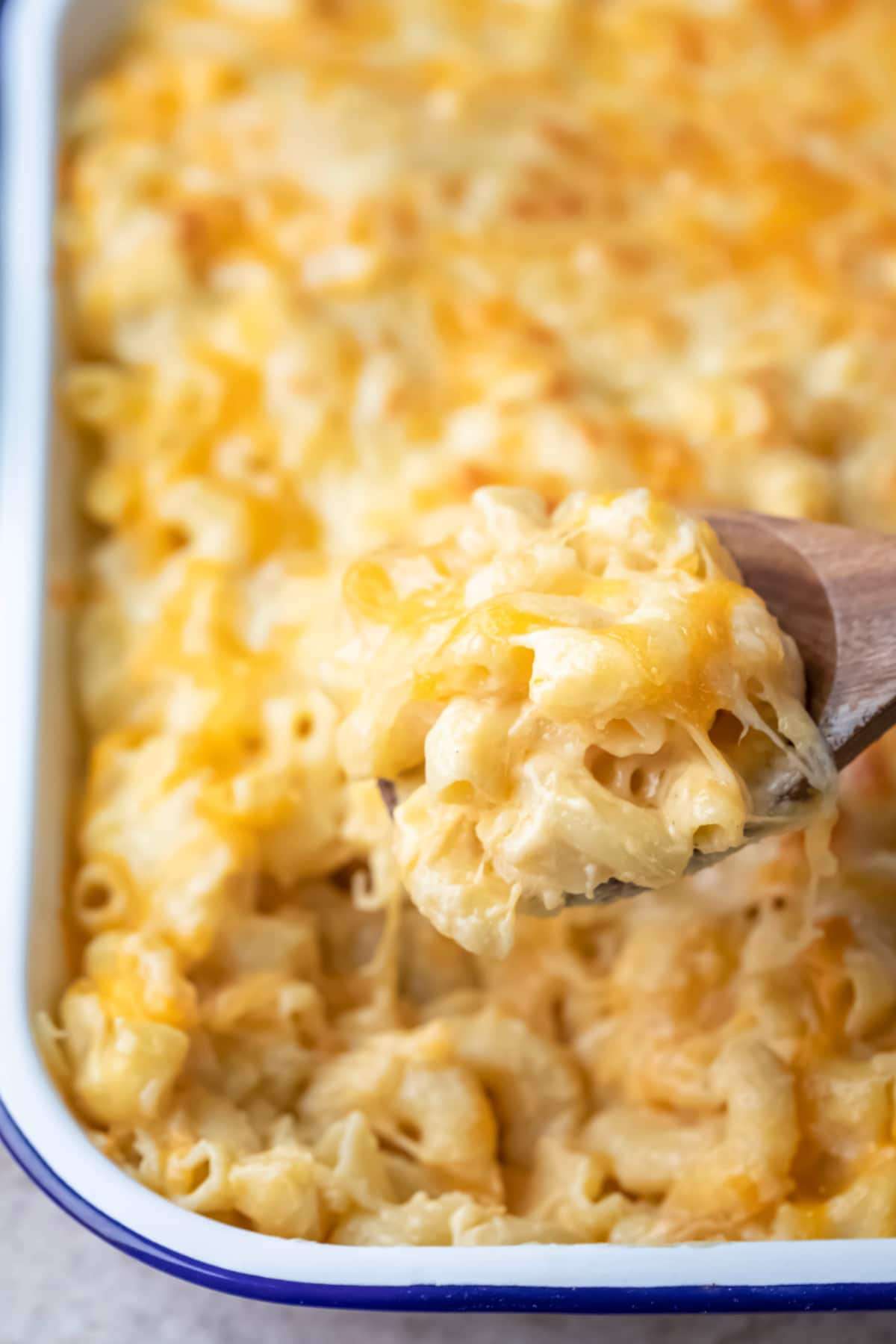
Baked Mac and Cheese
User Reviews
5
-
Prep Time
20 mins
-
Cook Time
30 mins
-
Total Time
50 mins
-
Servings
8 servings
-
Calories
753 kcal
-
Course
Main Course
-
Cuisine
American
Baked Mac and Cheese
Description
The Baked Mac and Cheese recipe features elbow pasta cooked just shy of al dente, ensuring it finishes cooking in the oven without getting mushy. A roux of melted butter and flour is gently cooked before whisking in milk and half-and-half to create a smooth, thickened base. Cheddar cheese is incorporated while the sauce is still warm, producing a creamy coating for the pasta. The mixture is placed in a greased baking dish in two layers, each topped with generous amounts of cheese to form a rich crust as it bakes.
The flavor profile is deeply cheesy with balanced salt and pepper, while the dry mustard powder offers a mild tanginess that cuts through the creaminess. Baking at a moderate temperature allows the cheese to melt evenly and creates a slightly toasted top layer without drying out the pasta beneath.
This macaroni and cheese works well as a standalone comfort food or as a side for roasted meats or vegetables. The note on cheese varieties suggests mixing sharp and mild cheddars and optionally blending in other compatible cheeses to customize flavor and melting properties.
Ingredient substitutions include different pasta shapes and butter types, while the use of milk and half-and-half can be adjusted for richness preferences. The mustard powder can be swapped with Dijon mustard for a slightly different taste. Nutritional values are approximate based on ingredient choices.
Ingredients
- 16 ounce pasta
- 1/2 cup butter
- 1/2 cup all-purpose flour
- 3 cups milk
- 1 cup half and half
- 6 cups cheddar cheese divided, see the note below about types of cheeses, grated
- salt
- black pepper ground
- 1/2 teaspoon mustard powder dry
Instructions
- Preheat oven to 325F. Grease a 9x13-inch baking dish. Set aside.
- Bring a large pot of salted water to boil over medium-high heat.
- Add the dry pasta, and cook for 1 minute less than the box calls for for al dente pasta.
- Meanwhile, melt the butter in a large saucepan over medium-low heat.
- Once melted, whisk in the flour.
- Let the flour cook, stirring constantly, for 1 minute.
- Stir in milk and half-and-half.
- Cook, whisking regularly, until the milk has thickened. The milk should coat the back of a spoon at this point.
- Whisk in 3 cups of the grated cheese, salt, pepper, and mustard.
- Drain the pasta, and return to the pot.
- Pour the cheese sauce over the cooked pasta, and toss to coat.
- Pour half of the cheesy pasta into the prepared baking dish.
- Sprinkle 1.5 cups of cheese over the pasta in the baking dish.
- Pour the remaining half of the cheesy pasta into the baking dish.
- Sprinkle the remaining 1.5 cups of cheese over the top of the pasta.
- Bake for 10-15 minutes, or until heated through and the cheese has melted.
- Broil if desired.
Notes
- Large elbow noodles are preferred but other pasta shapes like shells or cavatappi can be used to vary texture.
- Salted butter is standard, but unsalted butter works fine if salt level adjustments are desired.
- Milk fat content can be adjusted; whole milk will enrich the sauce, while skim reduces richness.
- Half-and-half enhances creaminess; it can be replaced by more milk if needed.
- Cheese types can be blended for flavor complexity; avoid using cheese like Parmesan alone for the sauce.
- Dry mustard powder adds subtle tanginess; Dijon mustard can substitute at a lower quantity.
Nutrition Information
Show DetailsNutrition Facts
Serving: 8servings
Amount Per Serving
Calories 753 kcal
% Daily Value*
| Serving | 1serving | |
| Calories | 753kcal | 38% |
| Carbohydrates | 55g | 18% |
| Protein | 33g | 66% |
| Fat | 44g | 68% |
| Saturated Fat | 28g | 140% |
| Trans Fat | 1g | 50% |
| Cholesterol | 133mg | 44% |
| Sodium | 682mg | 28% |
| Potassium | 405mg | 9% |
| Fiber | 2g | 8% |
| Sugar | 7g | 14% |
| Vitamin A | 1498IU | 30% |
| Vitamin C | 1mg | 1% |
| Calcium | 772mg | 77% |
| Iron | 2mg | 11% |
* Percent Daily Values are based on a 2,000 calorie diet.
User Reviews
Overall Rating
5
You'll Also Love