Braunschweiger Sausage
User Reviews
5
-
Prep Time
1 hr 30 mins
-
Cook Time
3 hrs
-
Total Time
4 hrs 30 mins
-
Servings
20 servings
-
Calories
338 kcal
-
Course
Main Course, Appetizer, Snacks, Lunch
-
Cuisine
German
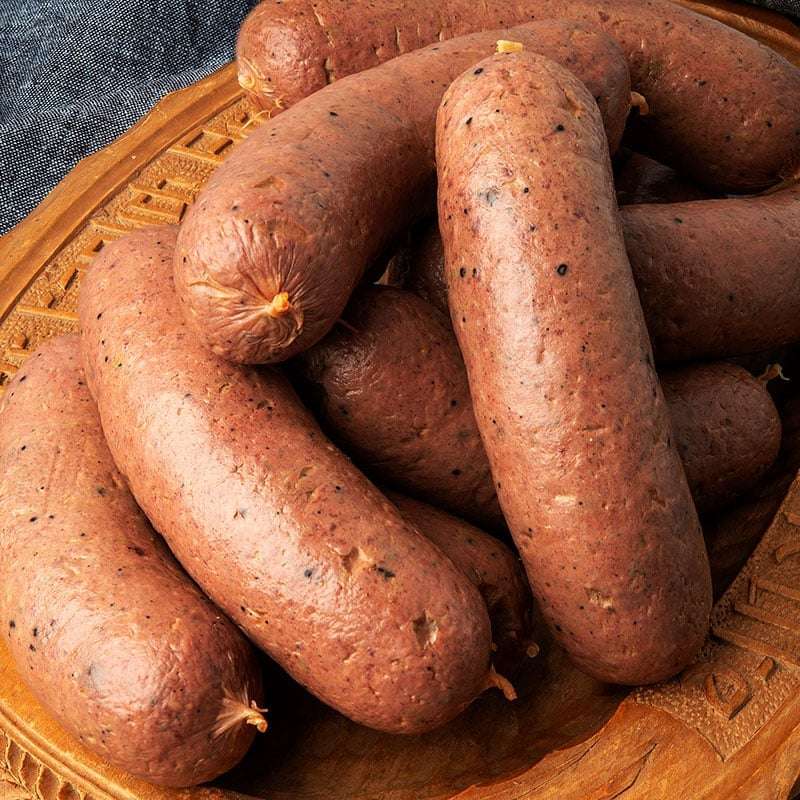
Braunschweiger Sausage
Description
This Braunschweiger recipe involves heating chicken stock and gently simmering the liver until cooled, which helps tenderize and infuse flavor. Pork fat and pork shoulder are cut into chunks and mixed with the liver, salt, curing salt (Prague powder #1), and dextrose (sugar). This mixture is rested in the refrigerator to develop the cure. Spices including mustard powder, white pepper, marjoram, ginger, cloves, and mace are added before grinding the meat through a coarse die and then a finer die to create a smooth texture. The mixture is kept cold throughout to maintain quality. It is then stuffed into hog casings to form links. Using a meat binder is recommended to improve texture by making the sausage links tighter and bouncier, applied before the final grinding or emulsification.
The process demands meticulous temperature control and hygiene to ensure safety given the liver and curing involved. This sausage has a distinctive flavor profile from the blend of spices and curing salts. It can be sliced and served cold or cooked as desired.
Binds well with Butcher & Packer's "special meat binder" sprinkled evenly before final grinding. Cooling all equipment before grinding assists in maintaining correct temperature.
Ingredients
- 1 pint chicken stock
- 1 pound liver
- 1 pound pork fat
- 3 pounds pork shoulder or a mix of pork and venison or beef
- 44 grams salt about 2 heaping tablespoons
- 4 grams Instacure No. 1 (Prague powder no. 1)
- 13 grams dextrose about 1 tablespoon, or sugar
- 2 teaspoons mustard powder
- 1 teaspoon white pepper
- 1/2 teaspoon marjoram dried
- 1/2 teaspoon ginger powdered
- 1/2 teaspoon cloves ground
- 1/2 teaspoon mace or nutmeg
- 1 teaspoon binder (optional, see notes below)
- 1 cup ground ice
- Hog casings
Instructions
- Heat the stock in a pan that will hold the livers. If you are using a larger mammal liver, cut it into chunks that will eventually fit into your grinder. When the stock boils, add the liver and bring back to a simmer, then turn off the heat. Cover the pot and let this cool. This step can be done a day ahead of time.
- Cut the pork fat and meat into chunks that will fit into your grinder. When the livers are cool, add them to this mix, then add the salt, curing salt and dextrose and mix well. You can do this a day before grinding, keeping the mix covered in the fridge; it will help the bind later.
- When you are ready to grind, mix in the remaining spices and grind through a large die, ideally 10 mm or thereabouts. If the meat mix is still well below 40°F, grind it again through a die between 5 mm and 7 mm. Now put the mix into the freezer for 1 hour. Clean everything up and put the blades, the auger, the tray and the auger housing in the freezer, along with the smallest die you have, ideally a 3 mm die.
- Set some hog casings into a bowl of warm water. You might want to run some water through the casings to see if you have any leaks. Get your sausage stuffer out, and when you are ready to grind the last time, thread a casing onto the stuffer.
- Once the meat mixture hits about 28°F, get ready for the final grind. Crush some ice and put that in a bowl. It's OK if it starts to melt. Put your grinder together quickly so everything stays icy. Load it up with the meat mix and grind through the 3 mm die.
- Add the melting ice to the meat mix and mix this well for 2 minutes. I use my hands wearing rubber gloves to protect them from the cold. You could use a mixer set on medium-low. You are ready when the meat mix can be picked up all in one piece, and when there are white-ish streaks in the bowl you are mixing.
- Get a large pot of water hot, about 160°F to 180°F. This is for poaching the sausage.
- Move the mix to the stuffer and fill the casings, leaving lots of room on each end to tie off. Fill whole casings before you make links. To make links, gently compress one end of the casing and tie it off. Make a link by pinching down on the coil and rolling the link away from you to tighten. Move down the coil and do this again, this time rolling the link towards you. Repeat until you have all the links. (Here is a video of the process.)
- Gently compress the meat in each link, revealing air pockets, Use a needle to pierce the casing so you can compress the links even more to remove the pockets. Do this carefully and gently, so you don't burst casings.
- Gently lower the finished links into the steaming water, and let them poach below a simmer for 20 minutes, or until the interior of one link hits about 150°F. As they are poaching, get a large basin of ice water ready to shock the links when they come out of the poaching water. Once the links are poached and then chilled down -- it should take about 30 minutes to chill the links -- pat them dry with towels.
- Finally, you need to smoke the sausages. This can be done a day later if you want. Smoke over cherry, apple, oak or maple at about 175°F and no hotter than 200°F, for three hours. Chill and either eat within 10 days or so, or freeze.
Notes
- Using a special meat binder helps produce a tighter and bouncier sausage texture.
- Add the binder evenly just before the final grinding or emulsification step.
- Keep the meat and equipment cold throughout processing to maintain quality and food safety.
Nutrition Information
Show DetailsNutrition Facts
Serving: 20servings
Amount Per Serving
Calories 338 kcal
% Daily Value*
| Calories | 338kcal | 17% |
| Carbohydrates | 1g | 0% |
| Protein | 18g | 36% |
| Fat | 28g | 43% |
| Saturated Fat | 11g | 55% |
| Polyunsaturated Fat | 3g | 18% |
| Monounsaturated Fat | 13g | 65% |
| Trans Fat | 0.04g | 2% |
| Cholesterol | 130mg | 43% |
| Sodium | 920mg | 38% |
| Potassium | 306mg | 7% |
| Fiber | 0.1g | 0% |
| Sugar | 0.02g | 0% |
| Vitamin A | 3837IU | 77% |
| Vitamin C | 1mg | 1% |
| Calcium | 12mg | 1% |
| Iron | 2mg | 11% |
* Percent Daily Values are based on a 2,000 calorie diet.
User Reviews
Overall Rating
5
You'll Also Love