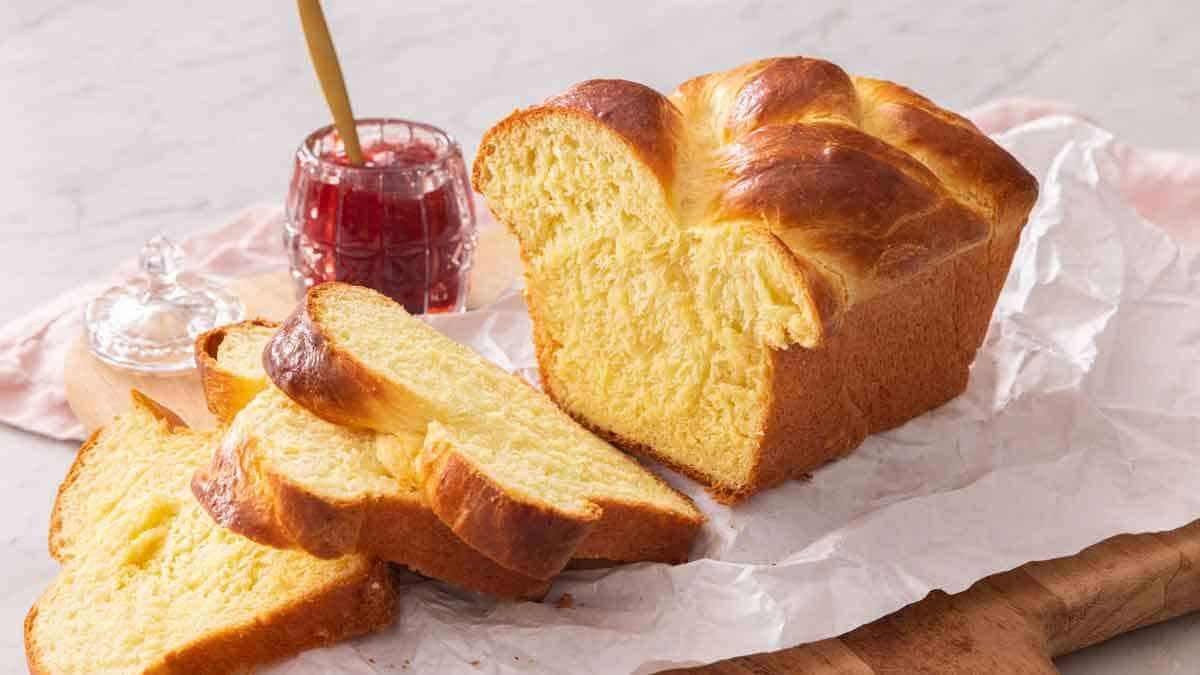
Brioche Bread
User Reviews
4.8
Brioche Bread
Description
Brioche Bread is crafted from a dough containing flour, warm milk, sugar, yeast, eggs, salt, and a significant amount of softened butter. This recipe begins with creating a sponge by mixing part of the flour with milk, sugar, and yeast, which is left to ferment until foamy. The remaining ingredients are added afterward, and the dough is kneaded extensively using a stand mixer with a dough hook. Gradual incorporation of butter while kneading contributes to the bread's characteristic richness and tender crumb.
The dough should be tacky but not sticky to touch, and it is allowed to rise in a warm environment until it doubles in volume. Proper measurement of ingredients, particularly flour, is emphasized to avoid dense or heavy loaves. Using room temperature eggs and maintaining ideal rise temperatures support the dough's development. Testing dough readiness can be done by gently pressing it to observe if the indentation remains.
This bread, with its fine crumb and buttery flavor, is versatile for both sweet and savory applications. It can be used to make sandwiches, French toast, or served plain alongside meals. Baking completion is gauged by an internal temperature of about 190°F to ensure doneness.
Ingredients
- 6 cups all-purpose flour divided (720g)
- ¾ cup milk 110-120°F (180mL, warm
- 6 tablespoons granulated sugar divided (75g)
- 1 .25-oz. packet active dry yeast 2¼ teaspoons
- 7 large egg divided
- 2½ teaspoons salt
- 1¼ cups butter softened and cubed (284g, unsalted
- 1 tablespoon water
Instructions
- To make the sponge, in the bowl of a stand mixer, whisk together 1 cup flour, the milk, 1 tablespoon sugar, and the yeast until combined. Loosely cover, and let stand at room temperature, until foamy, about 45 minutes.
- Once the sponge is ready, add 6 eggs, the salt, the remaining 5 cups flour, and the remaining 5 tablespoons sugar. With dough hook attachment, beat on low speed until well combined, about 2 minutes, scraping down the bowl as needed. Continue kneading until the dough is shiny and elastic about 10 to 12 minutes.
- With the mixer on low speed, gradually add in the butter 1 tablespoon at a time, waiting until it is fully incorporated before adding the next tablespoon. Once all of the butter is incorporated, increase the speed to medium-low and continue kneading until the dough is smooth and elastic, about 8 minutes more. (It should be tacky but not stick to a clean finger when quickly tapped.) Scrape the dough down into the bowl. Cover, and let rise in a warm place until doubled in size, about 1 hour.
- Butter 2 (8x4-inch) loaf pans.
- Punch down the dough and turn out onto a lightly floured surface. Divide the dough in half. Working with one half at a time, cut the dough into 3 equal pieces, and roll each piece into a 9-inch long rope. Braid the ropes together, pinching ends together to seal. Tuck the ends under and place in a buttered loaf pan. Repeat with the remaining dough half. Loosely cover, and let rise in a warm place until doubled in size, about 1 hour.
- While loaves are rising, preheat the oven to 375F.
- In a small bowl, whisk together the water and remaining 1 egg until smooth. Brush the risen loaves with egg wash.
- Bake for 35 minutes or until deep golden brown, covering with aluminum foil after 25 minutes if the top is browning too quickly. Let the bread cool in the pans for 5 minutes. Remove from pans, and continue cooling on a wire rack. Serve warm or at room temperature. Store cooled bread in an airtight container for up to 1 week, or slice and freeze in a freezer bag for up to 2 months.
Notes
- Measure flour by weight or fluff before measuring to avoid dense bread due to excess flour.
- Use warm milk between 110-120°F to activate yeast without killing it.
- Bring eggs to room temperature before mixing for better incorporation.
- Check dough readiness by pressing gently; indentation that remains or springs back slightly indicates it is ready.
- Over-proofed dough will deflate when poked; reshape and allow to rise again.
- Set baking completion by an internal temperature of 190°F.
- Optional sponge stage enhances flavor but can be shortened by blooming yeast in warm liquids.
Nutrition Information
Show DetailsNutrition Facts
Serving: 2loaves
Amount Per Serving
Calories 2839 kcal
% Daily Value*
| Calories | 2839kcal | 142% |
| Carbohydrates | 329g | 110% |
| Protein | 66g | 132% |
| Fat | 139g | 214% |
| Saturated Fat | 81g | 405% |
| Polyunsaturated Fat | 9g | 53% |
| Monounsaturated Fat | 37g | 185% |
| Trans Fat | 5g | 250% |
| Cholesterol | 965mg | 322% |
| Sodium | 3220mg | 134% |
| Potassium | 833mg | 18% |
| Fiber | 11g | 44% |
| Sugar | 42g | 84% |
| Vitamin A | 4639IU | 93% |
| Vitamin C | 1mg | 1% |
| Calcium | 295mg | 30% |
| Iron | 21mg | 117% |
* Percent Daily Values are based on a 2,000 calorie diet.
User Reviews
Overall Rating
4.8
You'll Also Love