Butadon (Pork Donburi)
User Reviews
4.8
-
Prep Time
5 mins
-
Cook Time
15 mins
-
Total Time
20 mins
-
Servings
2
-
Calories
408 kcal
-
Course
Main Course
-
Cuisine
Japanese
Butadon (Pork Donburi)
Description
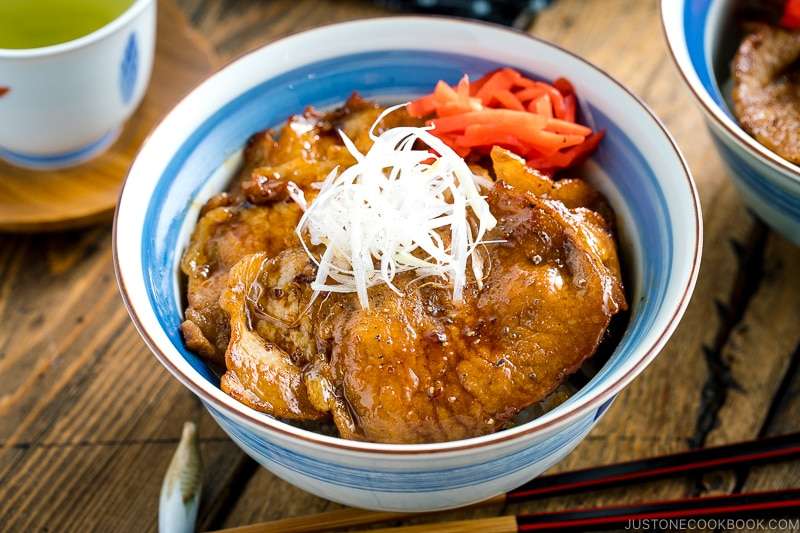
Butadon, or pork donburi, centers on pan-cooked thin slices of pork loin simmered in a distinctive sauce made by caramelizing sugar and adding soy sauce, sake, and water. This method adds depth and sweetness to the dish, complementing the savory pork. The pork is cooked quickly over medium heat until evenly coated, ensuring a tender texture.
The sauce’s caramelization imparts a rich color and subtle complexity, while the use of Japanese short-grain rice provides a slightly sticky and soft base that holds the meat and sauce well. The garnish of white green onions gives a gentle sharpness, and a sprinkle of black pepper adds mild heat. Pickled red ginger can be included for a tangy contrast.
Typically served in a donburi bowl, this dish is a convenient and hearty main meal option. Preparing the caramel sauce carefully and having boiling water ready helps manage the cooking stages smoothly. This dish suits anyone looking for a meat-and-rice meal with balanced sweet and savory profiles.
Ingredients
For the Sauce
- 3 Tbsp sugar (for the caramel)
- 1 Tbsp water (for the caramel)
- 4 Tbsp water for the caramel, boiling
- 3 Tbsp soy sauce
- 2 Tbsp sake
For the Pork
- ½ lb pork loin labeled “for ginger pork/shogayaki“ at the Japanese market; or follow my tutorial to thinly slice meat at home, thinly sliced
- 1 Tbsp neutral oil
- 2 ervings Japanese short-grain rice typically 1⅔ cups (250 g) per donburi serving, cooked
For the Garnish
- black pepper freshly ground
- 4 inches green onion use only the white part; or substitute chopped scallions, aka Tokyo negi, naga negi, long green onion
- pickled red ginger optional; you can make Beni Shoga at home, aka beni shoga or kizami beni shoga
Instructions
Before You Start...
- For the steamed rice, please note that 1½ cups (300 g, 2 rice cooker cups) of uncooked Japanese short-grain rice yield 4⅓ cups (660 g) of cooked rice, enough for 2 donburi servings (3⅓ cups, 500 g). See how to cook short-grain rice with a rice cooker, pot over the stove, Instant Pot, or donabe.
- Gather all the ingredients. Make sure 4 Tbsp boiling water is ready before you start.
To Make the Sauce
- In a heavy-bottom, high-sided saucepan, combine 3 Tbsp sugar and 1 Tbsp water. Turn the burner on medium heat. Cook, stirring at the beginning with a wooden spoon or silicone spatula, until the sugar dissolves. Once the sugar dissolves and the mixture begins to bubble, stop stirring. Let the sugar and water cook together. As the water evaporates and the sugar temperature rises, the sugar will begin to caramelize. You can gently swirl the pan to achieve even caramelization. Watch the pan closely, as this process moves quickly. In the meantime, prepare the boiling water and have it ready to use when the caramelized sugar is done.
- When your caramelized sugar reaches an amber color, turn off the heat. Add 4 Tbsp boiling water with one hand (wear a kitchen mitt to protect your hand) and hold a lid with the other hand to protect yourself from splattering as you pour the boiling water. Once the splatter stops, turn the stove back on and mix well. If there is crystallized sugar, it will melt again.
- Add 3 Tbsp soy sauce and 2 Tbsp sake and bring it to simmer, then turn off the heat.
To Prepare the Negi and Pork
- If you can get Tokyo negi (long green onion) from a Japanese grocery store, you can garnish the donburi with shiraga negi. Cut 4 inches Tokyo negi (naga negi; long green onion) and make an incision lengthwise to remove the green core. We only use the white outer layers. With a sharp knife, cut the white layers into julienned pieces. Soak them in water both to get rid of the bitterness and curl up the julienned pieces.
- With ½ lb thinly sliced pork loin, make several slits on the connective tissue between the meat and fat, which have different elasticities and will shrink and expand at different rates when cooked. Cutting these slits allows the meat to stay flat and prevents it from curling.
To Cook the Butadon
- Heat a large frying pan over medium to medium-high heat. When it‘s hot, add 1 Tbsp neutral oil to heat. Then, add some of the pork slices in a single layer. Sear the pork in batches and don‘t overcrowd the pan.
- Sear the bottom side until nicely browned, then flip over to sear the other side. When the other side is brown, remove the meat to a plate. Here, you only need to sear the meat. DO NOT overcook it, as you will pan-fry it again in the sauce later.
- Add the new slices of pork to sear another batch.
- Once all the meat is seared, return the meat to the pan. Pour most of the sauce in the pan, reserving some for drizzling over the steamed rice and the meat.
- Coat both sides of the meat with the sauce.
To Serve
- Divide 2 servings cooked Japanese short-grain rice into individual donburi (large) bowls. Drizzle some reserved sauce on the rice. Place the meat on top, layering the slices.
- Drizzle more sauce on the meat, if you‘d like. Season with freshly ground black pepper on top.
- Garnish with shiraga negi and pickled red ginger (beni shoga or kizami beni shoga). Serve immediately.
To Store
- You can store the grilled pork loin in an airtight container and keep in the refrigerator for up to 2–3 days or in the freezer for up to a month.
Notes
- This recipe is for two donburi servings, using about half a pound of thinly sliced pork loin.
- Use Japanese short-grain rice cooked following standard methods to achieve the ideal fluffy texture.
- Prepare boiling water before starting the sauce to ensure smooth caramelization and sauce mixing.
- Pickled red ginger is optional but adds a bright, tangy contrast when used.
- Freshly ground black pepper enhances the flavor; add according to your taste.
Nutrition Information
Show DetailsNutrition Facts
Serving: 2Serving
Amount Per Serving
Calories 408 kcal
% Daily Value*
| Calories | 408kcal | 20% |
| Carbohydrates | 42g | 14% |
| Protein | 29g | 58% |
| Fat | 11g | 17% |
| Saturated Fat | 7g | 35% |
| Trans Fat | 1g | 50% |
| Cholesterol | 75mg | 25% |
| Sodium | 1017mg | 42% |
| Potassium | 481mg | 10% |
| Fiber | 1g | 4% |
| Sugar | 12g | 24% |
| Vitamin A | 51IU | 1% |
| Vitamin C | 1mg | 1% |
| Calcium | 16mg | 2% |
| Iron | 2mg | 11% |
* Percent Daily Values are based on a 2,000 calorie diet.
User Reviews
Overall Rating
4.8
You'll Also Love