Cajun Shrimp Étouffée
User Reviews
5
-
Prep Time
20 mins
-
Cook Time
45 mins
-
Total Time
1 hr 5 mins
-
Servings
4 servings
-
Calories
571 kcal
-
Course
Main Course
Cajun Shrimp Étouffée
Description
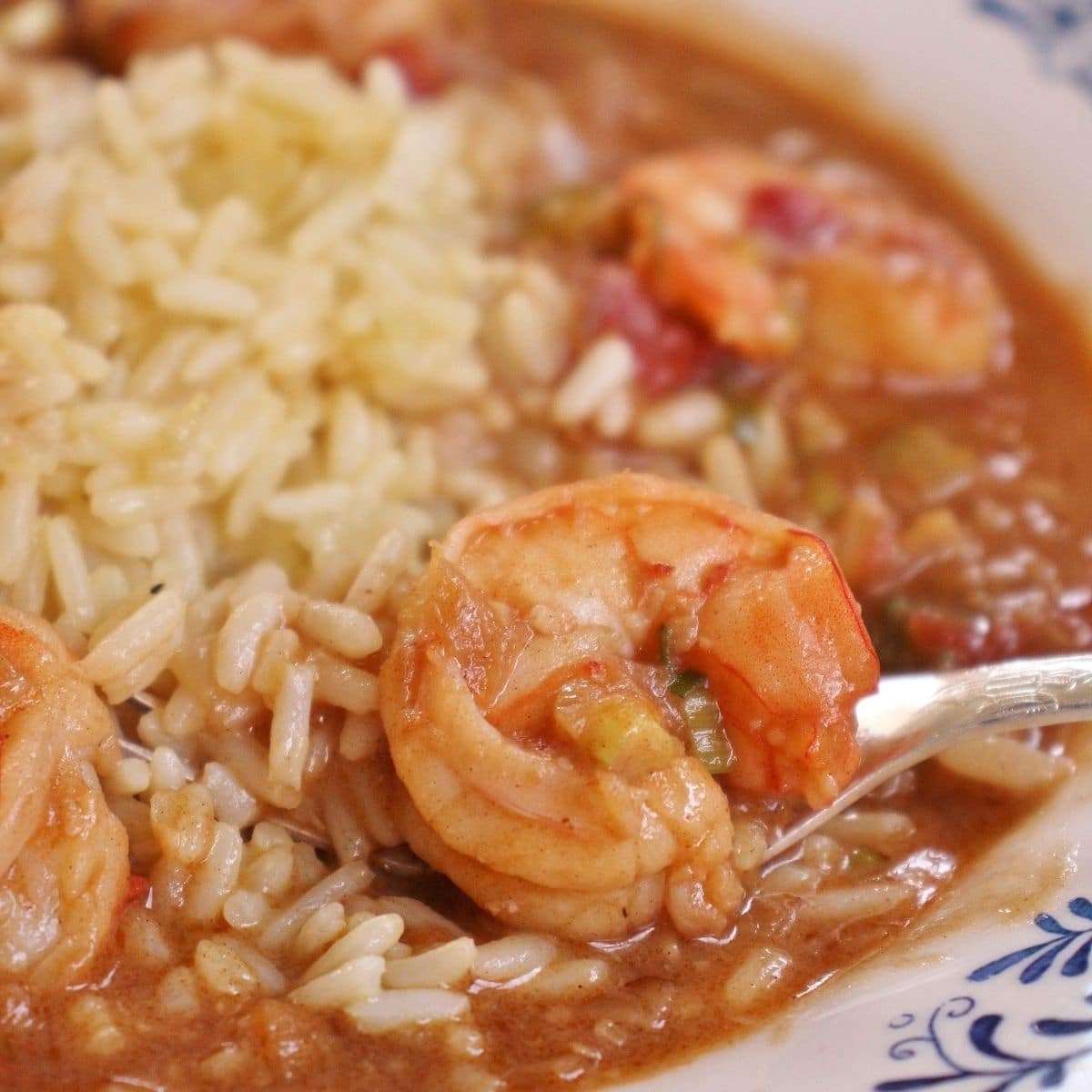
This Cajun Shrimp Étouffée recipe begins by making a brown roux from vegetable oil and flour cooked until deep brown and glossy, providing a nutty, rich foundation. Chopped onions are cooked into the roux until shiny, followed by additions of celery, garlic, allspice, and cayenne pepper which infuse aromatic warmth.
Chopped tomatoes and shellfish stock are added next, and the mixture is simmered until thickened. Butter enriches the sauce before peeled, deveined wild American shrimp and sliced scallions are incorporated. Hot sauce, kosher salt, and black pepper finalize the seasoning before serving.
The étouffée is traditionally served over fluffy, parboiled long-grain white rice, prepared with butter and onions for added flavor. The dish achieves a balance of textures—tender shrimp in a velvety, deeply flavored sauce with a slight spicy kick. It’s best served fresh but can be made in advance and reheated gently.
The recipe also offers variations such as swapping shrimp for chicken or crawfish and includes guidance for making homemade shrimp stock from shells to maximize flavor. The dish can be halved or doubled to suit different serving needs.
Ingredients
- ¼ cup vegetable oil (or other neutral-flavored oil)
- ¼ cup all-purpose flour
- 1 onion chopped
- 1 celery chopped, stalk
- 4 cloves garlic minced or crushed
- Pinch allspice
- Pinch cayenne pepper
- ½ cup tomato chopped
- 2 ½ cups shellfish stock or shrimp stock
- 3 tablespoons butter
- 1 pound Wild American Shrimp peeled completely and deveined, medium or large size
- 1 scallion sliced
- hot sauce such as Tabasco or Frank's Red Hot
- kosher salt
- black pepper
- 4 cups white rice cooked
Instructions
- Make a brown roux by heating the oil in a large heavy-bottomed pot over high heat. Whisk the flour into the hot oil. It will immediately begin to sizzle. Reduce the heat to medium and continue whisking until the roux turns a deep brown color, about 15 minutes. (Although depending on the thickness of your pan and the heat of your stove it may darken faster!)
- Add the onions, stirring them into the roux with a wooded spoon. Lower the heat to medium low and continue stirring until the roux turns a glossy dark brown, about 10 minutes.
- When the onions have turned the roux shiny and dark, add the celery, garlic, allspice and cayenne. Cook for 5 minutes.
- Then add the tomatoes and stock and raise the heat to high. Once the sauce has come to a boil, lower the heat to medium and simmer 5 to 7 minutes, stirring often to make sure the sauce doesn’t burn or stick to the pan.
- Reduce the heat to low and stir in the butter. Add the shrimp and scallions. Season with hot sauce, salt, and pepper. Once the shrimp are heated through, remove the pot from the heat. Serve over rice.
Notes
- Make your own shrimp stock by simmering shrimp shells with aromatics to enhance the étouffée’s flavor.
- Use parboiled long-grain rice such as Zatarain’s for ideal texture that doesn’t clump together.
- Cook the roux carefully until deep brown but not burnt for a rich, nutty base.
- Serve étouffée the day it is made or reheat gently on the stovetop over medium-low heat, stirring frequently.
- For chicken étouffée, substitute cooked chicken strips and use chicken broth instead of shrimp stock.
- Crawfish étouffée can be made by adding thawed crawfish tails at the end.
- This recipe scales well; adjust quantities to serve fewer or more people as needed.
Nutrition Information
Show DetailsNutrition Facts
Serving: 4servings
Amount Per Serving
Calories 571 kcal
% Daily Value*
| Calories | 571kcal | 29% |
| Carbohydrates | 57g | 19% |
| Protein | 27g | 54% |
| Fat | 25g | 38% |
| Saturated Fat | 7g | 35% |
| Polyunsaturated Fat | 4g | 24% |
| Monounsaturated Fat | 11g | 55% |
| Cholesterol | 163mg | 54% |
| Sodium | 246mg | 10% |
| Potassium | 215mg | 5% |
| Fiber | 2g | 8% |
| Sugar | 4g | 8% |
* Percent Daily Values are based on a 2,000 calorie diet.
User Reviews
Overall Rating
5
You'll Also Love