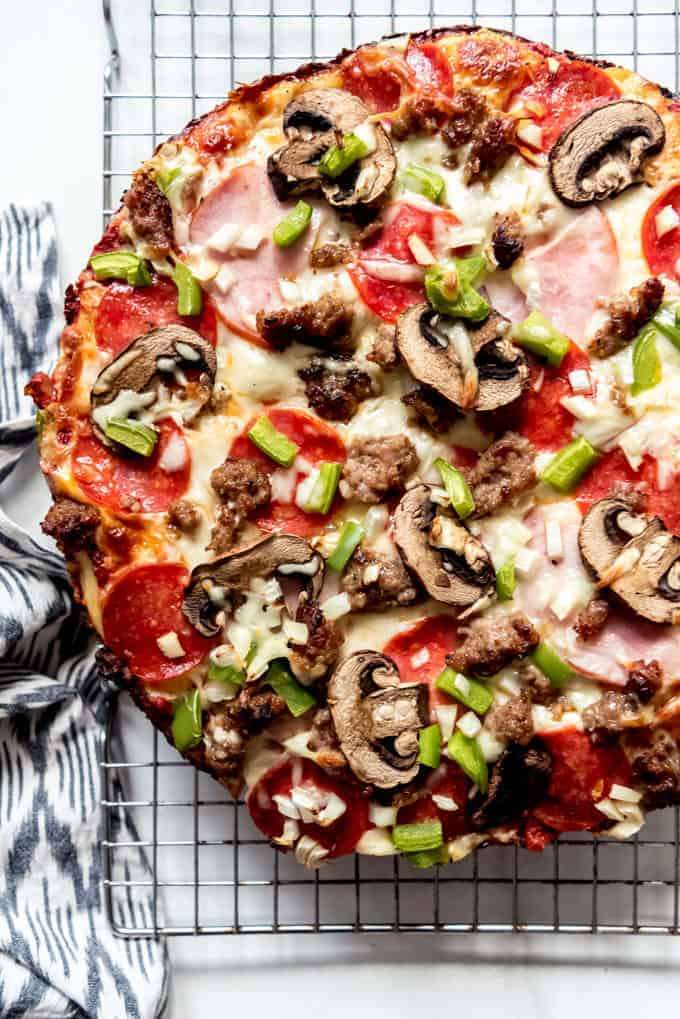
Cast Iron Pizza (Pizza Hut Pizza Recipe)
User Reviews
4.7
-
Prep Time
1 hr
-
Cook Time
15 mins
-
Additional Time
12 hrs
-
Total Time
13 hrs 15 mins
-
Servings
16 slices
-
Calories
195 kcal
-
Course
Main Course
-
Cuisine
American
Cast Iron Pizza (Pizza Hut Pizza Recipe)
Description
The dough preparation involves combining bread flour, lukewarm water, instant yeast, kosher salt, and olive oil, then using a series of folds and rest periods to build gluten and improve the dough’s structure. The folding technique and resting times create a pliable dough that bakes into a crust with both chew and crispness.
Assembly includes spreading a measured amount of pizza sauce over the dough, layering mozzarella cheese, and adding desired toppings such as pepperoni, sausage, mushrooms, and peppers. Parmesan cheese is also sprinkled for added flavor. Cooking in a well-oiled cast iron pan distributes heat evenly, achieving a golden crust with slightly crisp edges and bubbling cheese on top.
The recipe advises against overloading toppings to ensure thorough cooking through the dough. Optional garnishes like fresh herbs or extra grated cheese can be added after baking to enhance aroma and taste. The technique balances dough development and cooking method to approximate the texture and taste reminiscent of a Pizza Hut pizza.
Ingredients
Dough
- 3 3/4 cups bread flour
- 1 1/2 cups water lukewarm
- 1 teaspoon instant yeast or active dry yeast
- 2 teaspoons kosher salt
- 2 Tablespoons olive oil + 4 tablespoons olive oil for the pan
Assembly
- 1 to 1 1/2 cups pizza sauce divided
- 3 cups mozzarella cheese divided, shredded
- pepperoni cooked Italian sausage, sliced mushrooms, onions, peppers, olives, pineapple, etc, any desired toppings like
- 2 Tablespoons Parmesan Cheese divided, freshly grated
Instructions
- Combine flour, water, yeast, salt, and olive oil in the bowl of a stand mixer. Mix with the paddle attachment for 30-45 seconds, just until everything comes together in a shaggy dough. This can also be done by hand with a spoon by stirring for 1 minute. Scrape down sides of bowl to gather the dough into a rough ball, then cover loosely with a piece of plastic wrap and let it rest for 5 minutes.
- After 5 minutes, use wet hands to stretch the dough out, pulling from the bottom, and laying it over the top of itself, sort of folding it in half. Rotate the bowl 90 degrees and repeat the motion of stretching the dough out and folding it on top of itself 3 more time for a total of 4 folds. If the dough is sticking to your hands, moisten them again or use a wet bowl scraper to scrape the dough away from the side of the bowl so you can pull the dough from the bottom. Cover and let rest for another 15-20 minutes.
- Repeat the process of making the four folds, then covering and resting for the dough for 15-20 more minutes between each set of folds, three more times, for a total of four rounds of folding that take the place of kneading the dough. After that, cover with plastic wrap and let rest for 40 minutes at room temperature before sticking the dough in the fridge to slowly rise overnight. Let the dough rise at least 12 hours, but up to 72 to develop flavor.
- Three hours before you want to serve the pizza, take the dough out of the fridge. Divide the remaining olive oil between two 10" or 12" cast iron pans (2 tablespoons per pan), swirling to coat the pans well and using your fingers to use some of the oil to grease up the sides a bit as well. If you don't have a cast iron pan, another oven-safe skillet, 10-inch cake pan, or even a 9x9-inch square baking dish will work.
- Divide the dough between the two pans, turning to coat both sides with oil. Gently press the dough towards the edges of the pan, dimpling it with your fingers as you do so. If the dough shrinks back, that's okay. Let it rest for 15 minutes, then stretch it again until it reaches the sides of the pan. If it still doesn't reach the edges, give it a final 15 minutes rest and then stretch it one more time.
- Cover the crust loosely with a piece of plastic wrap and let it rise at room temperature for 2 hours. 30 minutes before baking, preheat the oven to 550 degrees F (or as hot as your oven will go).
- Top each pizza with about 1/2 to 3/4 cup of pizza sauce, spreading it all the way to the edges of the crust. Sprinkle with the shredded mozzarella cheese all the way to the edges of the pizza to create a caramelized edge crust. Top with the your favorite toppings and sprinkle each pizza with parmesan cheese.
- Bake on the bottom rack of the oven for 12 to 15 minutes until the cheese is bubbling and the bottom and edges of the crust are golden brown. You can use a metal spatula to lift and check the bottom. If your oven doesn't go all the way to 550 degrees F, you will need to increase the baking time to more like 18 to 20 minutes for a lower temperature like 450 degrees F.
- Run a knife around the edges to keep the cheese from sticking as it cools, but let the pizzas rest for 2 minutes. Use a metal spatula to slide the pizzas out of the pans onto cooling racks so the crust stays crisp. If you leave the pizzas in the pan too long, the crust will start to go soggy. Slice and serve.
Notes
- Fresh chopped herbs like oregano, basil, or thyme can be sprinkled before serving to add aroma.
- Additional grated hard cheeses such as parmesan or romano add savory depth when added after baking.
- Reducing rest time between folds to 5 minutes speeds up dough preparation without much effect on quality.
- Avoid excessive toppings to prevent soggy crust and ensure even cooking.
Nutrition Information
Show DetailsNutrition Facts
Serving: 16slices
Amount Per Serving
Calories 195 kcal
% Daily Value*
| Calories | 195kcal | 10% |
| Carbohydrates | 23g | 8% |
| Protein | 9g | 18% |
| Fat | 7g | 11% |
| Saturated Fat | 3g | 15% |
| Polyunsaturated Fat | 1g | 6% |
| Monounsaturated Fat | 3g | 15% |
| Cholesterol | 17mg | 6% |
| Sodium | 554mg | 23% |
| Potassium | 129mg | 3% |
| Fiber | 1g | 4% |
| Sugar | 1g | 2% |
| Vitamin A | 247IU | 5% |
| Vitamin C | 2mg | 2% |
| Calcium | 121mg | 12% |
| Iron | 1mg | 6% |
* Percent Daily Values are based on a 2,000 calorie diet.
User Reviews
Overall Rating
4.7
You'll Also Love