Cultured Vegan Cream Cheese
User Reviews
5
-
Prep Time
6 mins
-
Soaking time
2 hrs
-
Total Time
2 hrs 6 mins
-
Servings
6 (Yield: 3 cups)
-
Calories
247 kcal
-
Course
Condiments
-
Cuisine
American
Cultured Vegan Cream Cheese
Description
This Cultured Vegan Cream Cheese starts with soaked cashews blended alongside unsweetened plant-based yogurt and water until smooth. The blend is transferred to a glass container and left at room temperature around 24 hours to ferment and develop a cultured tang. Salt is added after fermentation. Optional mix-ins include jalapeño, scallion, dill, or chive for customized flavor variations.
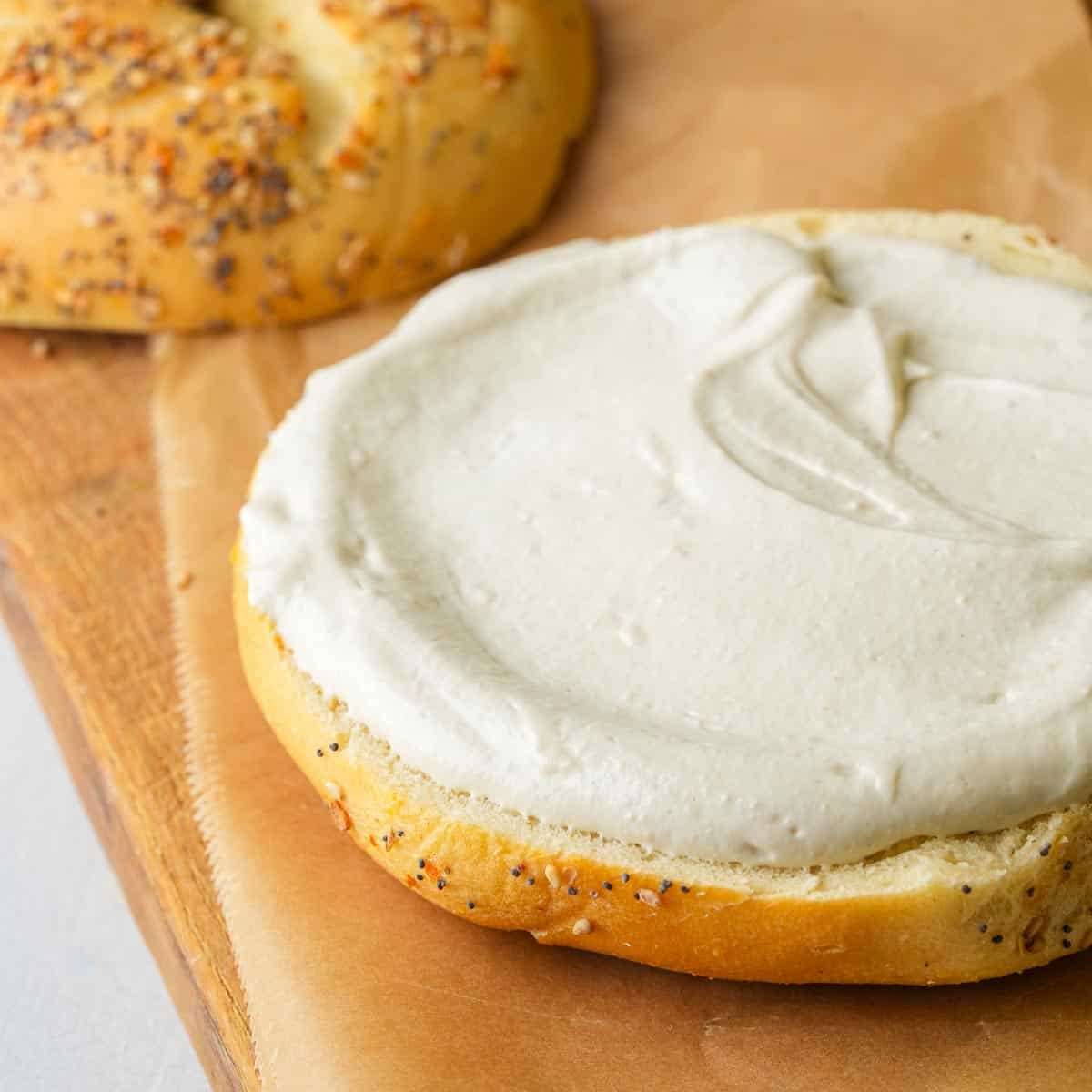
The culturing process produces a creamy, smooth spread with a mild tang from probiotics in the yogurt. The texture should be dense yet spreadable, with a subtle bubble formation indicating fermentation. Blending at medium-high speed and pausing to scrape ensures a uniform, smooth consistency.
This vegan cream cheese can be used similarly to dairy cream cheese, as a spread or in recipes requiring a creamy texture. Using a glass container allows monitoring of fermentation progress and is easy to sterilize to maintain a clean culturing environment.
Key considerations include using filtered water for purity, not surpassing 85°F during fermentation to protect cultures, and employing a powerful blender for smoothness. The cream cheese can continue ripening in the fridge if a tangier taste is desired. Adding a small amount of lemon juice or vinegar after fermentation can also adjust acidity without more culturing time.
Ingredients
- 2 cups cashew nuts soaked for 2 hours, or overnight in a sealed container in the refrigerator, raw
- ⅓ cup plant-based yogurt unsweetened
- ⅓ cup water
- ½ teaspoon salt (or to taste)
Optional additions for variations:
- 1 jalapeño roasted over an open flame and then minced
- 1 scallion minced
- 2 tablespoons dill minced
- 2 tablespoons chive minced
Instructions
- Begin by draining and rinsing your soaked cashews thoroughly. Place them in a blender along with unsweetened plant-based yogurt and water.
- Blend for 2 minutes on medium-high speed, stopping every 30 seconds or so, to scrape down the inside of the blender pitcher with a rubber spatula to ensure the cashews are smoothly pureed.
- Transfer the blended mixture to a clean, airtight container. Glass is best because you can sterilize it and also see the cheese to check its progress. Allow the cream cheese to culture by leaving it at room temperature for about 24 hours. Make sure to use a container with about an inch (2.5cm) of extra space to allow for expansion during fermentation, but not have a lot of extra space for air and bacteria to potentially hang out in.
- After a day, the mixture should be a little bubbly looking. Add the salt, and use a clean, dry rubber spatula to mix the contents of the container. Either use it immediately or let the cheese continue to ripen for 4 days under refrigeration before using it. This will give you a firmer, more typical cream cheese consistency and nicely developed tanginess.
- If you want a fun flavored cream cheese, stir in roasted and minced jalapeño with minced scallions, or introduce a herby dimension with minced dill or chives. Get creative!
- Once your cultured vegan cream cheese reaches the perfect tang and flavor, spread it on your favorite bagels, crackers, or use it as a versatile ingredient in various recipes. Enjoy the creamy goodness!
Notes
- Use filtered or distilled water for the purest flavor base.
- Maintain fermentation temperature below 85°F (29°C) to protect probiotics.
- Use a powerful blender for a smooth consistency; stop and scrape the sides as needed.
- Cultured cream cheese can be ripened longer in the fridge for stronger flavor.
- After fermentation, a splash of lemon juice or apple cider vinegar can brighten the taste instantly.
- Choose glass containers to monitor the fermentation and ensure cleanliness.
Nutrition Information
Show DetailsNutrition Facts
Serving: 6(Yield: 3 cups)
Amount Per Serving
Calories 247 kcal
% Daily Value*
| Calories | 247kcal | 12% |
| Carbohydrates | 14g | 5% |
| Protein | 8g | 16% |
| Fat | 19g | 29% |
| Saturated Fat | 3g | 15% |
| Polyunsaturated Fat | 3g | 18% |
| Monounsaturated Fat | 10g | 50% |
| Sodium | 243mg | 10% |
| Potassium | 294mg | 6% |
| Fiber | 2g | 8% |
| Sugar | 3g | 6% |
| Vitamin A | 62IU | 1% |
| Vitamin C | 3mg | 3% |
| Calcium | 35mg | 4% |
| Iron | 3mg | 17% |
* Percent Daily Values are based on a 2,000 calorie diet.
User Reviews
Overall Rating
5
You'll Also Love