Dairy-Free Saffron Scalloped Potatoes
User Reviews
5
Dairy-Free Saffron Scalloped Potatoes
Description
Dairy-Free Saffron Scalloped Potatoes starts with thinly sliced Russet or Yukon Gold potatoes arranged in a baking dish. The sauce is prepared by making a roux from dairy-free butter substitute and flour, then gradually whisking in coconut milk and almond milk to achieve a creamy consistency. Saffron threads are ground and soaked in hot water to release color and flavor, then added to the sauce along with garlic, salt, and cayenne pepper for warmth.
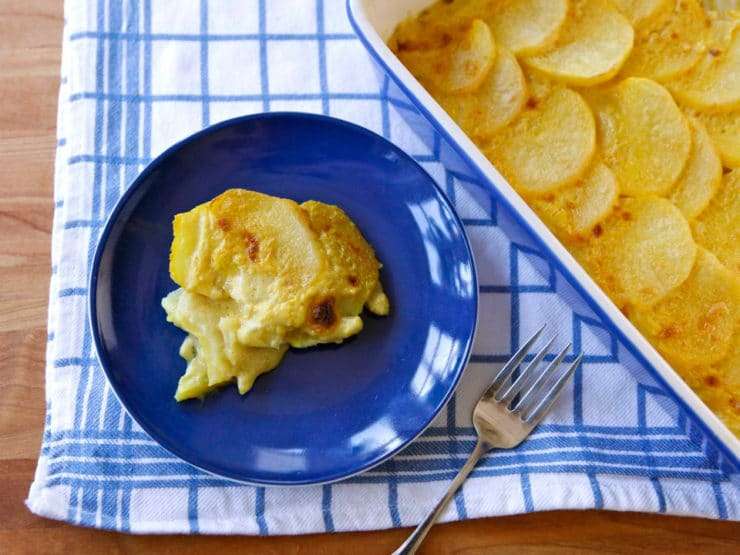
Once combined, the sauce is poured over the potatoes and baked at 350°F until tender and cooked through. The result is a creamy, golden scalloped potato dish with a mild heat and the unique aroma of saffron.
This dairy-free version allows those with dietary restrictions to enjoy a classic comfort dish with an aromatic twist from the saffron. The sauce's blend of coconut and almond milk offers richness without dairy.
Ingredients
- 3 1/2 pounds potato Russet or Yukon Gold
- Pinch saffron make sure it's a good quality saffron-- it's much more expensive, but the cheap stuff has no flavor, threads
- 2 tablespoons water hot
- 2 tablespoons butter substitute or use butter for dairy, non-hydrogenated
- 2 1/2 tablespoons flour (gluten free substitution below)
- 15 ounces coconut milk (1 can)
- 1 cup almond milk (or use milk for dairy)
- 1 teaspoon salt
- 1/2 teaspoon garlic or 1/4 tsp garlic powder, finely minced
- Pinch cayenne pepper adds heat, or more to taste
- paprika optional, for garnish
Instructions
- Preheat the oven to 350 degrees F. Peel the potatoes, slice them thin, and cover with cold water till ready to use—this will keep them from turning brown.Grind the saffron threads in a mortar and pestle to a powder. Add 2 tbsp of hot water to the ground saffron and let it soak for 5 minutes.
- Lightly grease a 9x13 baking dish. Drain the sliced potatoes and place half of them in a thin layer on the bottom of the dish, with each slice overlapping the next.
- In a small saucepan, melt 2 tbsp non-hydrogenated dairy free butter substitute over medium heat. Whisk in 2 ½ tbsp of flour to form a thick paste. Continue whisking for a minute or two until the mixture turns a sandy brown color.
- Slowly whisk in the coconut milk, a quarter cupful at a time, followed by the almond or soy milk.
- Whisk in the salt, garlic, cayenne, and saffron water. Heat the sauce over medium, whisking frequently, till it boils and thickens slightly. Reduce heat to low and keep warm.
- Pour half of the sauce over the layer of potatoes, using a ladle or large spoon to make sure the potatoes are evenly covered with sauce. Put the sauce back on the stovetop over low heat to keep warm.
- Make another layer with the remaining potato slices.
- Use a whisk to break up the top of the sauce. Pour the remaining sauce over the top layer of potatoes, again using a spoon or ladle to control the sauce. Make sure every potato is covered and no white areas remain.Cover the dish with foil. Place in the oven and bake covered for 60 minutes, till the potatoes are tender.
- Remove the foil and turn on your broiler. Place your baking dish 4-6 inches below the broiler. Broil the potatoes for a few minutes until the top is nicely browned.
- Sprinkle the top of the casserole lightly with paprika. Serve potatoes warm as a side dish.
Notes
- You will need a mortar and pestle to grind saffron threads to release their flavor effectively.
- For the gluten-free version, substitute the flour with 1 tablespoon of potato starch.
- A 9x13 baking dish is recommended to layer the potatoes evenly for consistent cooking.
Nutrition Information
Show DetailsNutrition Facts
Serving: 12servings
Amount Per Serving
Calories 172 kcal
% Daily Value*
| Calories | 172kcal | 9% |
| Carbohydrates | 18g | 6% |
| Protein | 4g | 8% |
| Fat | 9g | 14% |
| Saturated Fat | 7g | 35% |
| Sodium | 260mg | 11% |
| Potassium | 624mg | 13% |
| Fiber | 3g | 12% |
| Vitamin A | 85IU | 2% |
| Vitamin C | 15.4mg | 17% |
| Calcium | 71mg | 7% |
| Iron | 5.5mg | 31% |
* Percent Daily Values are based on a 2,000 calorie diet.
User Reviews
Overall Rating
5
You'll Also Love