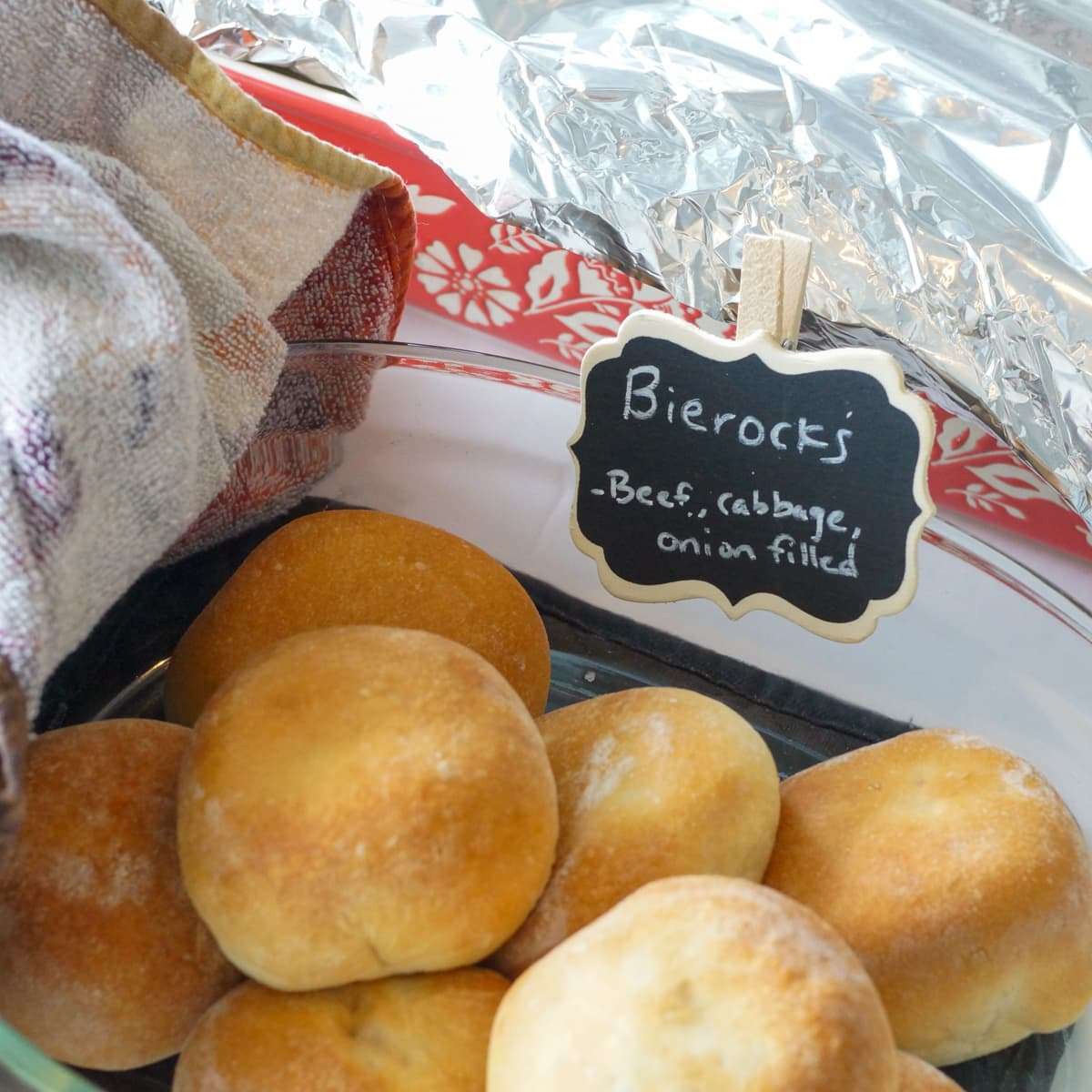
Easy Bierocks with Rhodes Rolls
User Reviews
5
-
Prep Time
15 mins
-
Cook Time
30 mins
-
Additional Time
3 hrs
-
Total Time
3 hrs 45 mins
-
Servings
18 bierocks
-
Calories
80 kcal
-
Course
Main Course
Easy Bierocks with Rhodes Rolls
Description
Easy Bierocks with Rhodes Rolls combines a simple ground beef filling mixed with shredded cabbage and diced onions, lightly seasoned and cooked before being encased in soft yeast roll dough. The filling provides a balance of savory beef and mild cabbage flavor. The dough is thawed, rolled thin, and filled with a generous scoop of the beef mixture, then carefully sealed to bake pleasingly soft, slightly golden buns. The recipe uses thawed frozen yeast roll dough to streamline preparation.
The filling is cooked on the stovetop then cooled before assembly, ensuring the dough does not become soggy and the rolls maintain their shape during baking. The gentle seasoning with salt and pepper allows the natural flavor of the ingredients to shine, with optional substitution of sauerkraut for a tangier note if desired.
These bierocks can be served warm as a filling snack or part of a light meal. They pair well with simple side salads or pickled vegetables. The recipe’s clear steps in forming the rolls help create sealed pastries that hold the flavorful filling securely.
The note about substituting sauerkraut suggests halving the cabbage amount to avoid excess moisture or strong flavor. Cooling the filling before assembly is key to easier handling and preventing dough sogginess. Refrigerating the filling for up to three days adds convenience for meal prep.
Ingredients
Beef mixture
- 1 pound ground beef
- 4 cups cabbage shredded
- 1 onion diced, small
- 1 Tablespoon olive oil
- ½ teaspoon black pepper
- salt 1-2 teaspoons, to taste
Dough
- 1 package yeast rolls will use about 18, frozen
- flour for dusting surface
Instructions
Making the filling
- Heat the oil in a large skillet over medium heat.
- Saute the onions in the oil until just soft.
- Add in the ground beef and cook until just cooked through. Drain the meat, if desired, then season with salt and pepper, turn off the heat and stir in the cabbage. * See notes.
- Let the mixture cool to room temp before filling the bierocks, or refrigerate for up to 3 days.
Preparing the dough
- Remove 18 dough balls and set on a baking tray and cover with Saran wrap. Let the dough thaw for 1.5 hours.
- On a well floured surface, sprinkle a little flour on the dough and roll gently to about 1/16 of an inch thick. The dough will be slightly smaller than a regular corn tortilla.
- Place a heaping ¼ cup of the beef mixture into the center of the dough.
- Fold up two opposite edges of the dough and pinch together.
- Bring up one side of the dough and pinch together.
- Bring up the final side of the dough and pinch together to form a tight seal.
- Flip the bierock over and place on a parchment paper lined baking sheet.
- Let the bierocks rest for 1.5 hours, to rise slightly.
Baking
- Preheat oven to 350 degrees.
- Bake the bierocks for about 25-30 minutes, until the top is lightly browned. Turn the pan 180 degrees halfway through.
Notes
- Substitute sauerkraut for cabbage for a tangier filling; reduce cabbage quantity by half if doing so to balance moisture and flavor.
- Allow the beef and cabbage mixture to cool completely before filling the dough to prevent sogginess and ease handling.
- The filling can be refrigerated for up to 3 days before assembly, making this recipe suitable for make-ahead preparation.
Nutrition Information
Show DetailsNutrition Facts
Serving: 18bierocks
Amount Per Serving
Calories 80 kcal
% Daily Value*
| Calories | 80kcal | 4% |
| Carbohydrates | 2g | 1% |
| Protein | 5g | 10% |
| Fat | 6g | 9% |
| Saturated Fat | 2g | 10% |
| Polyunsaturated Fat | 0.2g | 1% |
| Monounsaturated Fat | 3g | 15% |
| Trans Fat | 0.3g | 15% |
| Cholesterol | 18mg | 6% |
| Sodium | 154mg | 6% |
| Potassium | 105mg | 2% |
| Fiber | 1g | 4% |
| Sugar | 1g | 2% |
| Vitamin A | 16IU | 0% |
| Vitamin C | 6mg | 7% |
| Calcium | 14mg | 1% |
| Iron | 1mg | 6% |
* Percent Daily Values are based on a 2,000 calorie diet.
User Reviews
Overall Rating
5
You'll Also Love