Easy Gravlax Recipe
User Reviews
5
Easy Gravlax Recipe
Description
The Easy Gravlax Recipe starts with a whole salmon fillet cleaned of pin bones, then coated evenly with a curing mix of kosher salt, sugar, chopped fresh dill, and black pepper. Gin is optionally drizzled to mellow strong fish flavors. The fillet is tightly wrapped in plastic wrap and pressed under weight in the refrigerator for several days. This pressing extracts moisture and allows the curing agents to permeate the flesh, resulting in a firmer texture and concentrated salmon flavor without cooking it.
The curing method produces a lightly salted and herb-flecked salmon with a tender but firm consistency. The dill and pepper provide herbal and spicy notes complementing the natural fish flavor. The ginger gin addition subtly balances potential fishiness. Thin slices of this gravlax are served cold.
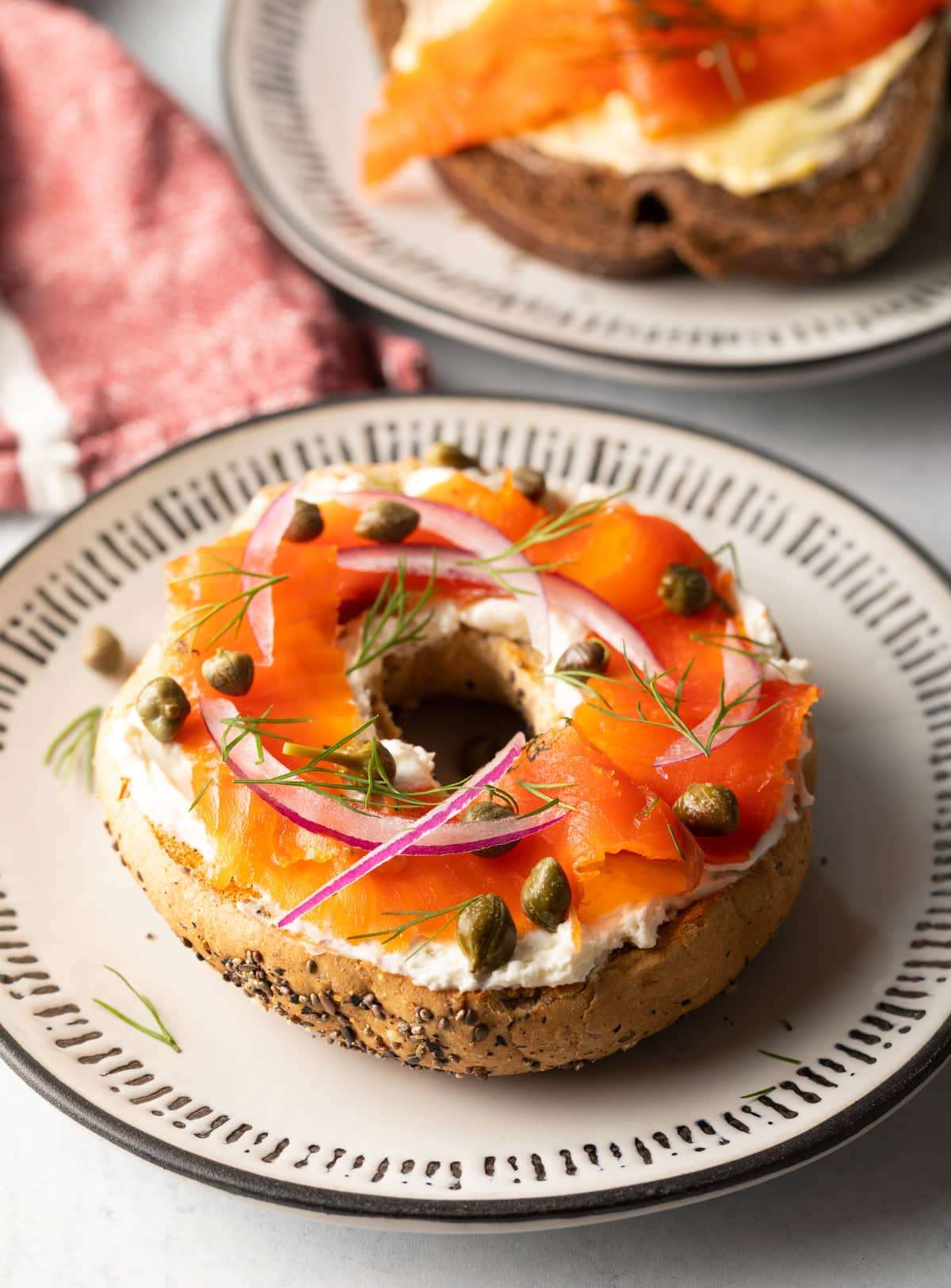
Gravlax pairs well with rye bread and mustard or horseradish sauce, and toppings like red onions, capers, or additional dill enhance the flavor. It also works on bagels with cream cheese or as an ingredient in salads and sandwiches, adding rich salmon flavor with a cured texture.
The notes advise consuming within two weeks for freshness. Vacuum sealing helps preserve flavor. The cured fillet freezes well if fresh salmon was used initially but refreezing previously frozen fish is not advised. Thaw frozen gravlax slowly in the refrigerator before serving.
Ingredients
- 1.5-2 pounds salmon fillet farmed or wild-caught, whole
- ½ cup kosher salt
- ½ cup granulated sugar
- ½ cup dill chopped, fresh
- 1 teaspoon black pepper
- 3 tablespoons gin optional
Instructions
- Lay the salmon fillet out on a clean work surface. Feel the top of the surface of the salmon with your fingers. Check for any small pin bones that were not removed. Then use your fingertips or tweezers to pull out any lingering bones.
- Set out a small mixing bowl. Combine the kosher salt, granulated sugar, fresh dill, and pepper. Mix well.
- Drizzle the gin over the surface of the salmon fillet. Then rub the salt and sugar mixture over the entire surface of the salmon fillet including the skin side. Pile any remaining salt mixture on top of the fillet.
- Wrap the salmon fillet very tightly in plastic wrap. Then place it in a baking dish.
- Set a smaller container, about the length of the salmon fillet, on top of it. Then place something heavy in the container to press down on the salmon… I like to use bags of dried beans or canned goods. The idea here is to press the salt into the salmon for several days.
- Now place the baking dish in the refrigerator and leave it alone. The salmon will be soft-cured within 36 hours. If you would like a heavier salt cure and a slightly denser texture, cure the salmon for up to 48 hours or even three full days. I usually remove mine at the 48 hour mark.
- Unwrap the salmon fillet and rinse with cold water to remove the excess salt and sugar. Then pat it dry.
- Working with a sharp knife, slice the salmon at an angle, against the grain, into fine slivers. If you cured the salmon for only 36 hours and it’s very soft, you may want to cut slightly thicker slices to make cutting more manageable.
- Place the slices in an airtight container and refrigerate until ready to use.
Notes
- Remove any remaining pin bones from the salmon before curing to ensure a pleasant texture.
- The gin in the cure is optional but helps moderate fishiness during the curing process.
- Press the wrapped salmon fillet under a heavy weight to allow even curing over several days in the refrigerator.
- Serve thinly sliced on rye bread with mustard, or with toppings like dill, red onions, and capers; also good on bagels with cream cheese or in salads.
- Consume cured gravlax within two weeks for best flavor and safety; vacuum sealing extends shelf life.
- To freeze, wrap tightly and store for up to two months, then thaw overnight in the refrigerator; avoid refreezing.
Nutrition Information
Show DetailsNutrition Facts
Serving: 12servings
Amount Per Serving
Calories 123 kcal
% Daily Value*
| Serving | 1.5oz | |
| Calories | 123kcal | 6% |
| Carbohydrates | 9g | 3% |
| Protein | 11g | 22% |
| Fat | 4g | 6% |
| Saturated Fat | 1g | 5% |
| Polyunsaturated Fat | 1g | 6% |
| Monounsaturated Fat | 1g | 5% |
| Cholesterol | 31mg | 10% |
| Sodium | 4742mg | 198% |
| Potassium | 296mg | 6% |
| Fiber | 0.1g | 0% |
| Sugar | 8g | 16% |
| Vitamin A | 175IU | 4% |
| Vitamin C | 2mg | 2% |
| Calcium | 15mg | 2% |
| Iron | 1mg | 6% |
* Percent Daily Values are based on a 2,000 calorie diet.
User Reviews
Overall Rating
5
You'll Also Love