Easy No Knead Bread Recipe
User Reviews
5
Easy No Knead Bread Recipe
Description
The Easy No Knead Bread Recipe starts by combining all-purpose flour, instant yeast, kosher salt, and warm water into a wet, tacky dough. This dough rests covered for 6 to 8 hours in a warm, draft-free environment, allowing the yeast to ferment and develop the dough’s structure without kneading. After this slow rise, the dough is shaped into a ball, placed on parchment, and given a second short rest at room temperature while a Dutch oven preheats to 450°F.
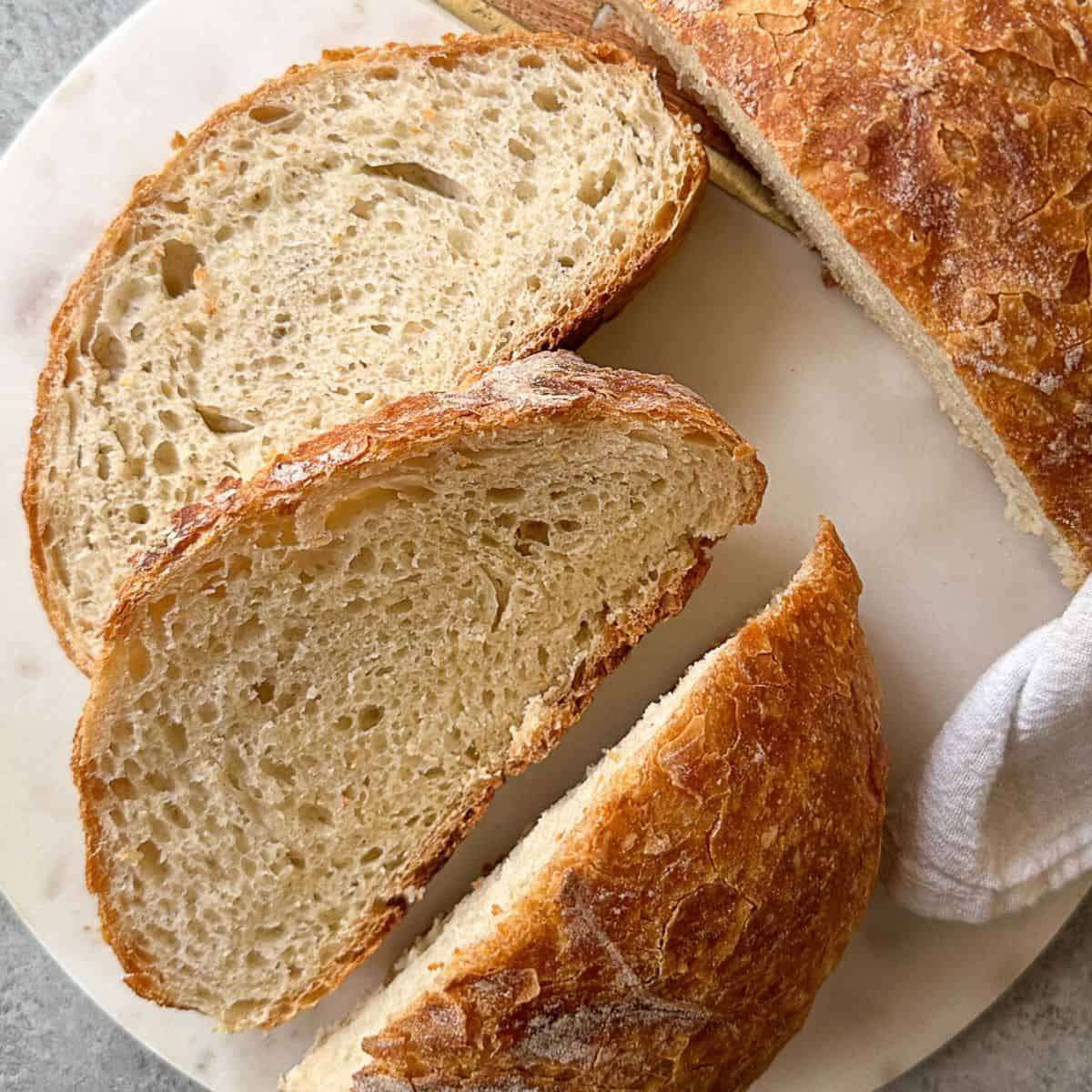
Once hot, the dough and parchment are transferred into the Dutch oven, which traps steam during baking and produces a crusty, golden loaf. The baking process transforms the shaggy dough into bread with a chewy crust and a soft crumb. The method is hands-off but leverages heat and time for an approachable bread baking experience without kneading.
This recipe yields a rustic bread ideal for sandwiches, toasting, or accompanying soups and salads. It pairs well with butter, cheese, or olive oil. Because it uses standard ingredients and no special equipment beyond a Dutch oven, it suits home bakers seeking texture and flavor with minimal fuss.
Notes suggest that bread flour may be used to improve texture due to higher protein, and partial whole wheat substitution is possible but may affect density. Leftover bread stores well in paper bags for two days or refrigerated for four days. Slices can be individually frozen for up to four months and toasted after thawing.
Ingredients
- 3 cups all-purpose flour
- 1 1/2 cup water 105-115 degrees F, warm
- 1 tsp kosher salt
- 1 tsp instant yeast
Instructions
- In a large bowl mix the all purpose flour, instant yeast, salt and water using a large spoon. The dough will be wet and tacky, that's how it should be.
- Cover the bowl with plastic wrap and a towel. Place it in a draft-free space such as an off oven for 6 to 8 hours (overnight).
- After the resting time, you'll see that the dough has risen and it feels quite shaggy. Gently transfer it to a floured surface and shape it into a ball, making sure the bottom of the dough is intact.
- Place the dough on a piece of parchment paper. Lightly top with some flour, cover with a kitchen towel and let it sit at room temperature for 1 hour.
- Place a 6 to 8-quart Dutch oven with a lid in the oven, and preheat to 450 degrees F. Once the dough has rested for one hour and the oven is heated, remove the pot very carefully and take the lid off using oven mitts.
- Lift the parchment paper with the dough on it and place it in the Dutch oven. Place the lid back on, and place the pot back in the oven. Bake for 30 minutes.
- After 30 minutes, remove the lid to expose the bread. It should have risen and look quite pale. Bake uncovered for another 20 to 25 minutes until the loaf is golden brown.
Notes
- You can use bread flour instead of all-purpose for a chewier texture and improved structure.
- Substituting up to half the flour with whole wheat is possible but using more may result in a dense, bitter loaf.
- Store leftover bread in a paper bag at room temperature for up to 2 days or wrap tightly and refrigerate for up to 4 days.
- For longer storage, slice the bread and freeze slices individually for up to 4 months, then thaw and toast as needed.
Nutrition Information
Show DetailsNutrition Facts
Serving: 8Serving
Amount Per Serving
Calories 176 kcal
% Daily Value*
| Calories | 176kcal | 9% |
| Carbohydrates | 36g | 12% |
| Protein | 5g | 10% |
| Fat | 1g | 2% |
| Saturated Fat | 0.1g | 1% |
| Polyunsaturated Fat | 0.2g | 1% |
| Monounsaturated Fat | 0.1g | 1% |
| Sodium | 292mg | 12% |
| Potassium | 65mg | 1% |
| Fiber | 2g | 8% |
| Sugar | 0.1g | 0% |
| Vitamin C | 0.01mg | 0% |
| Calcium | 8mg | 1% |
| Iron | 2mg | 11% |
* Percent Daily Values are based on a 2,000 calorie diet.
User Reviews
Overall Rating
5
You'll Also Love