Everyday Artisan-Style Crusty Bread (No-Knead)
User Reviews
5
Everyday Artisan-Style Crusty Bread (No-Knead)
Description
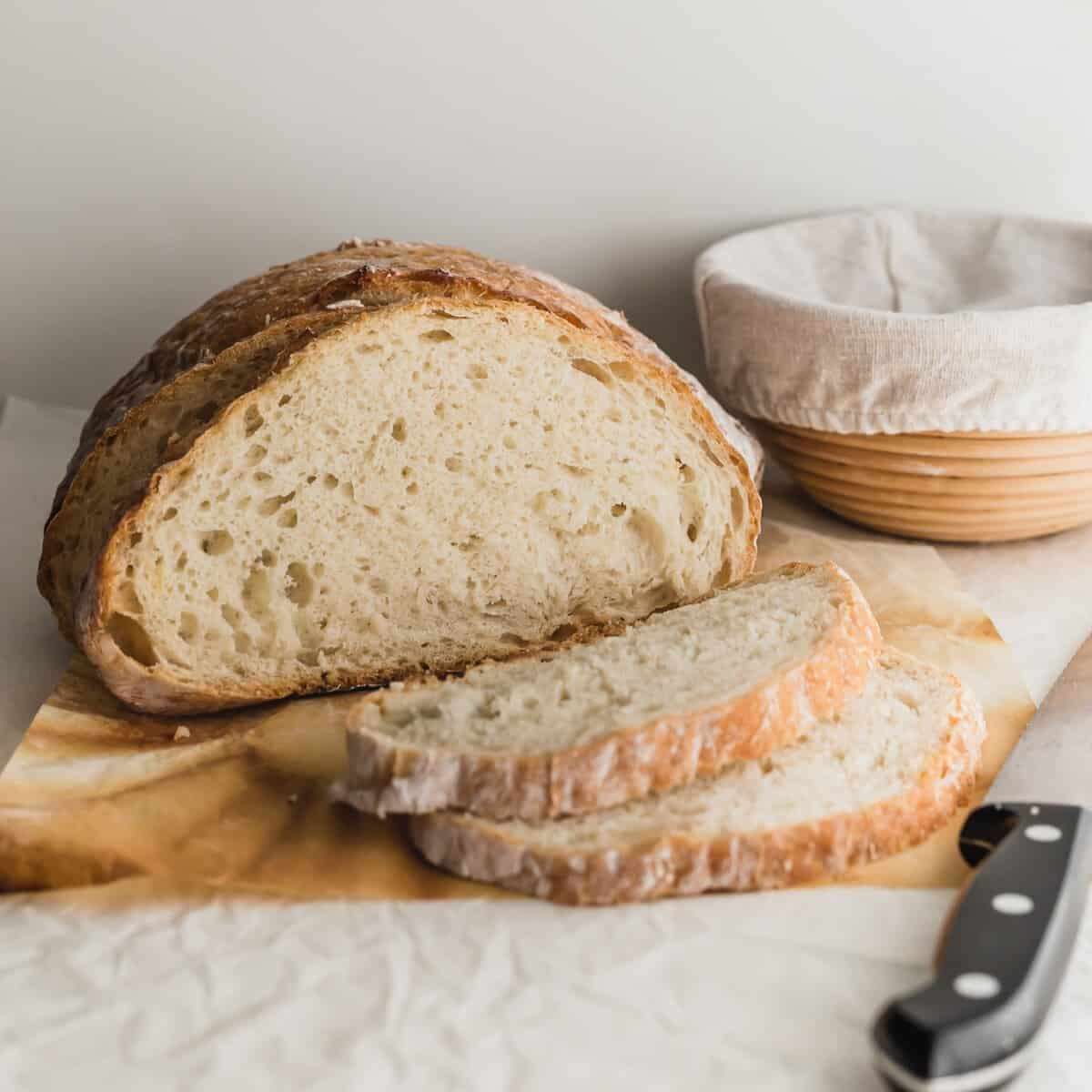
This no-knead bread recipe uses a simple combination of warm water, yeast, all-purpose or bread flour, and sea salt. After combining ingredients, the dough is stirred until slightly sticky, then covered to rise for about two hours until doubled. During this time, the dough is gently stretched and folded several times to develop its structure without kneading.
Baking involves preheating a heavy Dutch oven or cast iron pot to 500°F (260°C) to create an even heat environment and trap steam. The dough is shaped carefully on a floured surface to retain air pockets, then scored before baking covered followed by uncovered baking to form a thick, crusty exterior. This technique yields artisan-style bread featuring a chewy crust and tender crumb.
The process requires minimal active kneading but achieves a rich flavor through fermentation and baking method. Variations can include storing the dough refrigerated for several days to increase tanginess. This bread suits sandwiches, toasts, or accompaniment to meals that benefit from robust crust and soft interior texture.
Ingredients
- 400 ml water warm
- 7 g active dry yeast
- 450 g all-purpose flour or bread flour
- 9 g salt sea salt
Instructions
Make the dough:
- Combine warm water and yeast in a very large mixing bowl.
- Add in the flour and sea salt.
- Stir the mixture with a silicone spatula -- it should be slightly tacky.
- Cover with a lid and leave at room temperature for about 2 hours, or until doubled in bulk. If not baking right away, place into the fridge to slow down the fermentation. Store for up to 3-4 days -- the longer it's stored, the more tangier the dough will be.
- During the 2 hours, every 30 minutes, stretch and fold over the dough. (Use a spatula to help pick up the dough and fold it from north-south, turn the bowl 45 degrees, and repeat, until it's been done 4 times).
Shape the dough:
- Place a heavy-bottomed Dutch oven (or cast iron pot with lid) in the oven and preheat to 500°F/260°C.
- Transfer the dough to a lightly floured work surface.
- Gather the dough, being careful not to pop any air bubbles and pinch to seal a seam.
- Flip the dough seam-side down.
- Using a dough scraper, push the edge of one side of the dough to create a bit of tension. Repeat with the opposite edge (eg. North to South, South to North) and then then East to West and West to East.
Bake the dough:
- Place the shaped dough onto a large piece of parchment paper.
- Cover and let it rest at room temperature for 30 minutes.
- Score the top of the dough at a 45° with a sharp knife or bread lame (this gives the bread a weak point for the steam to escape).
- Carefully remove the hot Dutch oven pot from the oven (use gloves) and place the dough into the pot along with the parchment paper. Cover with the lid.
- Place into the oven and bake at 500°F/260°C for 20 minutes.
- Reduce the temperature to 400°F/204°C and bake for another 30 minutes.
- Let completely cool on a wire rack before slicing. (Cool for at least 3-4 hours).
Nutrition Information
Show DetailsNutrition Facts
Serving: 8Serving
Amount Per Serving
Calories 208 kcal
% Daily Value*
| Calories | 208kcal | 10% |
| Carbohydrates | 43g | 14% |
| Protein | 6g | 12% |
| Fat | 1g | 2% |
| Saturated Fat | 0.1g | 1% |
| Polyunsaturated Fat | 0.2g | 1% |
| Monounsaturated Fat | 0.1g | 1% |
| Sodium | 440mg | 18% |
| Potassium | 69mg | 1% |
| Fiber | 2g | 8% |
| Sugar | 0.2g | 0% |
| Vitamin C | 0.003mg | 0% |
| Calcium | 10mg | 1% |
| Iron | 3mg | 17% |
* Percent Daily Values are based on a 2,000 calorie diet.
User Reviews
Overall Rating
5
You'll Also Love