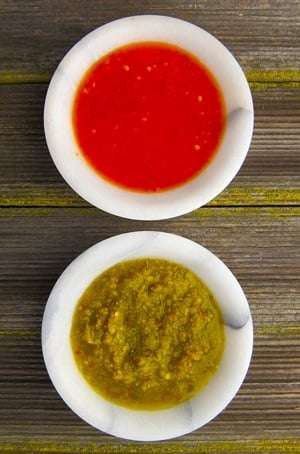
Fermented, Tabasco-Style Hot Sauce
User Reviews
5
-
Prep Time
30 mins
-
Total Time
30 mins
-
Servings
1 quart
-
Course
Condiments
-
Cuisine
American
Fermented, Tabasco-Style Hot Sauce
Description
Fermented, Tabasco-Style Hot Sauce begins with roughly chopped chile peppers blended with kosher salt and water into a rough puree. Keeping the seeds intact maintains its heat, but seeds can be removed for a milder result. This mixture is placed loosely capped in mason jars to ferment by natural airborne microbes, releasing gases that require periodic burping. The fermentation typically lasts one to three weeks in a cool, dark environment, encouraging sour flavors to develop.
After initial fermentation, oak cubes are added to the mash for aging, and sealed tightly for continued flavor absorption. The final sauce incorporates white wine vinegar to balance and preserve the ferment. Optionally, xanthan gum can be blended in to slightly thicken the liquid. The result is a nuanced hot sauce with both fermented depth and vinegar sharpness, analogous to commercial Tabasco sauce but crafted at home.
This hot sauce works well as a condiment on eggs, tacos, and grilled foods, providing a fermented heat distinct from fresh chile sauces. The long fermentation requires patience but yields complex flavor impossible to replicate by just blending fresh ingredients. Proper fermentation temperatures and careful burping are key to successful results.
Ingredients
- 3 1/3 pounds chile pepper about 1.5 kilos
- 1 ounce kosher salt about 37 grams
- 2 cups water
- 3 ounces oak cubes
- 4 cups white wine vinegar
- 1 teaspoon xanthan gum (optional)
Instructions
- Roughly chop the chiles and compost the stems. Blitz the chiles in a food processor or blender with the salt and water until you get a rough paste or slurry, depending on how much moisture there is in the peppers themselves. I keep the seeds in the chiles, but if you want a milder sauce, remove them.
- Put the mash into quart mason jars and cap them loosely. "Burp" the caps at least once a day to let out escaping gases and let air in. The chiles will ferment like this for at least a week, and sometimes up to 3 weeks. When the chiles settle down, add the oak cubes, distributing them evenly throughout the jars. Tighten the lids and store the jars in a cool, dark place. I kept mine in my salami fridge, which is 55°F. A basement is fine, as would a fridge. Tabasco keeps their mash barrels at ambient temperatures, which in Louisiana can top 100°F. I am working on a batch fermented this way now, and I see no reason it won't work. Don't let the mash freeze, however.
- Keep the mash like this no less than 3 months, and up to 2 years. When you are ready to finish the sauce, mix the mash with the vinegar.
- You now have two choices: You can do what Tabasco does and return the mix to the jars, shake them every day for a month and then strain out the pulp and seeds. Or, do what I do and keep all that pulp, which will give the sauce body and thickness. If you choose my method, you will need to really blend the sauce and stabilize it -- otherwise the sauce will eventually separate and will need to be shaken up before each use. To do so, dissolve the xanthan gum in 2 tablespoons of water and add it to the blender. Blend for a solid minute. Let the sauce rest for 1 hour before bottling so any trapped air in sauce (from the blending process) can escape. Bottle and store. The sauce will keep for a year or more.
Notes
- This recipe requires a fermentation period of at least one week, sometimes up to three, to develop proper flavor.
- Keep the mash in a cool, dark place between 50°F and 60°F during fermentation for best results.
- "Burping" the jars daily allows gases to escape and prevents pressure buildup while allowing some air in.
- Oak cubes added after fermentation impart additional flavor and are stored with the mash tightly sealed afterwards.
- Do not allow the mash to freeze during fermentation, as that will interrupt the microbial process.
- If a quicker sauce is desired, consider recipes that omit the fermentation step.
User Reviews
Overall Rating
5
You'll Also Love