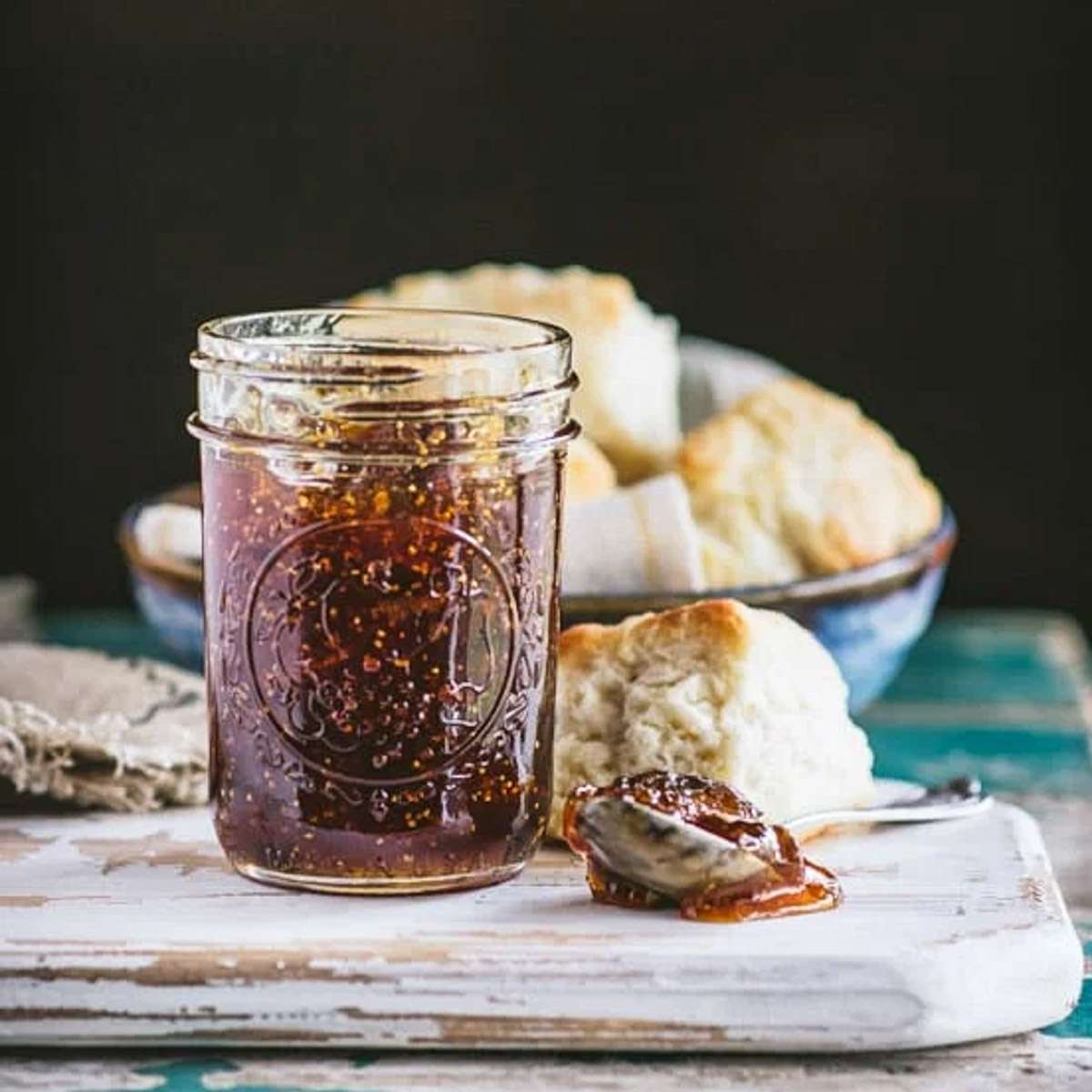
Fig Preserves Recipe without Pectin
User Reviews
5
-
Prep Time
5 mins
-
Cook Time
2 hrs 15 mins
-
Additional Time
12 hrs
-
Total Time
14 hrs 20 mins
-
Servings
3 (8 ounce) jars
-
Calories
65 kcal
-
Course
Condiments
-
Cuisine
American
Fig Preserves Recipe without Pectin
Description
The Fig Preserves Recipe without Pectin relies on the natural pectin present in figs and lemon to achieve a thick consistency during a slow cooking process. Fresh figs are combined with granulated sugar and paper-thin lemon slices, then left overnight to macerate. The mixture is gently heated to dissolve the sugar, then simmered for around two hours to develop a thick syrupy texture. Using a thermometer helps identify the jelling point between 220-225°F, signaling doneness without overcooking.
The lemon adds a bright acidity that balances the sweetness and assists with preservation, giving a marmalade-like nuance to the preserves. The final product has soft, broken-down pieces of fig softened during cooking, complemented by tender lemon slices. These preserves can be canned via a boiling water bath for shelf stability or refrigerated for shorter-term storage.
This recipe is flexible; sugar amounts can be adjusted according to taste and fig sweetness. Variations include omitting the lemon if refrigeration only is planned or scaling the batch size. It pairs well with toast, cheese, or as a topping in desserts. Attention to timing during cooking ensures the preserves remain spreadable rather than overly stiff.
Ingredients
- 1 ½ lbs. fig stems removed, fresh
- 1 ½ lbs. granulated sugar (approximately 3 ¼ cups)
- ½ lemon sliced paper-thin and seeds removed
Instructions
- Place the figs in a large pot. Pour the sugar over the figs, cover the pot, and let sit overnight.
- Heat the pot on the stovetop over medium heat. Cook, stirring constantly, until the sugar dissolves (this only takes a few minutes). Reduce the heat to low, add the lemon slices, and cook for about 2 hours (or until the syrup is thick). If the figs are particularly large, I like to use a wooden spoon or a potato masher to gently break apart the big chunks as the figs soften. If you have a deep fry or candy thermometer, you’re looking for a jelling point of 220-225°F.
- Divide the figs and syrup between 3 sterilized 8-ounce glass jars, leaving ¼-inch of headspace at the top of each jar. Wipe the rims clean with a damp cloth, then secure the lids and bands.
- Process in a boiling water bath for 10 minutes (or 15 minutes if your altitude is above 6,000 feet). Carefully remove the jars to a towel on the counter. Let stand, undisturbed, for 12 hours at room temperature. Check the seals after 12 hours by pressing the center of the lids. If the lid gives or the center button remains popped up, store in the refrigerator for up to 1 month. Properly sealed jars will keep in a cool, dark place for up to 8 months. Refrigerate after opening.
Notes
- Adjust sugar quantities to reduce sweetness, especially if figs are naturally sweet.
- Lemon provides acidity and helps with shelf stability; omit only if storing refrigerated short-term.
- Use a candy thermometer to avoid overcooking and ensure the preserves reach the right jelling point.
- Scale the recipe proportionally for larger batches, preserving ingredient ratios.
- Brown Turkey figs are used here, but other fresh fig varieties like Black Mission can be substituted.
- Leave ¼-inch headspace in jars to allow for expansion and proper sealing during canning.
- If skipping canning, cool preserves completely before refrigerating; consume within 3 weeks.
Nutrition Information
Show DetailsNutrition Facts
Serving: 3(8 ounce) jars
Amount Per Serving
Calories 65 kcal
% Daily Value*
| Serving | 1tablespoon | |
| Calories | 65kcal | 3% |
| Carbohydrates | 17g | 6% |
| Protein | 1g | 2% |
| Fat | 1g | 2% |
| Saturated Fat | 1g | 5% |
| Polyunsaturated Fat | 1g | 6% |
| Monounsaturated Fat | 1g | 5% |
| Sodium | 1mg | 0% |
| Potassium | 33mg | 1% |
| Fiber | 1g | 4% |
| Sugar | 16g | 32% |
| Vitamin A | 20IU | 0% |
| Vitamin C | 1mg | 1% |
| Calcium | 5mg | 1% |
| Iron | 1mg | 6% |
* Percent Daily Values are based on a 2,000 calorie diet.
User Reviews
Overall Rating
5
You'll Also Love