French Bread
User Reviews
5
French Bread
Description
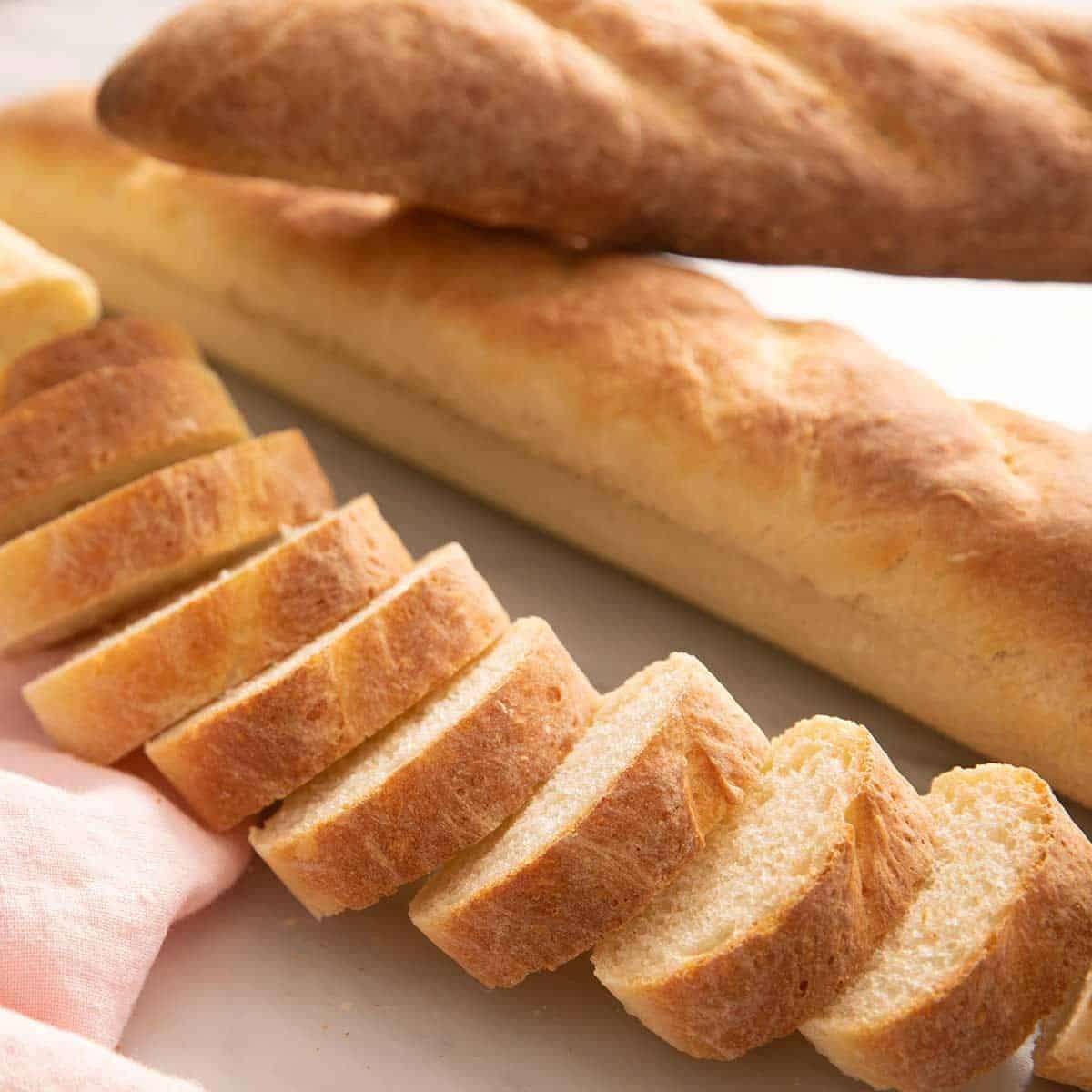
French Bread here starts with warm water, sugar, and active dry yeast to activate the yeast. Flour, salt, and olive oil are then combined and kneaded with increasing speed using a stand mixer until the dough forms a smooth, elastic ball that pulls away from the bowl and springs back when pressed. After rising until doubled, the dough is divided and shaped into cylinders by rolling flat rectangles, then scored before baking.
The baking process includes adding steam by pouring hot water into a pan placed on the oven's lower rack, which helps develop a crisp, crackly crust typical of French-style loaves. The crumb inside becomes soft with a slight chew, making it suitable for sandwiches or alongside meals.
Adjusting flour amount during kneading ensures proper dough texture. Monitoring temperature and environment affects rise times, suggesting warmth without overheating is ideal. This recipe can be adapted for different loaf sizes or shapes, including baguette pans, and swapping yeast types can shorten rise times.
Ingredients
- 2 cups water about 110°F) (480ml, warm
- 2 tablespoons granulated sugar
- 1 tablespoon active dry yeast
- 5½ cups all-purpose flour 660g, or bread flour
- 1½ teaspoons salt sea salt
- 1 tablespoon olive oil
Instructions
- In the bowl of a stand mixer, stir together the warm water, sugar, and yeast, and set aside for about 5 minutes or until very foamy.
- Add 3 cups of flour to the mixture along with the oil and salt and stir together with a spatula, then begin mixing with the dough hook on medium-low speed. Add the remaining flour a half cup at a time. Increase the speed to medium and knead until the dough comes together in a ball, 2 to 3 minutes. The dough should pull away from the sides of the bowl, spring back when pressed, and not stick to your finger. Add additional flour a few tablespoons at a time if needed.
- Transfer to a lightly oiled large bowl, cover with plastic wrap, and place in a warm place to rise until doubled in size, about an hour.
- Turn the dough onto a lightly floured surface. Divide it in half and shape each half into roughly a 9x12-inch rectangle. Starting on one long side, roll the dough like a jelly roll into a cylinder. Line a baking sheet with parchment paper and place the loaves on the pan. Loosely cover and allow to rise once more until very visibly puffed, 30 to 40 minutes.
- After the loaves have risen for 20 minutes, preheat the oven to 375°F. (See Tips about how to bake loaves with a crisp crust.)
- Cut 3 to 4 diagonal slashes on top of each risen loaf using a bread lame or very sharp knife.
- Bake for 25 to 30 minutes or until golden brown and the loaves sound hollow when you tap on them.
Notes
- Add flour gradually while kneading to achieve a soft, non-sticky dough.
- Use warm (110°F) water to activate yeast without killing it.
- Provide a warm but not hot environment for dough rising to avoid over-proofing.
- Score dough before baking to control expansion and shape.
- Create steam in the oven by adding hot water to a pan on the lower rack for a crisp crust.
- Divide dough into smaller portions for mini loaves or use baguette pans for uniform shape.
- Instant yeast can be used for faster rise; adjust method accordingly.
Nutrition Information
Show DetailsNutrition Facts
Serving: 2loaves
Amount Per Serving
Calories 1366 kcal
% Daily Value*
| Calories | 1366kcal | 68% |
| Carbohydrates | 275g | 92% |
| Protein | 36g | 72% |
| Fat | 11g | 17% |
| Saturated Fat | 2g | 10% |
| Polyunsaturated Fat | 2g | 12% |
| Monounsaturated Fat | 5g | 25% |
| Sodium | 1764mg | 74% |
| Potassium | 388mg | 8% |
| Fiber | 10g | 40% |
| Sugar | 13g | 26% |
| Vitamin C | 0.01mg | 0% |
| Calcium | 61mg | 6% |
| Iron | 16mg | 89% |
* Percent Daily Values are based on a 2,000 calorie diet.
User Reviews
Overall Rating
5
You'll Also Love