Grandma's Homemade White Bread
User Reviews
5
Grandma's Homemade White Bread
Description
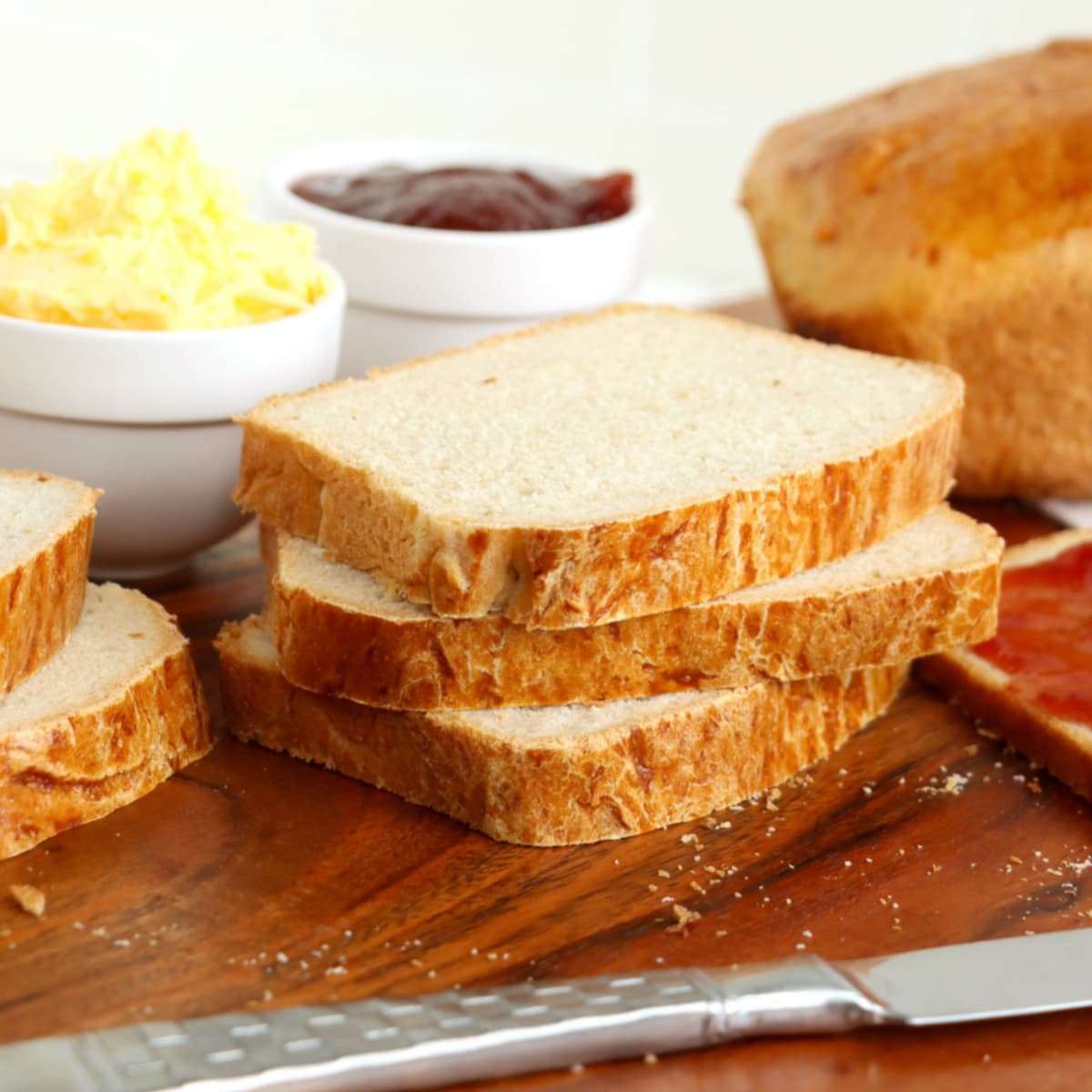
This homemade white bread recipe involves activating multiple packets of active dry yeast in warm water mixed with sugar until foamy. The flour is gradually incorporated, followed by warm milk, the remaining sugar, salt, and butter for flavor and tenderness. The dough is covered and left to rise in a warm spot until it doubles in size, which is crucial for developing proper texture and volume.
The resulting loaf has a soft crust and tender crumb due to the richness added by butter and milk. The recipe suggests that measuring flour precisely by spooning and leveling or weighing it with a scale is vital, as too much flour can cause dryness and hinder proper rising during final proofing. The bread's texture is achieved by careful kneading and proper proofing environment, reflecting classic home-baking methods passed down through generations.
This bread suits a variety of uses such as sandwiches, toast, or simply served warm with butter. It provides a foundational loaf that can be customized or served alongside soups and meals.
Note that controlling the dough moisture and using reliable yeast that foams properly ensures successful rising. Adjusting flour measurements if dough seems too dry will help avoid dense bread with poor rise. Keeping dough warm during proofing is essential for a good loaf.
Ingredients
- 3 tablespoons sugar
- 3 packets active dry yeast
- 8-9 cups all-purpose flour
- 1 ½ cups milk warm
- 2 tablespoons salt
- 4 ½ tablespoons butter plus extra for greasing and finish, melted, cooled
- 1 ½ cups water warm, around 105 degrees
- 1 large egg scrambled
Instructions
- In a large bowl, combine 1 ½ tablespoons of sugar and water. Sprinkle yeast over top of the mixture and allow it to sit for 10 minutes and foamy.
- The yeast puffs up and covers the surface of the water. If your yeast doesn't foam up within ten minutes you might need to use slightly cooler water or get some fresh yeast.
- My grandmother always said that as a general rule run tap water on top of the underside of your wrist or forearm until you can just tolerate the heat. That is when you grab your large measuring cup, whatever heat resistant bowl you are using and add your water, sugar and then yeast.
- Stir in 2 ¾ cups of the flour until incorporated. Cover with a warm damp cloth and place in a warm area for 45 minutes. My grandmother always left the bread in front of the window with the sun shining on it. This bread needs to rise in a warm area or it will not rise properly.
- Stir in milk, remaining sugar, salt and butter until combined.
- Stir in 5 to 6 cups of the remaining flour, enough to make a soft sticky dough.
- Dump the dough onto a floured surface and knead it for 10 to 15 minutes incorporating as much flour as necessary to prevent sticking. The dough should be smooth and elastic.
- Form it into a ball and put it into a well buttered bowl. Coat the dough with butter also. Cover again with a warm, damp towel and let rise for 45 minutes to 1 hour, back in a warm place, until it is double its original size.
- Punch down the center of the dough. Separate dough into two pieces and form into 2 loaves. Put each into a buttered loaf pan. Cover with the warm, damp towel again and let them rise again, covered, for 30 to 45 minutes until they almost double in size again.
- Scramble the egg and paint on top of both loaves before placing inside the oven.
- Bake in the middle of a preheated 425 degree oven for 5 minutes. Lower the heat to 375 degrees and bake for 35 to 40 minutes or until golden. Brush butter on top when it’s out of the oven and partially cooled and everyone will thank you. Turn onto a rack to cool.
- Serve and enjoy!
Notes
- Measure flour by spooning into the cup and leveling with a knife to avoid adding excess flour, which can dry out the dough.
- If possible, weigh flour for accuracy; about 140 grams per cup is standard.
- Ensure yeast is fresh and proofed in water of tolerable warmth (around forearm temperature) for proper activation.
- Keep dough in a warm, draft-free place to rise adequately, such as near a sunny window.
- If dough feels too dry or doesn't rise well, consider adjusting water or milk amounts slightly to improve hydration and fermentation.
Nutrition Information
Show DetailsNutrition Facts
Serving: 16Serving
Amount Per Serving
Calories 283 kcal
% Daily Value*
| Calories | 283kcal | 14% |
| Carbohydrates | 51g | 17% |
| Protein | 8g | 16% |
| Fat | 5g | 8% |
| Saturated Fat | 3g | 15% |
| Polyunsaturated Fat | 0.5g | 3% |
| Monounsaturated Fat | 1g | 5% |
| Trans Fat | 0.1g | 5% |
| Cholesterol | 23mg | 8% |
| Sodium | 912mg | 38% |
| Potassium | 108mg | 2% |
| Fiber | 2g | 8% |
| Sugar | 4g | 8% |
| Vitamin A | 152IU | 3% |
| Vitamin C | 0.001mg | 0% |
| Calcium | 41mg | 4% |
| Iron | 3mg | 17% |
* Percent Daily Values are based on a 2,000 calorie diet.
User Reviews
Overall Rating
5
You'll Also Love