Greek Yogurt Flatbread
User Reviews
4.9
Greek Yogurt Flatbread
Description
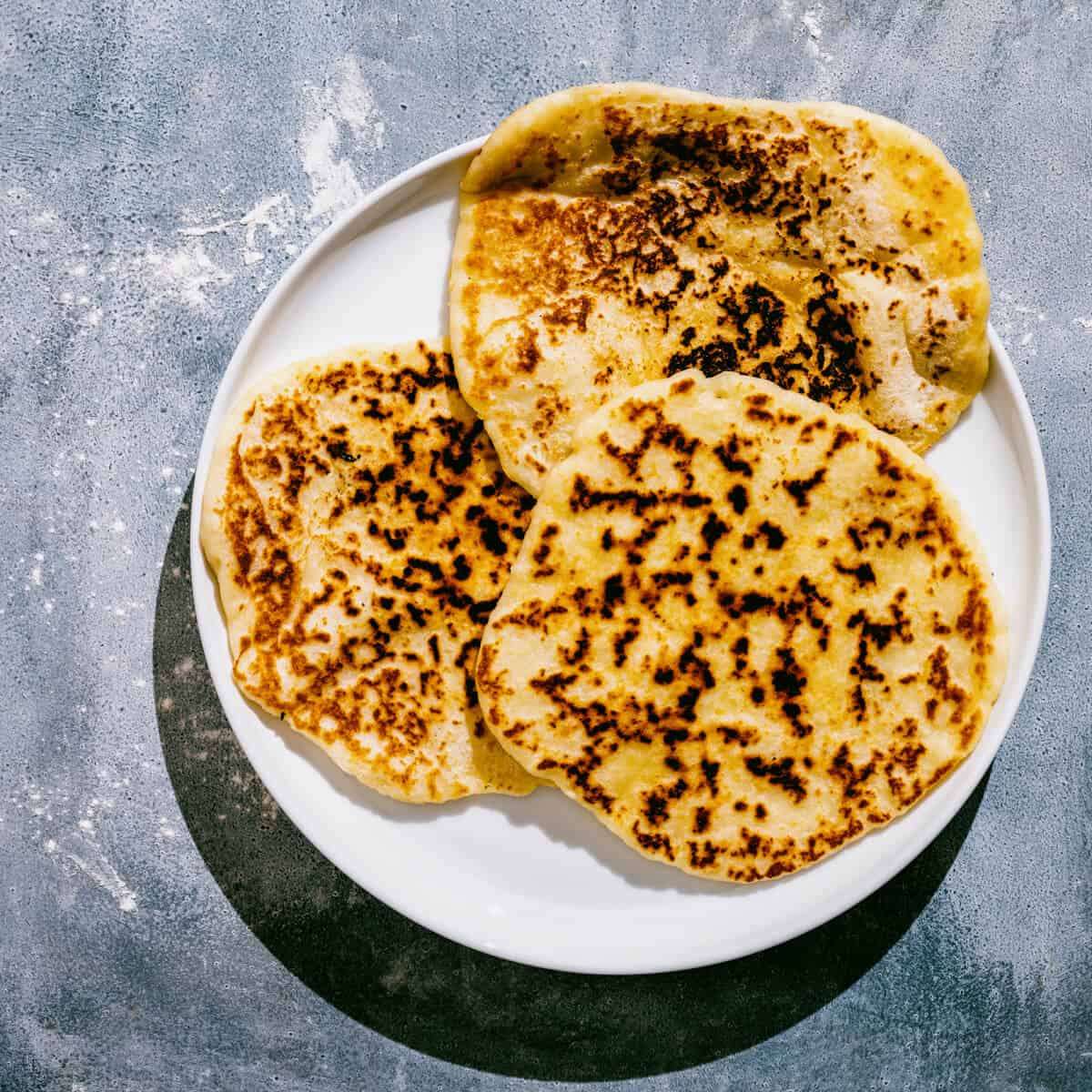
This Greek Yogurt Flatbread uses Greek yogurt and self-rising flour combined until a smooth dough forms, with adjustments made by adding flour or yogurt for ideal consistency. The dough rests briefly, is kneaded and divided, then rolled into thin circles. Cooking in a hot cast-iron skillet with a bit of olive oil causes the flatbread to puff and develop charred spots, which add flavor without bitterness. The texture strikes a balance between soft centers and crisped edges.
The flatbread can be served as a wrap, alongside dips, or to accompany meals needing bread without yeast or long rising times. The tang from yogurt adds subtle flavor distinct from other flatbreads.
Notes advise substituting regular plain yogurt or sour cream for Greek yogurt if preferred, and using all-purpose flour plus baking powder as an alternative to self-rising flour. Avoid overmixing the dough, and rolling thin promotes puffing and faster cooking. Heating the skillet thoroughly and using olive oil aids in texture and flavor development.
Ingredients
- 220 grams Greek yogurt (see note 1)
- 140 grams self-rising flour (see note 2)
- 1 teaspoon salt
Instructions
- Combine the flour and yogurt in a large bowl.
- Mix the flour and yogurt. Pay attention here: If the dough is too dry, add a tablespoon of yogurt. Alternatively, add a tablespoon of flour if the dough seems too wet. The consistency should feel smooth without being sticky.
- Shape into a ball and allow the dough to rest for half an hour.
- Knead the dough on a lightly floured surface and divide it into 4 pieces.
- Roll the dough into a thin circle using a rolling pin.
- Heat a cast-iron skillet at a high temperature and a little olive oil. Cook the greek yogurt flatbread for a few minutes on each side. The flatbread will puff up and char in certain parts (that’s OK! - it adds flavour!). Repeat with the remaining dough pieces until all the flatbreads are cooked.
Notes
- Greek yogurt can be substituted with plain yogurt or sour cream; avoid flavored varieties.
- All-purpose flour with added baking powder (2 teaspoons per cup) can replace self-rising flour.
- Do not overmix the dough; mix until just combined for best texture.
- Roll the dough thin for a lighter, puffier flatbread that cooks quickly.
- Ensure the cast iron skillet is very hot before cooking to encourage puffing and charring.
- Adding a tablespoon of olive oil to the dough improves smoothness and handling.
- Keep extra flour nearby for adjustments and to flour the kneading surface.
Nutrition Information
Show DetailsNutrition Facts
Serving: 4flatbreads
Amount Per Serving
Calories 159 kcal
% Daily Value*
| Serving | 1flatbread | |
| Calories | 159kcal | 8% |
| Carbohydrates | 27g | 9% |
| Protein | 10g | 20% |
| Fat | 1g | 2% |
| Saturated Fat | 1g | 5% |
* Percent Daily Values are based on a 2,000 calorie diet.
User Reviews
Overall Rating
4.9
You'll Also Love