Healthy Mashed Cauliflower
User Reviews
5
Healthy Mashed Cauliflower
Description
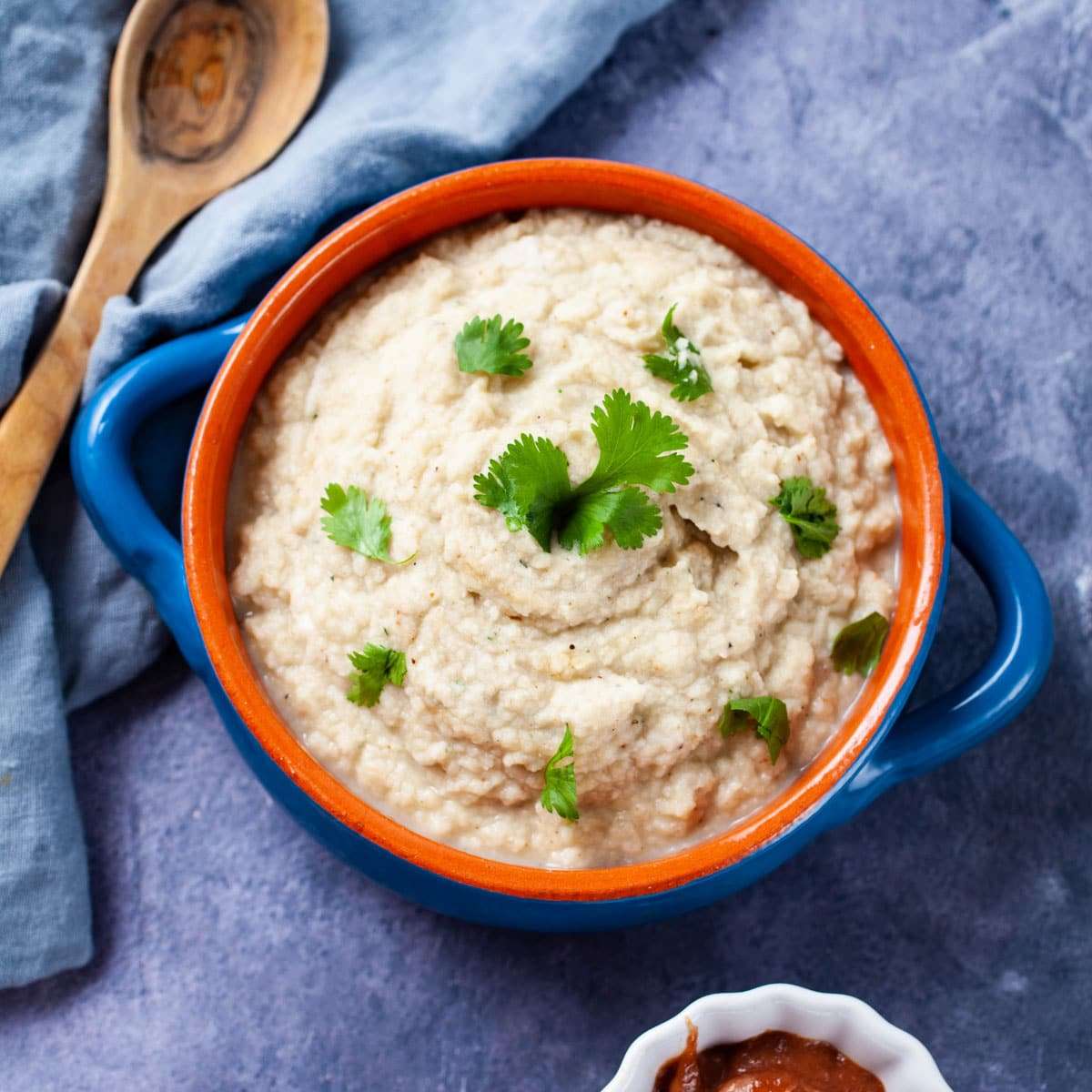
Healthy Mashed Cauliflower uses either whole cauliflower florets or packaged riced cauliflower blended with oat milk or butter, then combined with sautéed garlic and shallots for added depth. Parmesan cheese adds richness, while ground nutmeg introduces a subtle warmth. The mixture is smoothly blended and then gently heated to enhance flavors and texture.
The finished mash is creamy and smooth, with a delicate balance of savory onion-garlic notes and a faint nutmeg aroma, distinguishing it from traditional mashed potatoes. Using olive oil and plant milk contributes to its mild richness without overwhelming the cauliflower base.
This dish can be served as a side to many meals where mashed potatoes might usually appear. It offers a lighter, vegetable-forward alternative with a satisfying texture and subtle flavors that complement a range of proteins and vegetables.
Leftover mashed cauliflower stores well in the fridge for up to five days or can be frozen for up to three months. When reheating, adding a small amount of olive oil helps maintain moisture and prevents the mash from drying out. A good doneness cue is when the sweet aroma of nutmeg predominates, indicating the cauliflower is fully cooked and blended.
Ingredients
- 1 cauliflower about 2 pounds/900 grams, or 2 (16-ounce) packages rice cauliflower will do as well, large head
- ¼ cup oat milk 60 grams, or melted butter; or pea milk or cashew milk
- 3 tablespoons olive oil divided
- 2 cloves garlic chopped
- 2 shallot 160 grams, peeled and coarsely chopped. You can also use ½ of one large yellow onion
- salt
- black pepper
- 1 teaspoon ground nutmeg
- 1 cup Parmesan Cheese 90 grams, grated; replace with ¼ cup cashew sour cream to make it dairy-free
- parsley fresh leaves; for garnish
Instructions
- Remove outer leaves from cauliflower. Cut up the vegetable into florets and further coarsely chop the florets—core included. Omit this step if you use the packaged rice cauliflower.
- Place the cauliflower in a high-speed blender or food processor with the plant milk or butter. Blend on high speed until pureed. You might need to puree a certain amount of cauliflower if your blender is not large enough to hold everything, and then add in and puree the rest of the florets (or rice cauliflower) in batches—set aside.
- Cover the bottom of a large skillet with two tablespoons of olive oil and heat over medium heat. Add the garlic and the onions. Cook and stir for 3 minutes. Season with a few pinches of salt and pepper.
- Transfer the sauteed garlic and onions to the blender containing the pureed cauliflower. Mix everything for a few seconds or until the sauteed veggies are completely blended in with the cauliflower.
- Cover the same large skillet again with one tablespoon of olive oil and heat over the same medium heat.
- Transfer the pureed veggies from the blender to the skillet, spreading it evenly over the bottom of the pan. Cook and stir frequently to avoid browning for at least 5 minutes or until the pureed cauliflower mix is fully cooked.
- Season to taste with salt, pepper, and nutmeg.
- When fully cooked, stir in the grated cheese until completely melted.
- Garnish with fresh parsley leaves, chives, or extra grated cheese to taste (optional).
Notes
- Store leftovers in an airtight container in the fridge for up to 5 days or freeze for up to 3 months.
- Reheat gently on the stove or in the microwave, adding a teaspoon of olive oil to keep the mash moist.
- Watch for the nutmeg aroma as an indicator that the cauliflower mash is ready.
Nutrition Information
Show DetailsNutrition Facts
Serving: 4Servings
Amount Per Serving
Calories 256 kcal
% Daily Value*
| Calories | 256kcal | 13% |
| Carbohydrates | 15g | 5% |
| Protein | 11g | 22% |
| Fat | 18g | 28% |
| Saturated Fat | 6g | 30% |
| Polyunsaturated Fat | 1g | 6% |
| Monounsaturated Fat | 9g | 45% |
| Cholesterol | 22mg | 7% |
| Sodium | 490mg | 20% |
| Potassium | 533mg | 11% |
| Fiber | 4g | 16% |
| Sugar | 5g | 10% |
| Vitamin A | 248IU | 5% |
| Vitamin C | 71mg | 79% |
| Calcium | 283mg | 28% |
| Iron | 1mg | 6% |
* Percent Daily Values are based on a 2,000 calorie diet.
User Reviews
Overall Rating
5
You'll Also Love