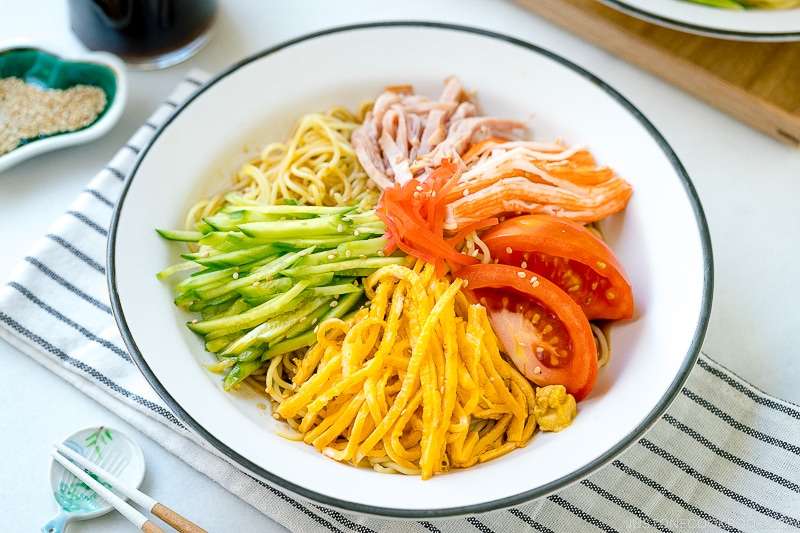
Hiyashi Chuka (Cold Ramen)
User Reviews
4.8
-
Prep Time
20 mins
-
Cook Time
10 mins
-
Total Time
30 mins
-
Servings
3
-
Calories
360 kcal
-
Course
Main Course
-
Cuisine
Japanese
Hiyashi Chuka (Cold Ramen)
Description
The dressing for Hiyashi Chuka is prepared by grating fresh ginger and combining it with soy sauce, rice vinegar, chicken stock, water, sugar, toasted sesame oil, and optional chili oil, then simmering until dissolved and cooled. Meanwhile, thin omelettes are made by whisking eggs with sugar and salt, cooking them in oil, and slicing into fine strips.
Cucumber is sliced thinly and the seeds optionally removed for texture, while tomato, ham, and crab meat add color and savory contrast to the dish. Fresh cooked hiyashi chuka noodles are cooled, then arranged with the toppings and dressed with the chilled sauce. Optional garnishes like toasted white sesame seeds, Japanese hot mustard (karashi), and pickled red ginger contribute flavor balance and depth.
This dish highlights contrasts between cool noodles and crisp vegetables, savory meats, and piquant sauce, making it a popular refreshing choice in warm weather with balanced textures and flavors.
Ingredients
For the Dressing
- ½ tsp ginger (grated, with juice; from 1-inch, 2.5 cm knob)
- 4 Tbsp soy sauce
- 3 Tbsp rice vinegar unseasoned
- 2 Tbsp chicken stock or substitute water, or broth
- 2 Tbsp water
- 2 Tbsp sugar
- 1 Tbsp sesame oil toasted
- ¼ tsp Chili oil optional; make my Homemade La-yu, Japanese style la-yu
For the Toppings
- 2 egg each thin omelette uses 2 eggs, large, 50 g each, without shell
- 2 tsp sugar
- ⅛ tsp kosher salt Diamond Crystal brand
- 1 Tbsp neutral oil (to fry the egg; use 1 Tbsp per omelette)
- 2 cucumber or use an English cucumber and remove the seeds, Japanese or Persian varieties
- 1 tomato
- 4 lices ham
- 4 ticks crabmeat or imitation crabmeat
For the Noodles
- 3 ervings hiyashi chuka noodles (6 oz, 170 g fresh noodles per serving)
For Serving (optional)
- 1½ tsp white sesame seeds toasted
- karashi mustard Japanese hot mustard
- pickled red ginger aka beni shoga or kizami beni shoga
Instructions
- Gather all the ingredients.
To Make the Dressing
- Peel and grate the ginger (I use a ceramic grater). Measure ½ tsp ginger, grated, with juice. If you like a gingery taste, use 1 tsp. You can always add more after you taste the sauce.
- In a medium saucepan, combine all the dressing ingredients—½ tsp ginger, 4 Tbsp soy sauce, 3 Tbsp rice vinegar (unseasoned), 2 Tbsp chicken stock/broth, 2 Tbsp water, 2 Tbsp sugar, 1 Tbsp toasted sesame oil, and ¼ tsp la-yu (Japanese chili oil). Whisk them all together. Bring it to a simmer and then turn off the heat. Make sure the sugar is completely dissolved.
- Prepare a bowl of iced water. Dip the base of the saucepan into the iced water to cool the sauce. Cool it completely, and store it in the refrigerator if you‘re serving later. You can make the dressing ahead and store it in the refrigerator for up to a week.
To Prepare the Toppings
- To make a thin omelette, whisk together 2 large eggs (50 g each w/o shell), 2 tsp sugar, and ⅛ tsp Diamond Crystal kosher salt in a small bowl.
- Heat a large frying pan over medium heat. When the pan is hot, add 1 Tbsp neutral oil and evenly distribute it. Pour the egg mixture into the pan (or if you‘re doubling the recipe, make two omelettes and use two eggs each).
- When the egg is set on the surface, flip and cook the other side for 1–2 minutes. Transfer the omelet to a paper towel to absorb the excess oil and let it cool.
- Peel the skin of 2 Japanese or Persian cucumbers, alternating peeled and unpeeled strips to create a stripe pattern. Diagonally cut the cucumbers into thin slices, and then cut them into julienned strips.
- Cut 1 tomato in half and then cut the halves into wedges.
- Cut 4 slices ham into thin julienned strips.
- Separate 4 sticks real or imitation crabmeat into thin strips.
- When the omelette is cool, cut it in half and then into thin strips.
- Now, all the toppings are ready.
To Cook the Noodles
- Bring a big pot of water to a boil. Loosen and separate 3 servings hiyashi chuka noodles with your hands and add them to the boiling water. Cook the fresh noodles according to the package directions. Tip: I usually cook the noodles for less time for a firm, al dente doneness.
- Transfer the cooked noodles to a colander and rinse them thoroughly with your hands under cold running water. This stops the cooking, cools the noodles, and removes the excess starch. Drain completely, shaking the colander to remove the excess water.
To Assemble and Serve
- Divide the noodles into individual plates or bowls. Place all the toppings and pour the dressing on top before serving. Sprinkle with 1½ tsp toasted white sesame seeds (optional). Serve optional pickled red ginger (beni shoga or kizami beni shoga) on top and Japanese karashi hot mustard on the side, if desired.
To Store
- You can keep the leftover sauce and toppings in separate airtight containers and store them in the refrigerator for 2 days. I recommend preparing the noodles right before you serve.
Nutrition Information
Show DetailsNutrition Facts
Serving: 3Serving
Amount Per Serving
Calories 360 kcal
% Daily Value*
| Calories | 360kcal | 18% |
| Carbohydrates | 47g | 16% |
| Protein | 17g | 34% |
| Fat | 11g | 17% |
| Saturated Fat | 3g | 15% |
| Polyunsaturated Fat | 3g | 18% |
| Monounsaturated Fat | 4g | 20% |
| Trans Fat | 0.01g | 1% |
| Cholesterol | 140mg | 47% |
| Sodium | 1395mg | 58% |
| Potassium | 311mg | 7% |
| Fiber | 3g | 12% |
| Sugar | 12g | 24% |
| Vitamin A | 706IU | 14% |
| Vitamin C | 9mg | 10% |
| Calcium | 38mg | 4% |
| Iron | 2mg | 11% |
* Percent Daily Values are based on a 2,000 calorie diet.
User Reviews
Overall Rating
4.8
You'll Also Love