Homemade beef stock recipe
User Reviews
5
Homemade beef stock recipe
Description
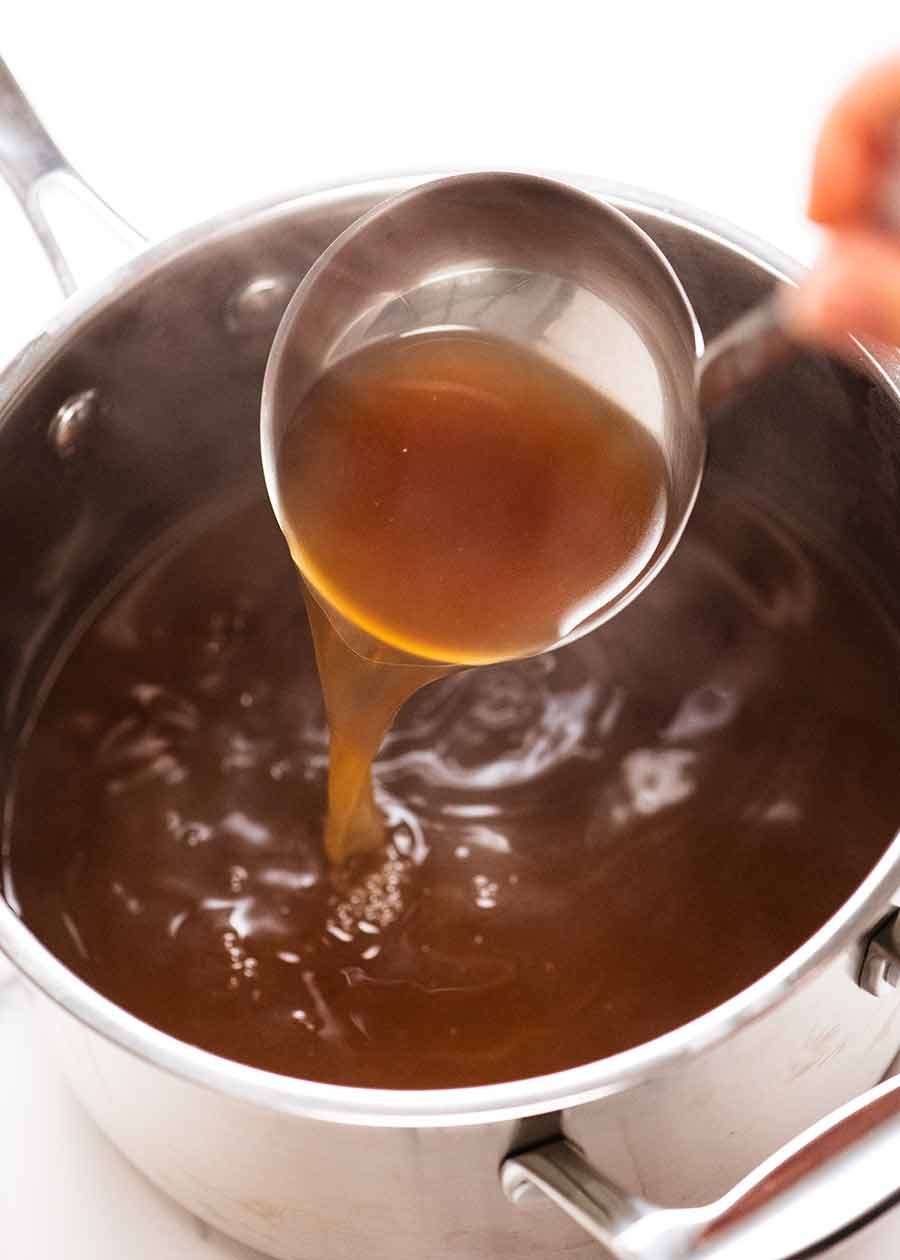
The process begins by roasting beef bones including marrow bones to develop caramelized flavors essential for an enriched stock. Aromatic vegetables like carrot, onion, celery, tomato, and herbs including bay leaf, thyme, and parsley, plus spices such as coriander seeds and black peppercorns, are added along with apple cider vinegar to help extract minerals and gelatin during simmering. Water covers the bones and ingredients.
The bones and ingredients simmer gently for an extended time, allowing collagen and flavors to infuse the liquid. Careful temperature control prevents cloudiness and helps develop a clear, aromatic stock. The addition of tomato and coriander seeds elevates complexity beyond a traditional stock. After straining, the concentration of stock can be adjusted by reduction to achieve desired richness.
Homemade beef stock delivers a gelatinous texture when cooled, indicating successful extraction of collagen, contributing to a velvety mouthfeel in dishes. The stock can be stored in the refrigerator or freezer in portioned containers. Leftover meat on bones, though mild in flavor, can be repurposed with sauces. This base supports a broad range of culinary preparations, improving depth and body.
Variations in cooking methods and equipment affect how much the stock reduces; slower cooking methods need additional concentration steps. Proper bone selection ensures optimal flavor and richness.
Ingredients
- 2.5 kg / 5 lb beef bones back and neck preferably, plus one marrow bone for richness (or knuckles) (Note 1, meaty
- 1 carrot , unpeeled, cut in half
- 1/2 onion (brown or yellow), peel and cut in half
- 2 tomato cut into quarters (keep seeds in) (Note 2
- 1/2 tbsp coriander seeds (Note 2)
- 1 tbsp apple cider vinegar (Note 3)
- 1/2 tbsp black peppercorns
- 1 celery cut in half or thirds (leaves on ok, stem
- 2 bay leaf fresh (or 1 dried
- 2 thyme or 1/2 tsp dried leaves, sprigs
- 12 parsley if you have it (not essential, sprigs
- 3 litres/quarts water , cold tap water
Instructions
Roast bones:
- Preheat oven to 220°C/430°F (200°C fan).
- Spread bones out across 2 baking trays. Roast for 1 hour, turning at 30 minutes, or until very well browned.
- Drain and discard excess fat, if any.
- Place bones into large stock pot (7 litres/7 quarts+ capacity)
Deglaze trays:
- Place tray on stove, turn onto medium. Add 3/4 cup water. When it comes to a simmer, start scraping the tray. The drippings (fond) on the tray will loosen and dissolve into the liquid.
- Once most of the drippings are removed from the base, scrape all the liquid into the pot. Repeat with other tray.
Simmer stock:
- Add remaining ingredients into the pot. Start with 3 litres of water, then squish the bones etc down to fit snugly in the pot. Add more water if needed, to just cover the bones (ingredients will collapse a bit as stock cooks). The water quantity depends on shape of bone and pot – my water level came to 5.75 litres/quarts mark on pot.
- Boil then simmer: Bring to a boil on medium high, then turn down to low so it's simmering ever so gently, with only a small bubble bursting every now and then.
- Remove surface scum: Scoop off any surface scum using a ladle and discard.
- Simmer for 8 hours on very low, no lid. Liquid level should reduce to around 4 litres/quarts for all - if not, just reduce after straining (Step 3 under Strain & Finish).
- Other methods: - Stove 3 hours on medium-low (very gentle simmer, with lid cracked)- oven (lid on) for 8 to 10 hours at 120°C/250°F (100°C fan). Water level will only reduce by about 500ml / 0.5 qt. Strain then rapid boil to reduce to 1.5 lt / 1.5 qt. - slow cooker 8 to 10 hours on low. Reduce after straining to 1.5 lt / 1.5 qt.
Strain & finish:
- Strain: Fish out most bones. Strain stock with remaining vegetables through a fine mesh colander / strainer set over a large pot or bowl. Leave strainer for a few minutes to let it drip.
- Cool to room temperature: Set stock pot or bowl in sink filled with cold water. Leave stock to cool for around 1h 15 mins, changing water every 20 mins or so as it gets warm.
- Measure stock volume: Pour stock into a vessel to measure volume - it should be between around 1.3 - 1.7 litres/quarts. If it's much more, reduce on the stove, otherwise stock flavour will be too weak.
- Refrigerate stock. When fat has solidified on surface, carefully scrape off with a large spoon and discard. You should have 1.25 - 1.5 L/Qts remaining.
- Ready! Beef stock is now ready to use! This stock is equivalent in strength to store-bought stock, so it can be used 1:1 in any recipe calling for beef stock.
- Salt adjustment: Homemade stock is unsalted whereas store-bought stock is salted. Add 1/4 tsp salt for every 1 cup homemade beef stock (250ml) to match the salt level of store-bought low sodium beef stock.
- To use: Cold stock has a jellied consistency (Note 4). It takes barely a minute to turn liquid on a medium high stove, or microwave. You can also just add it in jelly form straight into dishes, but sometimes you may need to liquify it to measure.
Notes
- Use meaty bones, including marrow bones, for the best flavor and richness in the stock.
- Incorporating coriander seeds and tomato adds extra depth and sweetness to the stock.
- Apple cider vinegar helps draw nutrients and gelatin from the bones into the stock.
- A slow simmer with the lid off extracts maximum flavor and gelatin without cloudiness.
- Strain the stock carefully and reduce further if needed to achieve the target quantity and concentration.
- Store stock in portions in the fridge for up to 7 days or freeze for up to 3 months.
- Leftover meat on the bones can be removed and used with additional seasoning or sauces.
Nutrition Information
Show DetailsNutrition Facts
Serving: 2litres / quarts
Amount Per Serving
Calories 121 kcal
% Daily Value*
| Calories | 121cal | 6% |
| Carbohydrates | 27g | 9% |
| Protein | 5g | 10% |
| Fat | 1g | 2% |
| Saturated Fat | 1g | 5% |
| Sodium | 66mg | 3% |
| Potassium | 1047mg | 22% |
| Fiber | 9g | 36% |
| Sugar | 12g | 24% |
| Vitamin A | 13387IU | 268% |
| Vitamin C | 61mg | 68% |
| Calcium | 125mg | 13% |
| Iron | 3mg | 17% |
* Percent Daily Values are based on a 2,000 calorie diet.
User Reviews
Overall Rating
5
You'll Also Love