Homemade Bread
User Reviews
5
-
Prep Time
15 mins
-
Cook Time
30 mins
-
Rise time:
3 hrs
-
Total Time
3 hrs 45 mins
-
Servings
24
-
Calories
202 kcal
-
Course
Bread
-
Cuisine
American, International
Homemade Bread
Description
Homemade Bread combines simple ingredients—yeast, warm water, honey or sugar, salt, oil, and flour—to produce a traditional yeast bread dough. The process starts by proofing the yeast to ensure activation, followed by mixing the dough until it pulls away cleanly from the bowl, indicating proper hydration and flour content. After kneading for several minutes, the dough will be elastic and slightly sticky to the touch, essential for good bread crumb texture. The dough rises in an oiled bowl until doubled, allowing the yeast to develop flavor and structure.
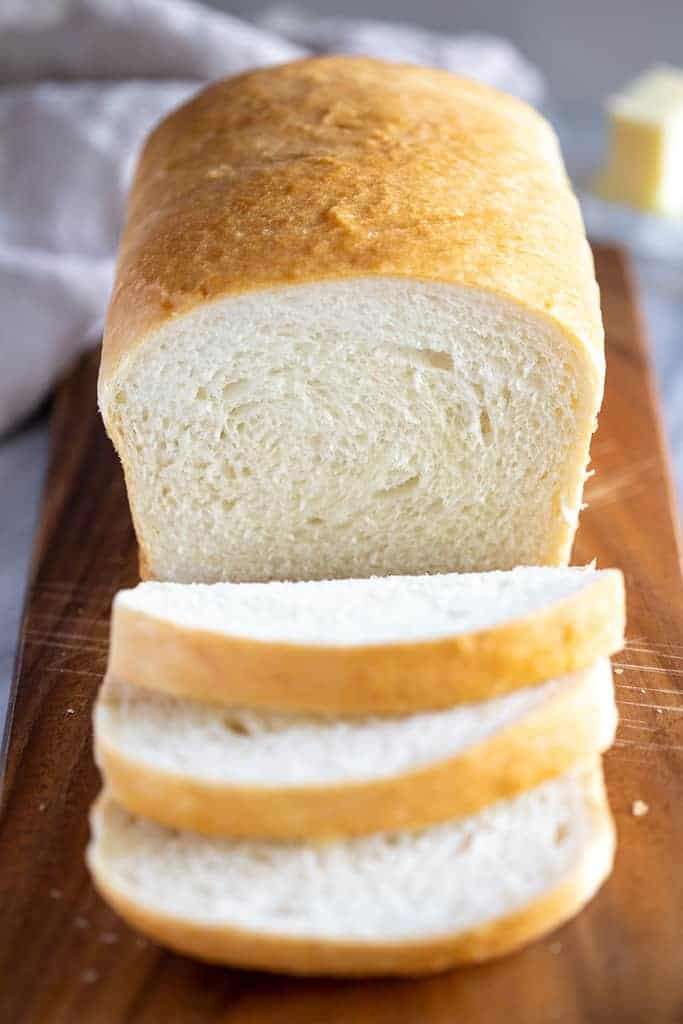
The resulting loaf has a soft crumb with a slightly chewy crust, influenced by the choice of either all-purpose or bread flour. The baking process develops the crust and creates a balanced interior texture. This bread works well for sandwiches, toast, or as a side for meals that call for fresh bread.
The recipe includes options for speeding up rises by using a warm oven as a proofing environment, and it guides how you can make dough ahead for convenience. Freezing instructions detail how to freeze shaped dough before the final rise, and how to freeze fully baked bread for longer storage. Bread machines can also use this recipe with minor adjustments to recipe size.
I Made This!
1,278 people made thisSave this
6,472 people saved thisIngredients
- 2 cups water 474g, warm, 105-115 degrees
- 1 Tablespoons active dry yeast
- 1/4 cup honey 85g honey, 50g sugar, or sugar
- 2 teaspoons salt
- 2 Tablespoons canola oil or vegetable oil
- 4 - 5 1/2 cups all-purpose flour 500g-688g, or bread flour
Instructions
- Prepare the dough: In a large bowl or stand mixer add the yeast, water and a pinch of the sugar or honey. Allow to rest for 5-10 minutes until foaming and bubbly. (This is called “proofing” the yeast, to make sure it is active. If it doesn’t foam, the yeast is no good, and you need to start over with fresh yeast).
- Add remaining sugar or honey, salt, oil, and 3 cups of flour. Mix to combine.
- Add another cup of flour and mix to combine. With the mixer running add more flour, ½ cup at a time, until the dough begins to pull away from the sides of the bowl. The dough should be smooth and elastic, and slightly stick to a clean finger, but not be overly sticky. Add a little more flour, if needed.
- Knead the dough: Mix the dough for 4-5 minutes on medium speed (or knead with your hands on a lightly floured surface, for 5-8 minutes).
- First Rise: Grease a large bowl with oil or cooking spray and place the dough inside, turning to coat. Cover with a dish towel or plastic wrap and allow to rise in a warm place* until doubled in size, about 1 1/2 hours.
- Spray two 9x5'' bread pans generously with cooking spray on all sides. (I also like to line the bottom of the pans with a small piece of parchment paper, but this is optional.)
- Punch the dough down well to remove air bubbles. Divide into two equal portions. Shape each ball into long logs and place into greased loaf pans.
- Second rise: Cover pans with a lightweight, dry dish towel (or spray two pieces of plastic wrap generously with cooking spray and lay them gently over the pans). Allow dough to rise again for about 45 minutes to one hour, or until risen about 1 inch above the loaf pans. Gently removing covering.
- Bake: Preheat oven to 350 F. Bake bread for about 30-33 minutes, or until golden brown on top. Give the top of a loaf a gentle tap; it should sound hollow.
- Invert the loaves onto a wire cooling rack. Brush the tops with butter and allow to cool for at least 10 minutes before slicing.
- Once cool, store in an airtight container or bag for 2-3 days at room temperature, or up to 5 days in the refrigerator.
Notes
- Either all-purpose or bread flour can be used; bread flour produces a chewier loaf.
- Whole wheat flour is not a direct substitute due to gluten differences; see specific whole wheat recipes.
- With instant or rapid rise yeast, skip proofing and add yeast with other ingredients; rising times will be shorter.
- To quicken the first rise, place dough in a greased bowl inside a turned-off, preheated oven at 180°F with door slightly open.
- Dough can be made through kneading and then refrigerated up to one day before rising and baking.
- Shape dough before the second rise and freeze for up to 3 months; thaw and complete the rise before baking.
- Baked bread stores up to 3 months frozen; thaw fully before serving.
- For smaller batches or bread machines, halve the recipe as needed.
Nutrition Information
Show DetailsNutrition Facts
Serving: 24Serving
Amount Per Serving
Calories 202 kcal
% Daily Value*
| Calories | 202kcal | 10% |
| Carbohydrates | 41g | 14% |
| Protein | 5g | 10% |
| Fat | 2g | 3% |
| Saturated Fat | 1g | 5% |
| Sodium | 196mg | 8% |
| Potassium | 56mg | 1% |
| Fiber | 1g | 4% |
| Sugar | 3g | 6% |
| Calcium | 8mg | 1% |
| Iron | 2mg | 11% |
* Percent Daily Values are based on a 2,000 calorie diet.
User Reviews
Overall Rating
5
You'll Also Love